
📖This article is part of the complete guide to Ultimate Guide to AI GTM Strategy for B2B.
Most B2B companies treat lead generation like a lottery, hoping that a whitepaper download or a 'contact us' form submission is enough to signal readiness to buy. In my experience building high-scale acquisition systems, I've seen that these static markers are lagging indicators. By the time a lead fills out a form, they may have already spent three days researching your competitors on Perplexity and ChatGPT. To win in 2026, you need to shift from static lead capture to the analysis of behavioral signals GTM teams can act on in real-time.
For a comprehensive overview of how this fits into your broader growth engine, explore our Ultimate Guide to AI GTM Strategy for B2B.
What are Behavioral Signals in the Context of GTM?
📚
Definition
Behavioral signals are observable, quantifiable actions taken by a prospect across digital touchpoints, such as scroll depth, reading velocity, repeated visits to pricing pages, and interaction with AI agents, that indicate a specific stage of the buyer's journey and level of intent.
Behavioral signals represent the 'digital body language' of your B2B buyers. Unlike demographic data (which tells you who the person is) or firmographic data (which tells you where they work), behavioral signals tell you exactly what they want and how urgently they need it. In a modern AI GTM plan, these signals are no longer manually tracked in a spreadsheet; they are ingested by Large Language Models (LLMs) and AI agents to trigger immediate, personalized responses.
When we developed the architecture for BizAI Intelligence, we discovered that the most potent behavioral signal isn't the 'click,' but the 'pattern.' For example, a user who spends five minutes on a technical documentation page and then immediately navigates to the pricing table is exhibiting a high-intent pattern. This is fundamentally different from a user who bounces from a blog post to the home page in ten seconds. By capturing these micro-behaviors, companies can stop treating all leads as equal and start prioritizing those with the highest probability of closing.
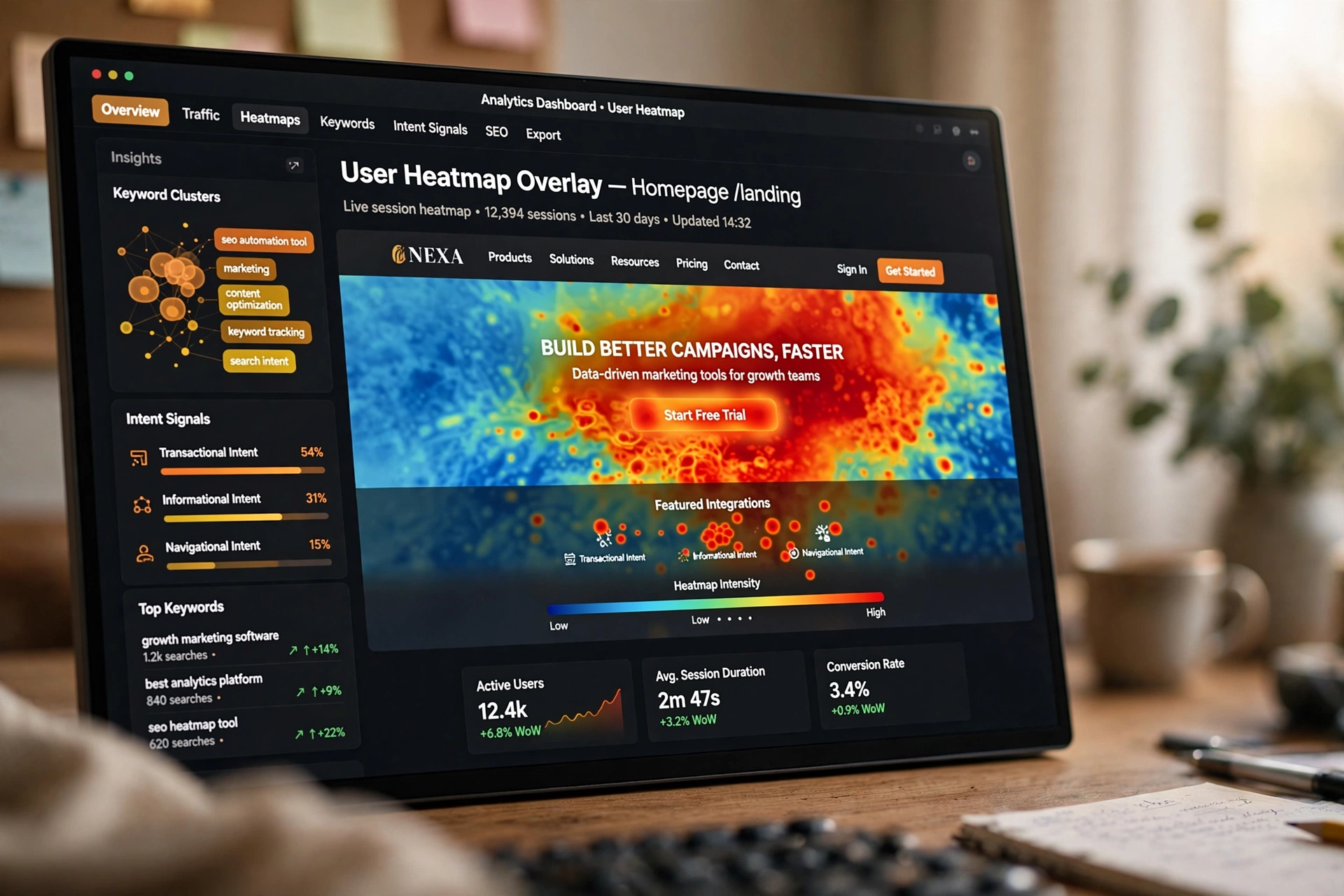
In 2026, these signals are increasingly captured through Generative Engine Optimization (GEO) and integrated AI agents. When a user interacts with an AI salesperson on your site, the agent isn't just answering questions; it's recording the nuance of the inquiry, the speed of the response, and the specific pain points mentioned. This data is then fed back into the GTM engine to refine the target account list and adjust the outreach cadence for the entire account.
Why Do Behavioral Signals Matter for Your Business Growth?
Behavioral signals matter because the B2B buying cycle has become fragmented. According to Gartner's research on the B2B buying journey, buyers now spend only 17% of their total buying journey meeting with potential suppliers. The remaining 83% of the time is spent independently researching and evaluating options. If your GTM strategy relies solely on direct interactions, you are blind to 83% of your customer's decision process.
By integrating behavioral signals into your AI GTM plan, you solve three critical problems: lead leakage, poor timing, and misalignment of value propositions.
First, behavioral signals eliminate lead leakage. Traditional forms are high-friction. Many high-intent buyers will leave a site rather than fill out a 10-field form. When you use AI agents to track engagement signals, you can initiate a conversation based on behavior (e.g. "I see you're looking at our enterprise security specs; would you like a quick summary of our compliance certifications?") before the user even thinks about the contact page. This allows you to capture leads that would otherwise have vanished into the void of organic traffic.
Second, timing is everything in B2B sales. A lead generated via a generic webinar might be in 'learning mode,' while a lead who has visited your pricing page three times in 48 hours is in 'buying mode.' Treating them the same is a waste of your SDR's time. When behavioral signals are integrated with AI lead scoring software for GTM optimization, the system can automatically escalate high-intent signals to a live representative within seconds, drastically increasing conversion rates.
Third, these signals allow for hyper-personalized messaging. If the behavioral data shows a prospect is spending time on your 'Integration with Salesforce' page, your AI SDR can lead the conversation with integration capabilities rather than a generic company overview. This alignment of value increases the perceived authority of your brand and shortens the sales cycle.
How to Implement Behavioral Signals in Your GTM Workflow
Implementing a behavioral signal framework requires moving away from 'snapshots' and moving toward 'streams' of data. You cannot rely on a weekly report; you need a real-time pipeline where behavior triggers action.
Step 1: Define High-Intent Signal Clusters
Not all behaviors are created equal. You must categorize actions into signal clusters. For instance, reading a 'What is...' blog post is a low-intent awareness signal. Comparing your product to a competitor is a medium-intent consideration signal. Calculating ROI using your online tool or visiting the 'Legal/Security' page is a high-intent decision signal. By mapping these clusters, you can tell your AI system exactly when to pivot from education to sales.
Step 2: Deploy Context-Aware Capture Mechanisms
Use an AI-driven layer that can track interactions without creating friction. This is where the dual-engine architecture of BizAI Intelligence becomes essential. While the organic traffic engine brings the users in via programmatic SEO, the AI agent monitors the 'scroll velocity' and 'reading speed' of the visitor. If a user lingers on a specific section of a pillar page, the agent can offer a targeted insight or a direct booking link to a demo.
Step 3: Integrate Signals with Your CRM and Automation
Behavioral data is useless if it stays in the browser. It must be piped into your CRM. Using automated inbound lead qualification and CRM integration, you can ensure that every time a 'High-Intent' signal is triggered, a task is created for the account owner or an automated, personalized email is sent via your AI SDR. This closes the gap between intent and outreach.
Step 4: Optimize for AI Search Engines
In 2026, a significant portion of behavioral signals happen off your site. Users are asking ChatGPT or Perplexity about your pricing or your pros and cons. To capture this, you must use Generative Engine Optimization (GEO). By structuring your data and using clear schema markup, you ensure that when users seek behavioral confirmation from an AI, your brand is the one cited as the authority. You can learn more about this in our guide on GEO vs Traditional SEO.

The Traditional vs. Modern Approach to Intent
To understand the leap in efficiency, we must compare how intent has been handled over the last decade. Most companies are still stuck in the 'Traditional' or 'Generic AI' phase, while the top 1% have moved to the 'Modern' behavioral approach.
| Feature | Traditional Approach | Generic AI Approach | Modern Behavioral Approach (BizAI) |
|---|---|---|---|
| Lead Trigger | Form Fill / Email Opt-in | Keyword-based Chatbots | Real-time Behavioral Patterns |
| Response Time | Hours to Days | Instant (but generic) | Instant & Context-Aware |
| Data Source | Self-reported data | Static User Profiles | Dynamic Interaction Signals |
| Personalization | Template-based | basic "Hello [Name]" | Solution-mapped to behavior |
| SDR Workflow | Manual qualification | Filtered list of leads | Auto-booked high-intent meetings |
As shown in the table, the Generic AI approach often fails because it lacks context. It treats the user as a set of keywords rather than a human exhibiting behavior. The Modern Approach, powered by systems like BizAI Intelligence, treats every interaction as a data point that refines the sales strategy in real-time.
Common Mistakes to Avoid When Tracking Behavioral Signals
Many GTM teams fail not because they lack data, but because they lack the discipline to use it. I've seen companies track 50 different metrics and end up with 'analysis paralysis,' where they have so much data they don't know which signal actually correlates to a closed deal.
1. Over-weighting Low-Intent Signals
One of the most frequent mistakes is treating every 'page view' as a lead. A prospect reading five blog posts about industry trends is not necessarily a buyer; they might be a student or a competitor. If you trigger a high-pressure sales sequence based on low-intent behavior, you damage your brand authority. Focus on 'conversion-oriented' behaviors, such as visiting the pricing page or attempting to access a technical spec sheet.
2. Ignoring the 'Dark Social' Gap
Behavioral signals are often hidden in private Slack channels, podcasts, and peer-to-peer conversations. While you cannot track a private Slack message, you can track the result of that conversation. When a user arrives at your site via a direct link to a very specific, deep-level page (rather than the homepage), it is a strong behavioral signal that they were referred by a trusted peer. Ensure your AI GTM plan accounts for these 'direct-to-deep' entry points.
3. Failing to Update Signal Weights
Buyer behavior changes. A signal that worked in 2024 may be irrelevant in 2026. For example, the importance of a 'demo request' may decrease as users prefer to interact with an AI agent to qualify the product before ever speaking to a human. You must continuously audit your lead scoring and adjust the 'weight' of each behavioral signal based on actual conversion data.
4. Using Friction-Heavy Tracking
If your tracking requires the user to create an account or sign in just to see a piece of content, you are killing your own behavioral data stream. The goal is to observe the user in their natural state. High-friction barriers prevent you from seeing the early-stage behavioral patterns that allow for proactive GTM outreach. Instead, use anonymous tracking coupled with AI agent identification to build a profile before the user ever identifies themselves.
5. Lack of Synergy Between Marketing and Sales
Marketing often tracks the signal, but Sales doesn't receive it in time to act. If a prospect spends 20 minutes on your site and then leaves, and your SDR calls them three days later, the behavioral signal has gone cold. The only way to solve this is through deep integration. Your GTM strategy should utilize AI appointment setters for B2B to bridge the gap between the signal and the meeting instantly.
Frequently Asked Questions
What is the difference between buyer intent and behavioral signals?
Buyer intent is the overall goal or desire of the customer to purchase a solution. Behavioral signals are the specific, measurable actions that prove that intent exists. For example, 'wanting to improve CRM efficiency' is the intent; 'spending 10 minutes comparing two different AI CRM pricing plans' is the behavioral signal. One is a state of mind, the other is a data point.
Which behavioral signals are most indicative of a high-intent B2B buyer?
The strongest signals are typically those associated with the 'bottom of the funnel.' These include multiple visits to the pricing page, interacting with a ROI calculator, searching for 'integrations' or 'API' documentation, and engaging in deep, specific questioning with an AI sales agent. Repeated visits from the same IP address to high-value pages over a 48-hour window is a primary indicator of a buyer in the final decision stage.
How do AI agents improve the capture of behavioral signals?
AI agents act as a continuous feedback loop. Unlike a static form, an AI agent can ask clarifying questions that uncover intent signals the user wouldn't normally disclose. By analyzing the sentiment, urgency, and specific vocabulary of a user's queries, the AI agent can assign a 'behavioral score' to the lead and pass that context directly to the CRM, providing the sales team with a transcript of the intent before the first call.
Can behavioral signals be used for account-based marketing (ABM)?
Absolutely. In an AI-driven ABM strategy, you don't just track individuals; you track 'account-level behavior.' If five different people from the same company are all visiting your 'Enterprise Security' page within the same week, this is a massive behavioral signal that the account is in an active buying cycle. This allows your team to coordinate a multi-pronged outreach to the decision-makers at that specific company.
How do I avoid 'creepiness' when using behavioral tracking?
The key is to provide value in exchange for the tracking. Instead of saying, "I saw you spent 10 minutes on our pricing page," use the signal to be helpful: "Many users looking at our pricing also find our ROI calculator useful for their CFO; would you like to see it?" When the interaction is framed as assistance rather than surveillance, users perceive it as a premium service experience rather than an invasion of privacy.
Conclusion
In the 2026 B2B landscape, the companies that win are those that stop guessing and start observing. Behavioral signals are the only objective way to identify who is actually ready to buy, allowing you to allocate your most expensive resources, your human sales talent, to the leads with the highest probability of closing. By shifting your GTM plan from a static funnel to a dynamic, signal-based engine, you eliminate waste and accelerate your pipeline.
Whether you are scaling through programmatic SEO or refining your account-based approach, the integration of real-time behavior is the catalyst for exponential growth. If you aren't capturing this data, you are essentially flying blind while your competitors use AI to map your customers' every move.
To integrate these signals into a complete, automated system that fills your pipeline while you sleep, dive into our Ultimate Guide to AI GTM Strategy for B2B and discover how to build a compounding organic authority hub.
Ready to stop renting traffic and start owning your niche? Visit BizAI Intelligence to deploy your autonomous AI SDR and organic growth engine today.
AI Search Accelerator: 1-on-1 Strategy Session
Claim one of the 10 monthly slots. Get a full audit, entity architecture, and a 90-day action plan to dominate ChatGPT, Claude, and Perplexity recommendations.