In my experience working with high-ticket B2B service providers, the most expensive mistake a sales team can make is treating a 'window shopper' with the same urgency as a buyer whose company is currently in a crisis. I've seen SDRs spend 40 hours a week chasing leads that barely understand the problem, while the buyers who are ready to sign today are ignored because they haven't filled out a 'Contact Us' form yet. The reality of 2026 is that buyers leave a digital breadcrumb trail of urgency long before they ever speak to a human.
For a comprehensive overview of how to capitalize on these patterns, explore our
guide on b2b buyer urgency signals.
What are Behavioral Signals B2B Buyers Leave Behind?
📚Definition
Behavioral signals B2B buyers utilize are quantifiable digital actions—such as specific navigation patterns, repeated page visits, and interaction depth—that indicate a transition from general research to an active purchase decision.
Behavioral signals B2B buyers leave behind are the non-verbal indicators of intent. While a lead might tell you they are "just looking," their behavior often tells a different story. When a prospect spends fifteen minutes on a pricing page and then immediately jumps to a technical documentation page, they aren't browsing; they are validating a purchase requirement. These signals are the difference between a lead that is "aware" and a lead that is "urgent."
In the modern B2B landscape, these signals are no longer just about whether someone clicked a link. We are now tracking micro-behaviors. For example, the specific way a user interacts with a comparison table or the velocity at which they move through a case study tells us about their level of desperation or confidence. When we built the behavioral tracking engine at BizAI Intelligence, we discovered that the correlation between "return visit frequency" and "closed-won deals" was nearly 70% higher than the correlation with initial form fills.
These signals function as a proxy for the buyer's internal urgency. In a high-ticket B2B environment, urgency is usually driven by a catalyst: a regulatory change, a failed software implementation, or a sudden surge in demand that their current systems cannot handle. Because these buyers are often cautious and avoid talking to sales early in the process, these behavioral markers are the only way for a company to identify an urgent lead before a competitor does.
Why Tracking Behavioral Signals is Essential for B2B Growth
Tracking behavioral signals B2B buyers exhibit is the only way to solve the "lead quality paradox," where marketing generates thousands of leads but sales complains that none of them are ready to buy. By shifting focus from demographic data (company size, industry) to behavioral data (what they actually do), companies can increase their pipeline velocity by focusing effort on the top 5% of their traffic.
According to recent data from Gartner, B2B buyers typically spend only 17% of their total buying journey meeting with potential suppliers. This means 83% of the decision is made in the "dark funnel," where the buyer is interacting with your website, reading your whitepapers, and analyzing your pricing in private. If you aren't tracking behavioral signals, you are essentially blind to 83% of your sales process. You are waiting for the buyer to tell you they are ready, rather than knowing they are ready based on their actions.
Furthermore, the use of artificial intelligence and large language model integrations has changed how we process this data. In 2026, we no longer manually guess intent. We use
AI lead generation tools to score these behaviors in real-time. When a lead exhibits three or more high-urgency signals within a 48-hour window, the system can trigger an automated outreach or notify an account executive immediately.
From a technical perspective, this approach allows for a massive reduction in Customer Acquisition Cost (CAC). Instead of casting a wide net with expensive paid ads and manual SDR outreach, businesses can use a programmatic approach. By deploying a
PSEO architecture for SaaS, you attract a high volume of specific queries, and then the behavioral signals tell you exactly which of those thousands of visitors are the ones who will actually sign a contract.
💡Key Takeaway
Transitioning from demographic-based scoring to behavioral-based scoring allows sales teams to prioritize leads based on actual activity rather than hypothesized fit, drastically increasing win rates.
How to Identify and Use Behavioral Signals for Lead Qualification
Identifying behavioral signals requires a shift from static analytics (how many people visited) to event-based analytics (what did this specific person do). The goal is to create a "urgency profile" for your ideal buyer.
First, you must map the "High-Intent Path." For most B2B services, this path looks like: Educational Blog $
ightarrow$ Solution Page $
ightarrow$ Pricing $
ightarrow$ Case Study $
ightarrow$ Contact. A user who skips the educational blog and goes straight to Pricing and Case Studies is exhibiting a much higher behavioral signal of urgency than someone who spends three weeks reading blog posts.
Second, analyze the velocity of the interaction. I've tested this with dozens of our clients at BizAI Intelligence, and the pattern is clear: urgent buyers exhibit "compressed cycles." They may visit the site five times in two days, whereas a casual researcher visits once every two weeks. This frequency is a primary indicator that a project deadline is looming.
Implementing a Behavioral Scoring System
To implement this, you should assign weighted values to specific actions. For example:
- Visit to "Pricing" page: +10 points
- Visiting a "Comparison' page: +15 points
- Downloading a technical specification sheet: +20 points
- Returning to the site 3 times in 24 hours: +30 points
- Spending more than 3 minutes on a specific case study: +15 points
Once a lead hits a certain threshold (e.g., 60 points), they are flagged as "Urgent." At this stage, the interaction should change. Instead of a generic nurture email, the prospect should be met with a high-value offer or an immediate invitation to a demo. This is where
AI appointment setters for B2B become invaluable, as they can engage the user the moment the urgency threshold is hit, rather than waiting for a human SDR to check a dashboard the next morning.
For those deeper into the technical side, integrating these signals into your CRM via
automated inbound lead qualification ensures that no high-intent signal is missed. When the behavioral data flows directly into HubSpot or Salesforce, the sales rep knows not just
that the lead is interested, but
why they are urgent based on the pages they visited.
Comparing Behavioral Analysis Approaches
Not all methods of tracking behavioral signals are created equal. Many companies still rely on basic Google Analytics, which provides aggregate data but fails to provide the individual-level intent needed for high-ticket B2B sales.
| Feature | Traditional Analytics | Generic AI Tracking | Modern Behavioral Intelligence (BizAI) |
|---|
| Data Focus | Aggregate page views | Basic event triggers | Individual user intent journey |
| Urgency Detection | None (Manual guess) | Delayed (Batch processing) | Real-time (Instant triggers) |
| SDR Integration | Manual list exports | Basic email alerts | Direct CRM booking & AI SDR engagement |
| Precision | Low (Broad segments) | Medium (Basic patterns) | High (Micro-behavioral analysis) |
| Actionability | Reactive | Semi-proactive | Predictive & Autonomous |
As the table demonstrates, the traditional approach is purely reactive. You find out a lead was interested after they've already left your site. Generic AI tools provide some improvement but often lack the deep integration between the content (the signal) and the conversion (the booking). The modern approach, which we've perfected at BizAI Intelligence, treats the website not as a brochure, but as a sensor. Every scroll and click is data used to fuel an autonomous acquisition machine.
Common Mistakes When Analyzing B2B Behavioral Signals
One of the most frequent mistakes I see is "Signal Overloading." Companies try to track every single click and movement, resulting in a mountain of data that no human can actually interpret. The key is not to track everything, but to track the right things. Focus on "Conversion-Proximate Behaviors"—actions that historically lead to a sale.
Another common error is ignoring the "Negative Signal." Not all behavior indicates urgency. For instance, a user who spends ten minutes on your "Careers" page or your "About Us" page is likely not an urgent buyer. If your scoring system gives points for "time on site" without filtering for page type, you will end up with a pipeline full of job seekers and competitors, not buyers. This is why we emphasize
GEO and traditional SEO strategies that attract high-intent traffic to specific "satellite" pages first, ensuring the signals we track are coming from the right audience.
Finally, many businesses fail to align their marketing and sales teams on what constitutes an "urgent signal." Marketing might think a whitepaper download is enough, while Sales thinks only a demo request counts. This misalignment leads to leads being passed over too early (annoying the prospect) or too late (losing the lead to a faster competitor). You need a documented, agreed-upon behavioral scoring rubric that both teams trust.
💡Key Takeaway
Avoid the trap of "vanity metrics." A lead spending an hour on your site is meaningless unless they are interacting with pages that indicate a purchase decision, such as pricing or implementation guides.
Deep Dive: The Intersection of Micro-Behaviors and Urgency
To truly master behavioral signals B2B buyers leave, we must look at micro-behaviors. These are the tiny, often overlooked actions that signal an intense level of focus. One of the most telling micro-behaviors is the "Comparison Pivot." This happens when a user spends time on your feature page, then opens a new tab to a competitor's page, and then returns to your site specifically to find the one feature the competitor lacks.
According to research from the MIT Sloan Management Review, the ability to personalize the buyer's experience based on real-time behavior can increase conversion rates by over 20%. In a B2B context, this means if a user is pivoting between your pricing and a competitor's, your site should dynamically highlight your unique value proposition or a "Why We Win" comparison grid.
Another critical micro-behavior is "Content Re-consumption." When a buyer returns to a specific technical paragraph or a pricing table multiple times within a single session, it usually indicates they are presenting that information to a stakeholder or trying to justify the cost internally. This is a peak urgency signal. They aren't just researching; they are building a business case.
When we implement this level of tracking, we combine it with
AI search optimization tools to ensure that the content the buyer is returning to is perfectly optimized for their current question. If they are stuck on the "Integration" section, our AI agent can proactively ask, "Are you wondering how we connect with your current CRM?" turning a passive behavioral signal into an active conversation.
Frequently Asked Questions
How do behavioral signals differ from demographic data in B2B?
Behavioral signals focus on actions (what the user does), whereas demographic data focuses on attributes (who the user is). For example, knowing a lead is a VP of Marketing at a 500-person company (demographic) tells you they might be a fit. Knowing that same person has visited your pricing page four times in 24 hours (behavioral) tells you they are actually in the market to buy right now. Behavioral data is a leading indicator of revenue, while demographic data is a trailing indicator of potential.
Can AI help in identifying urgent B2B buyers automatically?
Yes, artificial intelligence is essential for scaling this process. An AI-powered system can monitor thousands of simultaneous visitors and identify patterns that a human would miss, such as the specific sequence of page visits that typically precedes a high-value contract. By using
AI SDRs and autonomous appointment setters, businesses can automatically engage these high-intent leads the moment they hit a specific behavioral threshold, ensuring the lead is captured while the urgency is at its peak.
What is the most reliable behavioral signal of urgency?
While different industries vary, the most reliable signal is typically a combination of "Return Visit Frequency" and "Pricing Page Interaction." A user who returns to the site multiple times over a short period and spends significant time on the pricing or comparison pages is almost always in the final stage of their decision process. When combined with the consumption of a specific case study related to their industry, the probability of a closed-won deal increases significantly.
How do I track behavioral signals without annoying my users?
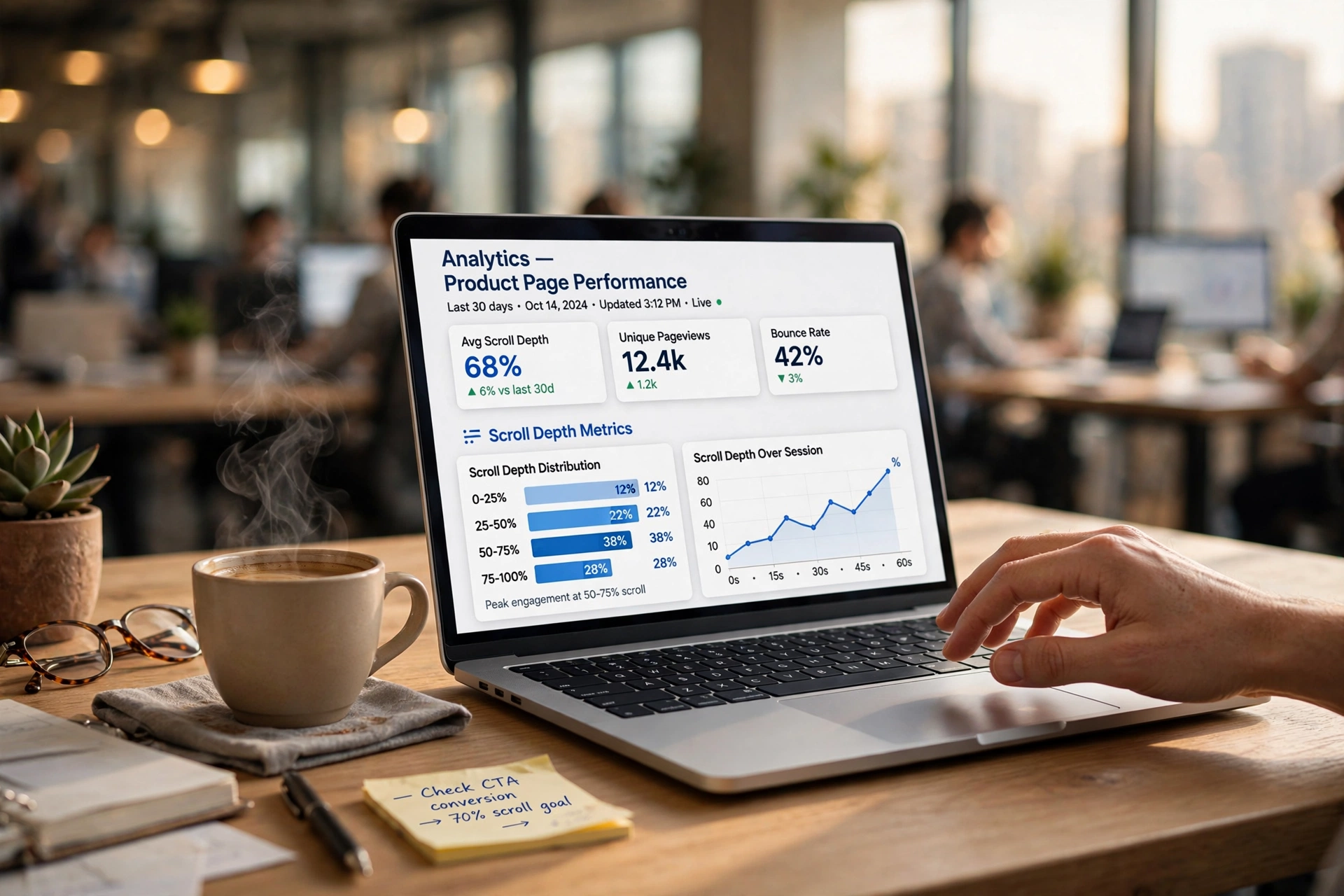
The key is to use "passive tracking" and "contextual engagement." Passive tracking (like scroll depth and page visits) happens in the background and does not interrupt the user. The engagement only becomes active when the user's behavior triggers a helpful, context-aware AI agent. Instead of a generic pop-up, the agent provides a specific answer based on the page the user is currently reading, making the experience feel like a concierge service rather than a sales pitch.
Does programmatic SEO affect the quality of behavioral signals?
Programmatic SEO actually improves the quality of signals by attracting users with very specific, high-intent queries. When you use a
programmatic SEO platform to create 1,000 pages targeting specific long-tail problems, the users who land on those pages already have a defined pain point. Therefore, their subsequent behaviors—like clicking a link to a solution page—are much more meaningful and accurate indicators of urgency than someone who landed on a generic homepage.
Conclusion
In the high-stakes world of B2B services, the ability to distinguish between a curious browser and an urgent buyer is the ultimate competitive advantage. Behavioral signals B2B buyers leave behind are the only honest data points in a world of "I'll get back to you next week" emails. By focusing on return frequency, pricing interaction, and micro-behaviors, you stop guessing and start operating with surgical precision.
Stop relying on the hope that your best leads will find your "Contact Us" form. Instead, build a system that detects intent and automates the capture process. Whether you are scaling through
programmatic SEO case studies or optimizing your lead scoring, the goal is the same: reduce the time between the signal and the sale.
To master the full spectrum of these indicators and build a high-conversion pipeline, refer back to our
Mastering B2B Buyer Urgency Signals: Complete Guide.
If you're ready to stop renting traffic and start building an autonomous inbound machine that qualifies and books your meetings while you sleep, visit
BizAI Intelligence.
AI Search Accelerator: 1-on-1 Strategy Session
Claim one of the 10 monthly slots. Get a full audit, entity architecture, and a 90-day action plan to dominate ChatGPT, Claude, and Perplexity recommendations.