📖This article is part of the complete guide to Ultimate Guide to Hot Lead Notifications for Sales.
In my experience working with high-ticket B2B enterprises, the difference between a closed deal and a lost opportunity usually comes down to a window of about five minutes. When a prospect is actively engaging with your pricing page or requesting a demo, their intent is at its peak; if your sales team waits two hours to respond, that psychological urgency evaporates. This is the 'lead decay' phenomenon that kills most pipelines. For a comprehensive overview of how to solve this, explore our Ultimate Guide to Hot Lead Notifications for Sales.
What Are the Core Benefits of Hot Lead Notifications?
📚
Definition
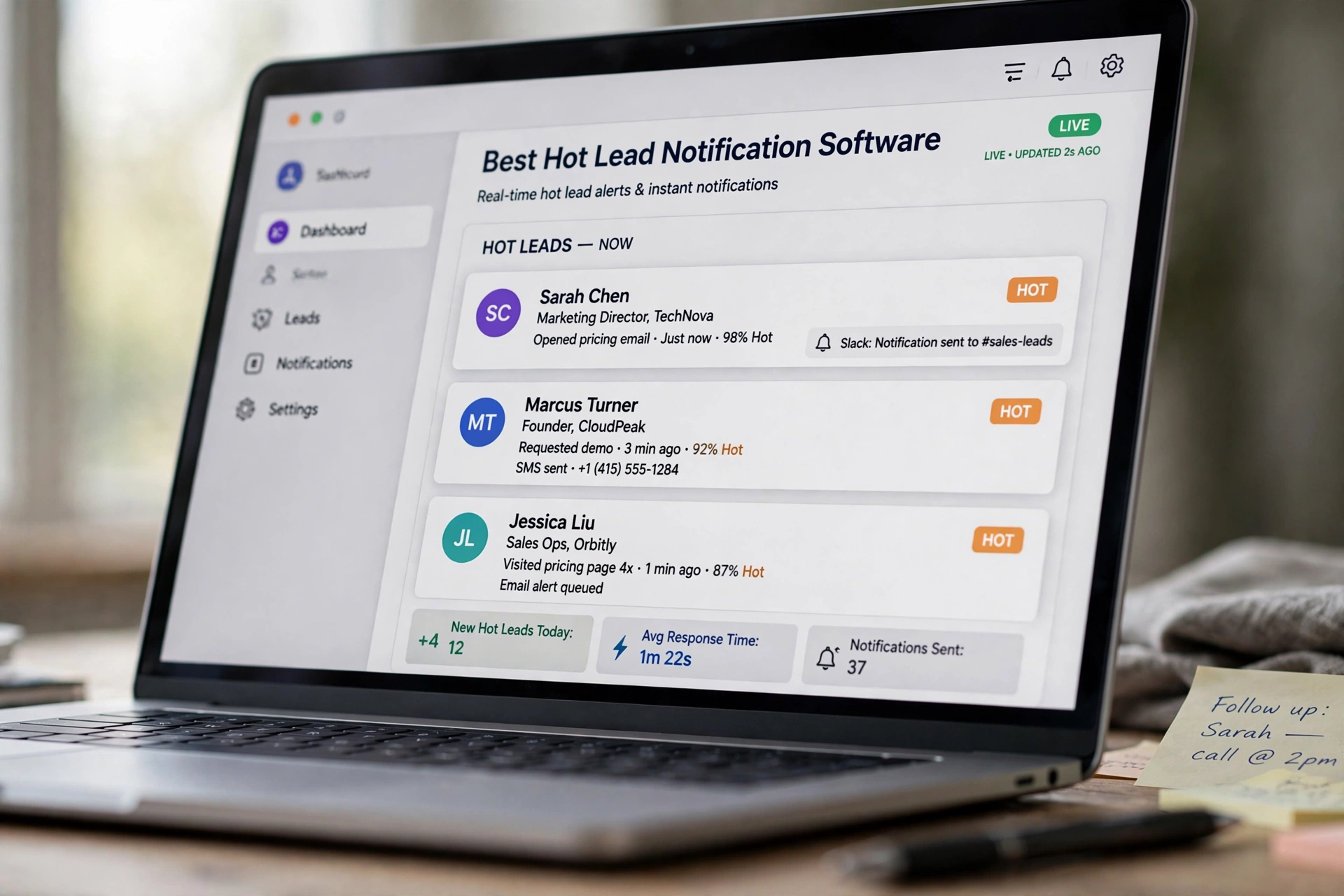
Hot lead notifications are real-time, automated alerts triggered by high-intent behavioral signals (such as repeated visits to a checkout page or interaction with an AI agent), notifying a sales representative immediately via Slack, Email, or CRM.
The primary advantage of hot lead notifications is the drastic reduction in response time, which directly correlates to higher conversion rates. When a lead is flagged as 'hot,' it means they have crossed a specific intent threshold, moving from passive research to active buying mode. By alerting a human representative at the exact moment of peak interest, businesses can strike while the iron is hot, effectively bypassing the traditional, slow-moving lead nurture cycle.
According to research by the Harvard Business Review, firms that try to contact potential customers within one hour of receiving a query are nearly seven times as likely to qualify the lead than those who wait even 60 minutes. In the context of 2026, where AI-driven competition is fierce, this window has shrunk even further. Hot lead notifications allow teams to shift from a reactive posture to a proactive one, ensuring that no high-intent prospect is left waiting in a generic database.

Furthermore, these notifications provide the salesperson with critical context. Instead of a cold call, the representative enters the conversation knowing exactly which pages the lead visited and what specific pain points they are researching. This integration of behavioral data into the notification makes the initial outreach feel personalized and timely rather than intrusive. This level of precision is why many companies are now moving toward automated inbound lead qualification CRM systems to manage the flow of high-intent data.
Why Do Hot Lead Notifications Matter for B2B Growth?
Real-time notifications solve the 'leaky bucket' problem in digital marketing. Most businesses spend thousands on SEO and paid ads to drive traffic, but they lose a significant percentage of those visitors because the hand-off between marketing and sales is fractured. Hot lead notifications act as the bridge, ensuring that the moment a visitor identifies themselves as a buyer, the sales team is engaged.
One of the most significant benefits is the increase in Lead-to-Opportunity conversion rates. When a team uses an AI-powered alert system, they aren't just guessing who to call; they are targeting users whose behavior indicates a high probability of closing. This efficiency allows smaller sales teams to punch above their weight, focusing their limited energy on the 5% of leads that will provide 80% of the revenue. For those scaling their organic reach, combining this with a PSEO architecture guide for SaaS & Enterprise B2B Growth ensures a steady stream of high-intent visitors who can be instantly captured.
Another critical factor is the impact on the customer experience. Modern B2B buyers expect an instantaneous response. If a prospect spends ten minutes on your site and then receives a personalized message or a call within moments, it signals a level of operational excellence and attentiveness that builds trust before the first meeting even starts. This is especially true for high-ticket services where trust and speed are primary differentiators.
Moreover, hot lead notifications allow for better resource allocation. Instead of SDRs spending hours manually scrubbing lists or checking logs, the system pushes the work to them. This shift in workflow is a core reason why many are evaluating AI SDR vs Human SDR ROI calculators to determine how to optimize their headcount. By automating the 'discovery' of hot leads, humans can focus on the 'closing' aspect of the sale.
Practical Use Cases for Hot Lead Alerts
Implementing hot lead notifications requires a strategic approach to behavioral triggers. You cannot notify a salesperson every time someone visits your homepage; that would lead to 'alert fatigue.' Instead, you must define a high-intent threshold.
The Pricing Page Trigger
One of the most effective use cases is the pricing page trigger. When a lead who has already provided an email address returns to the pricing page for the third time in 48 hours, it is a clear signal of purchase intent. A notification is sent to the account executive: "Lead [Name] is reviewing pricing for the second time today." This allows the AE to reach out with a specific offer or a clarifying question about the plans, moving the deal forward immediately.
The AI Agent Interaction
In 2026, the most sophisticated triggers come from AI Sales Agents. When a visitor interacts with a chatbot and answers a series of qualification questions, confirming budget, authority, and timeline, the agent doesn't just book a meeting; it sends a 'Hot Lead' alert. This notification includes the full transcript of the AI conversation. By the time the human rep calls, they already have the discovery phase completed, as seen in our analysis of how AI appointment setters automate B2B demo booking.
The Competitor Comparison Page
When a prospect visits a "Your Brand vs. Competitor" page, they are in the final stage of the decision process. This is a high-stakes moment. An instant notification allows the sales team to intervene with a targeted case study or a specific value proposition that addresses the competitor's weakness. This is a prime example of how leveraging GEO vs traditional SEO strategies can drive users to these high-intent pages, which are then converted through real-time alerts.

The Repeat Visitor Loop
Tracking 'return visits' is a powerful way to identify warming leads. If a lead who went cold three months ago suddenly visits four different blog posts in a single session, the notification warns the rep that the account is 're-heating.' This allows for a non-aggressive 'Checking in' email that feels perfectly timed with the prospect's renewed interest.
Comparing Lead Management Approaches
To understand the true benefit of hot lead notifications, we must compare them to the outdated methods still used by many enterprises.
| Feature | Traditional Lead Forms | Generic AI/Chatbot | Modern Hot Lead Notifications |
|---|---|---|---|
| Response Time | 24-48 Hours | Immediate (Bot only) | Immediate (Human intervention) |
| Context | Basic Contact Info | Fragmented Chat Log | Full Behavioral Intent Map |
| Sales Action | Reactive/Manual | Automated/Cold | Proactive/High-Precision |
| Conversion Rate | Low (Lead Decay) | Medium (Bot Friction) | High (Peak Intent Timing) |
| Customer Feel | Forgotten/Processed | Robotic/Impersonal | Attentive/White-Glove |
As this table demonstrates, the modern approach doesn't replace the human; it empowers the human with the exact data needed to close a deal at the moment the buyer is most receptive. This is the engine driving the success of those who utilize how to automate organic traffic and lead capture with AI.
Common Mistakes to Avoid When Implementing Notifications
Despite the benefits, many teams fail because they implement notifications incorrectly. The most common mistake is over-notification. If your sales team receives 50 'hot lead' alerts a day for people who only spent 30 seconds on a blog post, they will start ignoring the notifications. This is known as alert fatigue. You must set a strict intent threshold, for example, requiring a minimum of 3 minutes of dwell time on a high-value page or a specific set of AI-qualified answers, before a notification is triggered.
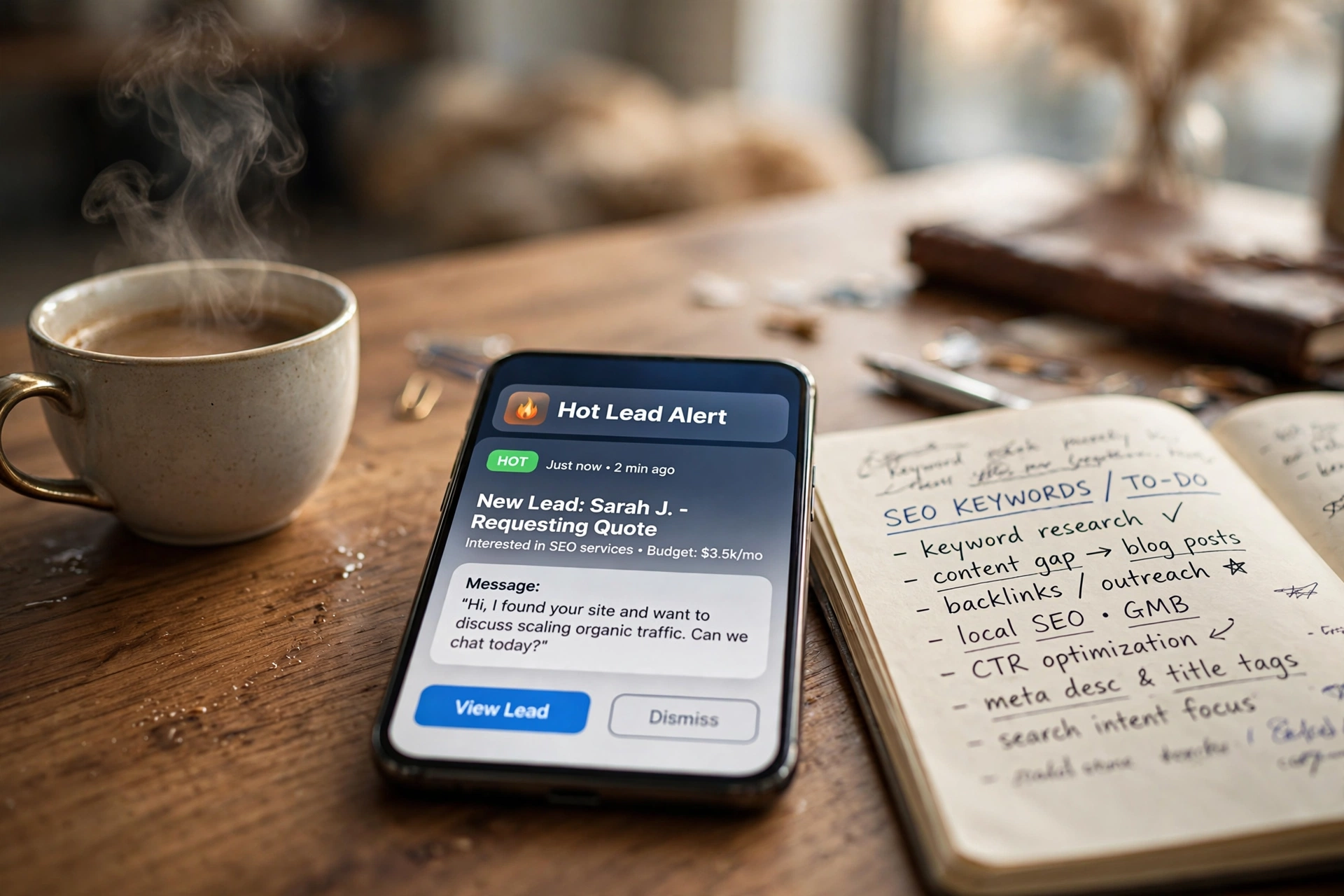
Another frequent error is the lack of actionable context. A notification that simply says "New Hot Lead" is useless. The rep needs to know why the lead is hot. The notification should include the lead's name, the specific page they are on, and their last three actions. Without this, the sales rep is flying blind, and the 'speed to lead' advantage is wasted because the conversation lacks relevance.
Thirdly, businesses often fail to integrate notifications with their CRM. If the alert arrives in Slack but the rep has to manually search for the lead in HubSpot to find their history, the process is too slow. The notification should include a direct link to the CRM record. For those looking to scale this, we recommend exploring best B2B sales automation software for inbound leads to ensure the plumbing is seamless.
Finally, avoid over-aggressive outreach. Just because a lead is 'hot' doesn't mean you should call them the second they click a link; that can feel like 'stalking' and creep out the prospect. The key is the method of outreach. An AI agent can initiate the conversation, or a salesperson can send a highly personalized LinkedIn message or email that references the specific problem the user was researching. The goal is to be helpful, not haunting.
Frequently Asked Questions
How do hot lead notifications improve the sales pipeline?
Hot lead notifications eliminate the gap between interest and action. By alerting reps to high-intent behavior in real time, they stop the 'lead decay' that occurs when prospects move on to competitors. This increases the velocity of the pipeline, meaning deals move from the 'Lead' stage to the 'Opportunity' stage significantly faster, which ultimately increases the quarterly revenue forecast by ensuring no high-value intent is ignored.
What is the difference between a standard lead alert and a hot lead notification?
A standard lead alert usually triggers when someone fills out a form, regardless of their intent or behavior. A hot lead notification is based on behavioral intent. It tracks actions, such as visiting a pricing page multiple times or engaging deeply with an AI agent, to identify a lead that is actively in the buying phase, rather than someone just browsing for information. This creates a higher-quality signal for the sales team.
Can these notifications be integrated with Slack or Microsoft Teams?
Yes, most modern systems are designed to push alerts directly into communication hubs like Slack or Teams. This is essential because sales reps rarely sit and watch a CRM dashboard all day. By pushing the 'Hot Lead' alert into the channel where the team already communicates, the response time is lowered from hours to seconds, allowing for immediate coordination between SDRs and Account Executives.
Do hot lead notifications work for low-traffic websites?
Absolutely. In fact, they are more important for low-traffic, high-ticket sites. When you only get 100 visitors a day, you cannot afford to lose a single high-intent lead. Real-time notifications ensure that every single person who shows a genuine interest in your B2B service is contacted, maximizing the ROI of your existing organic traffic regardless of total volume.
How do you prevent sales reps from getting overwhelmed by alerts?
The solution is 'Intent Scoring.' Instead of alerting on every action, you assign points to behaviors (e.g. Homepage = 1pt, Pricing Page = 10pts, Demo Request = 50pts). A notification is only triggered when a lead hits a specific score, such as 30 points. This ensures that only truly 'hot' leads reach the sales team, maintaining the integrity of the alert system and preventing burnout.
Conclusion
The ability to identify and contact a prospect at the exact moment of their peak intent is a massive competitive advantage in 2026. Hot lead notifications transform your website from a passive brochure into an active, 24/7 lead generation engine. By reducing response times, providing deep behavioral context, and focusing human effort on the highest-probability deals, businesses can significantly scale their revenue without exponentially increasing their headcount.
When you combine real-time alerts with a robust organic growth strategy, such as using how to rank on ChatGPT, SearchGPT, and Perplexity AI to drive the right traffic, you create a compounding acquisition machine. Stop letting your best leads slip through the cracks of a slow CRM process and start capturing intent the moment it happens.
To master the full technical implementation of these systems, return to our Ultimate Guide to Hot Lead Notifications for Sales and start building your real-time response engine today.
Visit BizAI Intelligence to discover how our AI agents can automate your lead qualification and notify your team the second a deal turns hot.
AI Search Accelerator: 1-on-1 Strategy Session
Claim one of the 10 monthly slots. Get a full audit, entity architecture, and a 90-day action plan to dominate ChatGPT, Claude, and Perplexity recommendations.