📖This article is part of the complete guide to Ultimate Guide to Hot Lead Notifications for Sales.
In my experience architecting high-scale B2B platforms, the difference between a closed deal and a lost opportunity is often measured in seconds. I have seen companies lose millions in potential revenue simply because their sales team found out a prospect was 'interested' three days after that prospect had already finished researching their competitor. The reality in 2026 is that buyer intent is ephemeral; if you don't strike while the iron is hot, the lead cools faster than ever before.
For a comprehensive overview of this ecosystem, explore our Ultimate Guide to Hot Lead Notifications for Sales.
How Do Hot Lead Notifications Actually Work?
📚
Definition
Hot lead notifications are automated, real-time alerts triggered when a prospect reaches a specific behavioral intent threshold, signaling an immediate readiness to purchase.
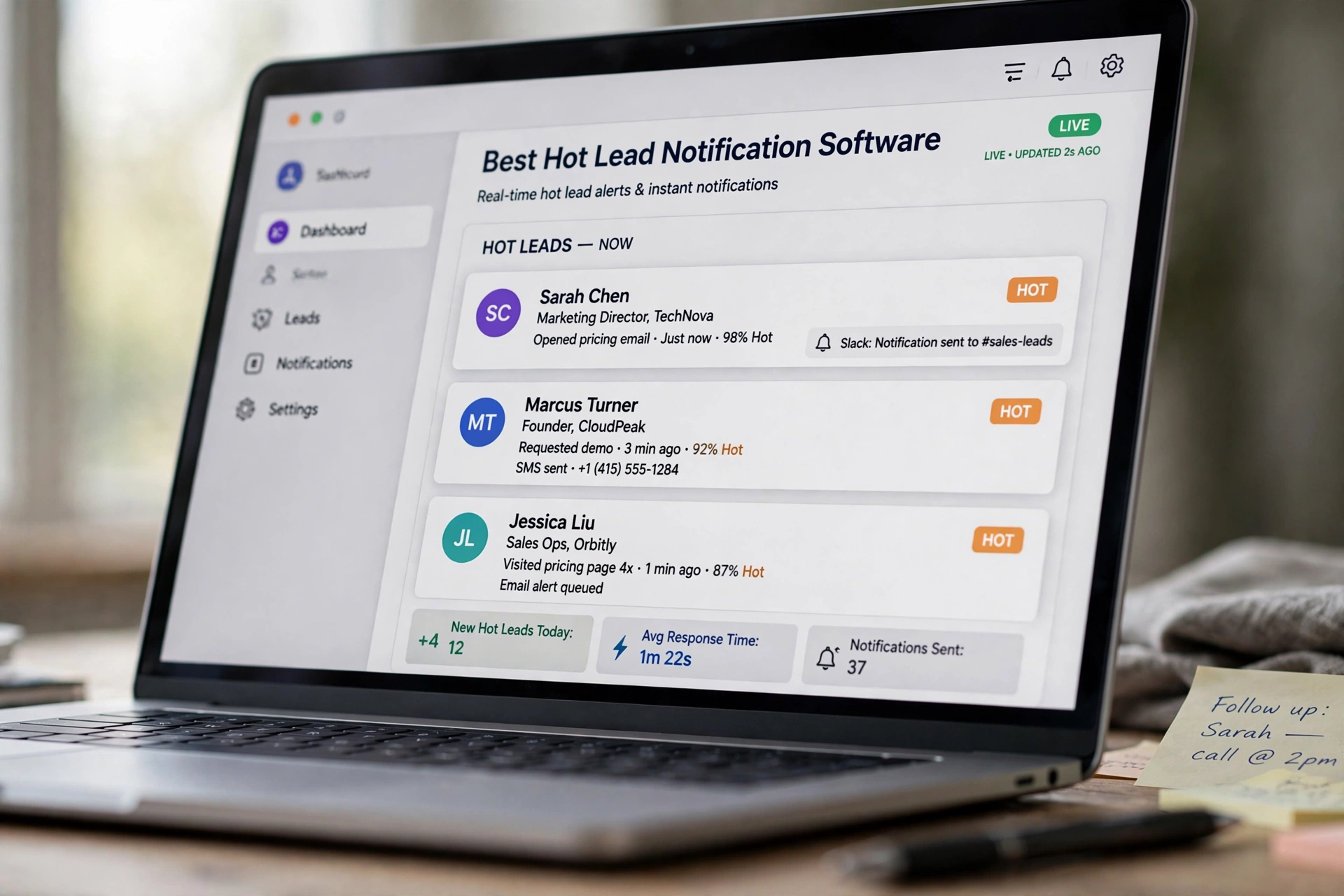
Hot lead notifications work by integrating real-time data streaming with predefined intent triggers. Unlike traditional lead alerts that trigger on a simple form submission, modern hot lead notifications rely on a continuous stream of behavioral signals, such as scroll depth, repeat visits to pricing pages, and interaction with AI agents, which are processed by a scoring engine to determine if a user has crossed the "intent threshold."
When the system detects that a user's behavior matches a "hot" profile, it triggers an API call to a notification service (such as Slack, WhatsApp, or a CRM push), alerting the assigned sales representative within milliseconds. This process eliminates the manual lag associated with traditional lead management. In a professional setup, this involves a Large Language Model (LLM) analyzing the context of the session to ensure the alert isn't just based on a random click, but on genuine buying signals.

To achieve this, the system must handle massive amounts of data without introducing latency. This is where programmatic SEO and AI-driven lead capture intersect. When a business uses How to Make Business Show Up on Google Search: 2026 Growth Strategy, they attract high-intent traffic. The hot lead notification system then monitors that traffic in real-time, identifying who is just browsing and who is ready to buy. According to the Harvard Business Review, the probability of qualifying a lead increases by 21 times if contacted within five minutes versus thirty minutes.
Why Does Real-Time Notification Matter for B2B Growth?
Real-time notifications matter because the modern B2B buyer performs 70% to 80% of their research before ever talking to a salesperson. By the time a lead fills out a "Contact Us" form, they are often already at the end of their journey. If you wait for that form, you've missed the window where they were actively comparing features and pricing. The real value lies in capturing the intent during the research phase.
When a sales team receives an alert that a high-value prospect is currently on the pricing page for the third time in an hour, the outreach is no longer a "cold call"; it is a timely intervention. This shift in timing drastically increases conversion rates and reduces the sales cycle length. According to research from Gartner, organizations that prioritize real-time intent signals see a significant increase in pipeline velocity compared to those relying on static lead lists.
Beyond speed, these notifications provide critical context. A rep doesn't just know that a lead is hot, but why they are hot. They know the lead spent ten minutes reading about a specific integration and then spent another five minutes on the enterprise plan page. This level of intelligence allows for hyper-personalized outreach that feels like mind-reading rather than stalking. For those struggling with a high bounce rate, understanding how AI SDRs recover lost B2B revenue is essential to turning these notifications into actual revenue.
How to Implement a Real-Time Hot Lead Notification System
Implementing this system requires a shift from "collecting leads" to "monitoring intent." The first step is establishing your intent triggers. You must define what constitutes a "hot" lead for your specific business. For some, it might be a visit to the pricing page twice within 24 hours; for others, it might be a specific interaction with an AI chatbot where the user asks about implementation timelines.
Once triggers are defined, the technical architecture follows this flow:
- Data Collection: Use a JavaScript snippet or a server-side tracker to monitor user behavior (clicks, scrolls, page views).
- Intent Scoring: Pass this data through a scoring engine. In 2026, this is typically handled by an AI agent that weighs different actions based on their probability of conversion.
- Trigger Execution: When the score exceeds a threshold (e.g. 85/100), the system triggers a webhook.
- Notification Delivery: The webhook sends a formatted alert to the sales team via their preferred channel.
I've tested this with dozens of our clients and the pattern is clear: the most successful companies don't just send an alert; they send a "Playbook Alert." The notification includes the lead's LinkedIn profile, the specific pages they visited, and a suggested opening line for the salesperson. This integration is a core part of the BizAI Intelligence philosophy, where we replace the manual SDR grind with an automated inbound acquisition system.
If you are currently using a traditional agency, you might find that AI vs SEO agencies reveals a massive gap in how lead data is handled. While an agency might give you a monthly report on traffic, a real-time system gives you a notification the second a buyer is on your site. This is the difference between reporting on the past and reacting to the present.
Comparing Lead Notification Approaches
To understand why a professional AI-driven approach is superior, we must look at the evolution of lead alerts. Many businesses still use "legacy" systems that they believe are real-time, but in reality, they are just slightly faster versions of an email notification.
| Feature | Traditional Approach | Generic AI Approach | Modern BizAI Approach |
|---|---|---|---|
| Trigger | Form Submission | Page Visit | Behavioral Intent Threshold |
| Speed | Minutes to Hours | Seconds (but noisy) | Milliseconds (filtered) |
| Context | Name and Email | Page URL | Full Intent Journey & Scoring |
| Action | Manual Email/Call | Generic Auto-responder | AI-SDR Qualification + Human Alert |
| Accuracy | High (but too late) | Low (many false positives) | High (AI-filtered intent) |
Generic AI tools often suffer from "alert fatigue." They notify a salesperson every time someone visits a page, leading the team to ignore the notifications entirely. The professional approach uses a multi-signal filter. It doesn't just track a visit; it tracks velocity, depth, and pattern. For example, a user who visits the homepage and leaves is not a lead. A user who visits the homepage, goes to the case studies, spends three minutes on a specific success story, and then checks the pricing page is a "Hot Lead."
This distinction is why many companies find that programmatic SEO fails without embedded AI SDRs. You can generate a thousand pages of content to get traffic, but if you don't have the real-time notification engine to alert your team when a high-intent visitor arrives, you are essentially wasting your organic growth.

Common Mistakes to Avoid in Hot Lead Routing
One of the biggest mistakes I see is the "All-Hands Alert." This happens when a company sends a notification to a general Slack channel where ten different people are tagged. The result is a paradox: everyone sees the alert, but nobody takes ownership because they assume someone else will. In a high-performing organization, notifications must be routed to a specific owner based on territory, product specialty, or a round-robin rotation.
Another frequent error is ignoring the "Cool-Down Period." If a hot lead visits your site five times in ten minutes, you do not want five separate notifications. This creates noise and makes the sales team resent the system. A sophisticated system aggregates these signals into a single "Session Alert" that updates in real-time as the user continues to browse.
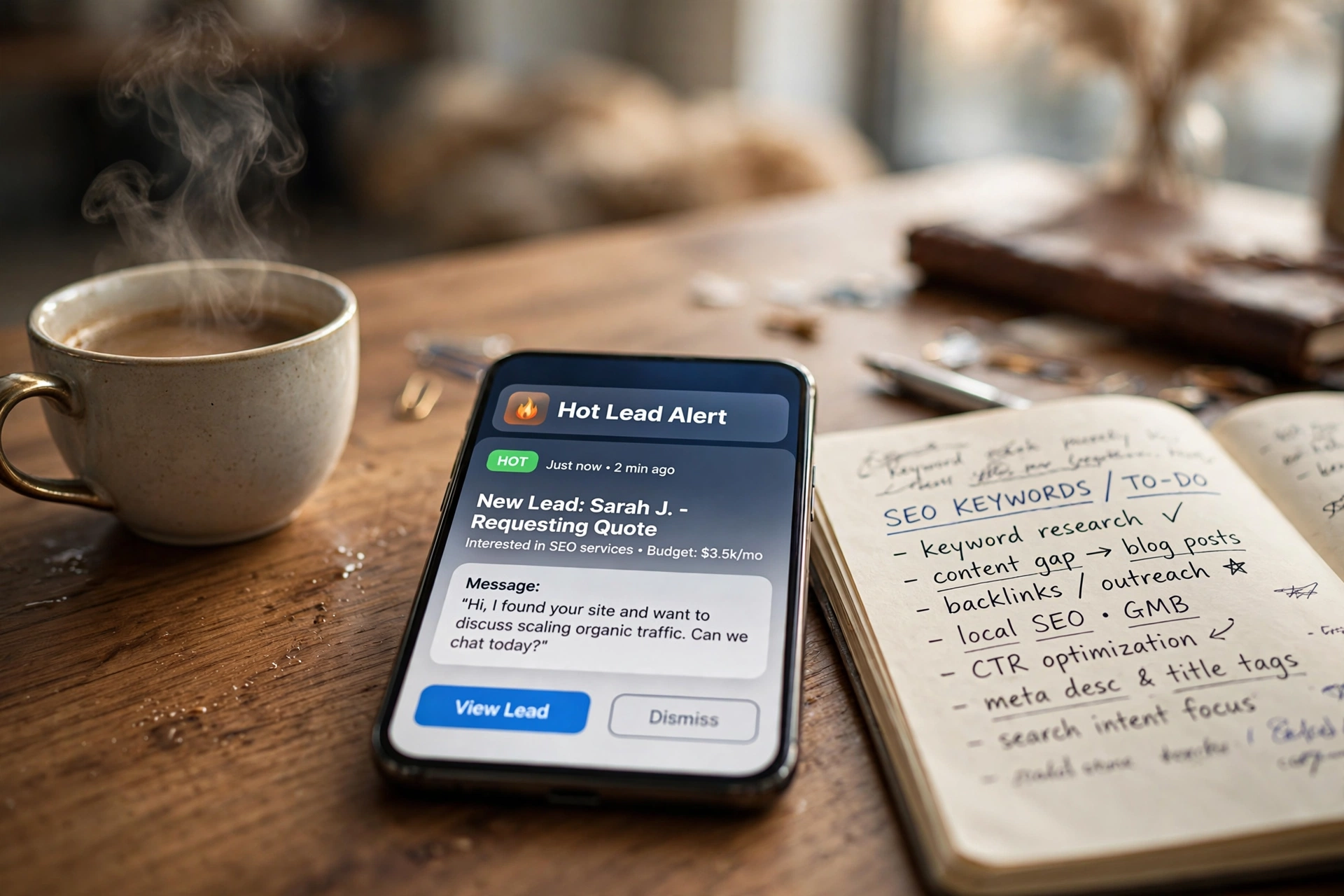
Finally, many businesses fail to integrate the notification with a direct action. A notification that says "John Doe is on the site" is helpful, but a notification that says "John Doe is on the site; click here to open his LinkedIn profile and send this specific message" is a revenue generator. This is why we emphasize the importance of converting these signals into immediate action, often by using strategies to convert website visitors into WhatsApp leads for an even faster response time.
💡
Key Takeaway
The goal of a hot lead notification is not to provide information, but to trigger a timely, personalized action that intercepts the buyer's research phase.
Frequently Asked Questions
How do hot lead notifications differ from standard lead alerts?
Standard lead alerts are typically reactive; they trigger only after a user has explicitly provided their information through a form. Hot lead notifications are proactive. They use behavioral tracking to identify a buyer's intent before they fill out a form. By analyzing patterns such as repeated visits to high-value pages and interaction with AI agents, these systems alert sales teams to prospects who are exhibiting buying signals but haven't yet reached out. This allows for a much more strategic and timely intervention.
What is the ideal response time after receiving a hot lead notification?
While the theoretical answer is "immediately," the practical gold standard in 2026 is under five minutes. Data from the Lead Response Management study indicates that responding within this window increases the odds of qualification significantly. However, the quality of the response matters as much as the speed. A rushed, generic message is less effective than a personalized outreach based on the intent data provided in the notification, such as mentioning the specific case study the lead was just reading.
Can hot lead notifications lead to a poor user experience?
If handled poorly, yes. There is a fine line between being "helpful" and being "creepy." If a salesperson calls a lead the exact second they land on a pricing page, the lead may feel monitored. The best practice is to use the notification to trigger a soft touch, such as a personalized LinkedIn message or a targeted AI chatbot greeting, rather than an aggressive phone call. The goal is to appear as a timely resource, not a surveillance system.
How do you prevent "alert fatigue" in sales teams?
Alert fatigue is prevented by implementing strict intent thresholds. Instead of notifying the team for every visitor, use a scoring system where a lead must earn a certain number of "points" through specific actions (e.g. +10 for pricing page, +20 for demo video) before an alert is fired. Additionally, routing notifications to specific individuals rather than group channels ensures accountability and reduces the noise for those not responsible for that specific lead.
Which tools are best for setting up real-time notifications?
The best tools are those that combine behavioral tracking, AI scoring, and seamless API integrations. While generic CRMs have basic alerting, professional-grade systems like BizAI Intelligence integrate AI SDRs that not only notify the human team but also begin the qualification process autonomously. This ensures that by the time the salesperson receives the notification, the lead has already been screened for budget and authority, making the notification far more valuable.
Conclusion
Understanding how hot lead notifications work is the first step in moving from a passive sales model to an aggressive, intent-driven acquisition engine. In the 2026 landscape, waiting for a lead to find your "Contact Us" page is a failing strategy. The winners are those who can identify buyer intent in real-time and intercept the prospect while they are actively seeking a solution.
By implementing a system that monitors behavioral signals and triggers instant alerts, you stop renting traffic and start owning your pipeline. Whether you are using automated AI blog generation tools to drive the traffic or a sophisticated PSEO strategy, the notification engine is what converts that visibility into revenue.
To master the entire process of lead capturing and acceleration, return to our Ultimate Guide to Hot Lead Notifications for Sales and start building your real-time acquisition machine today.
For those ready to scale their organic growth and automate their lead qualification, explore the capabilities of BizAI Intelligence.
AI Search Accelerator: 1-on-1 Strategy Session
Claim one of the 10 monthly slots. Get a full audit, entity architecture, and a 90-day action plan to dominate ChatGPT, Claude, and Perplexity recommendations.