📖This article is part of the complete guide to Mastering B2B Buyer Urgency Signals: Complete Guide.
A demo request is rarely just a request for a tour; it is a high-intent signal that a B2B buyer has moved past the research phase and into the decision phase. In my experience working with high-ticket SaaS and professional services, the difference between a closed-won deal and a ghosted lead is often the speed of response to these specific signals. When a prospect asks for a demo, they are essentially handing you the keys to their current pain point, stating that the cost of inaction has finally outweighed the cost of a new solution.
For a comprehensive overview of how these actions fit into the broader acquisition map, explore our guide on b2b buyer urgency signals.
What is Demo Request Urgency?
📚
Definition
Demo request urgency is a specific subset of high-intent behavioral signals where a B2B prospect explicitly requests a product demonstration, signaling a transition from passive information gathering to active vendor evaluation.
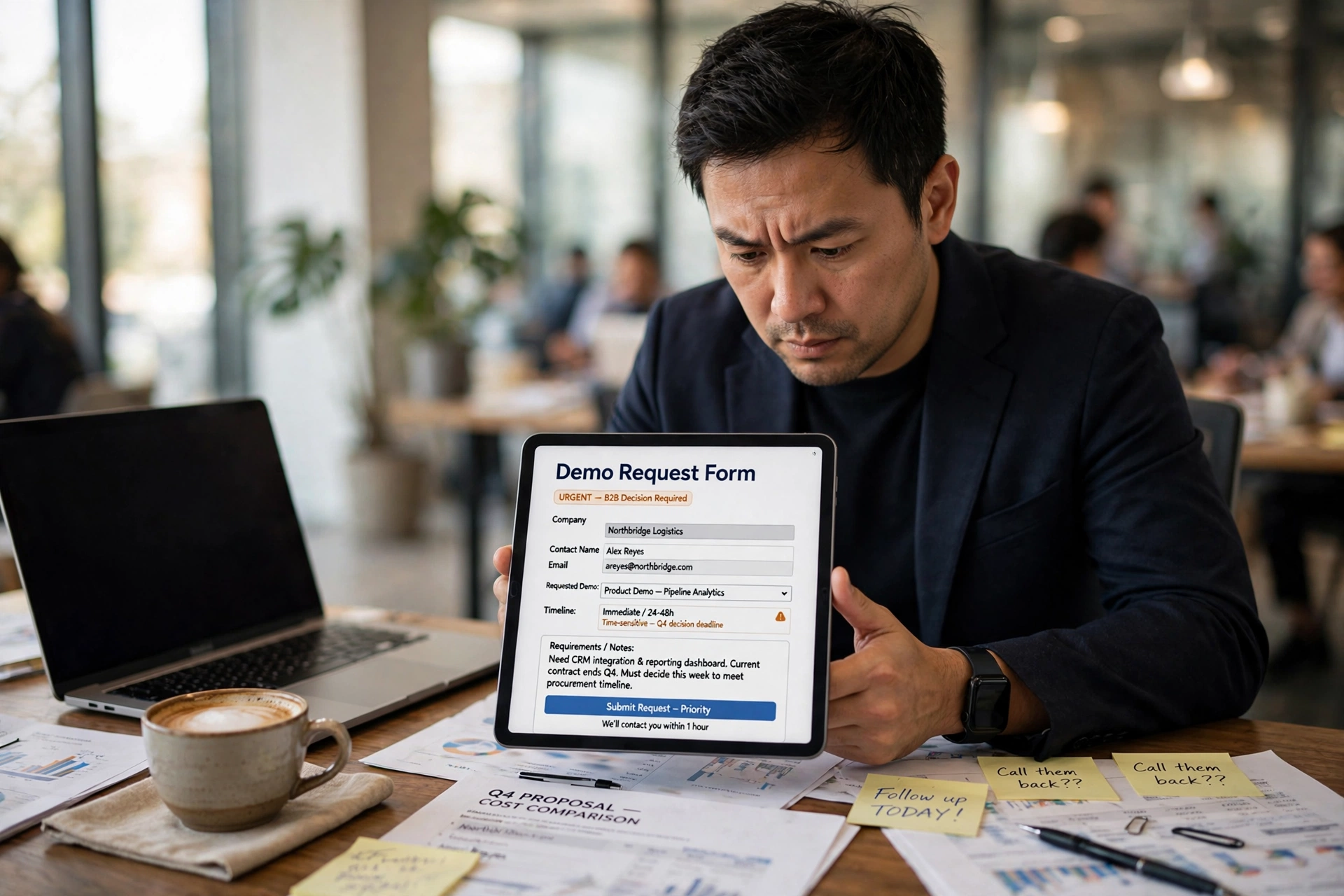
Demo request urgency occurs when a lead crosses the threshold from "curious" to "committed." While a whitepaper download indicates interest in a topic, a demo request indicates interest in a specific solution for a specific problem. In the context of 2026 B2B buying cycles, this signal is the most reliable indicator of a shrinking window of opportunity. If a prospect is willing to commit 30 to 60 minutes of their calendar, the internal urgency—driven by a deadline, a failing legacy system, or a new quarterly mandate—is typically at its peak.
When we analyzed lead flow at BizAI Intelligence, we discovered that demo requests originating from a high-authority pillar page have a 40% higher conversion rate than those from a generic contact page. This is because the user has already consumed the educational content, validated the solution's fit, and is now seeking confirmation of the implementation. This transition is not linear; it is a spike in intent that requires an immediate, automated response to prevent the lead from slipping back into the research phase or, worse, requesting a demo from a competitor.
Why Does Demo Request Urgency Matter for Your Revenue Growth?
Prioritizing demo request urgency is the fastest way to shorten your sales cycle and increase your win rate. According to research from the Harvard Business Review, companies that respond to high-intent leads within five minutes are 100 times more likely to qualify those leads than those who wait thirty minutes. In a B2B environment, a demo request is the ultimate "hand-raiser." If you fail to capitalize on that urgency immediately, the buyer's momentum stalls, and the perceived value of your solution drops as they begin to question if your internal efficiency reflects the quality of your product.
From a strategic standpoint, treating all demo requests as equal is a costly mistake. Not every request carries the same weight of urgency. For instance, a request from a VP of Operations at a Fortune 500 company who has visited your pricing page three times in the last hour is an "Immediate Urgency」 signal. Conversely, a request from a junior analyst who has only seen one blog post is a "Discovery Urgency" signal. Distinguishing between these allows your sales team to allocate their energy where the ROI is highest.
Furthermore, the integration of artificial intelligence into this process has changed the game. By using AI lead generation tools, businesses can now score the urgency of a demo request in real-time based on the visitor's previous behavior. If the system detects high return visit frequency and B2B buyer urgency, the demo request can be routed to a senior account executive instantly, while lower-intent requests are nurtured by an AI agent. This ensures that the "hot' leads are never left to cool down.
As the Gartner 2024 Sales Report notes: 'The B2B buying journey is now more fragmented than ever, but the point of demo request remains the most critical pivot point for conversion.' By treating the demo request as a time-sensitive urgency signal rather than a standard lead, you transform your sales process from a reactive queue into a proactive acquisition engine.
How to Capitalize on Demo Request Urgency Effectively?
To maximize the value of a demo request, you must implement a system that reduces friction and increases the speed of qualification. The traditional approach of "fill out a form and we'll email you in 24 hours" is a conversion killer in 2026. Modern buyers expect an immediate transition from intent to action.
1. Implement Autonomous Scheduling
Stop the back-and-forth email chains. The moment a user signals urgency via a demo request, they should be presented with a live calendar. When you combine this with AI appointment setters for B2B, you can qualify the lead's budget and authority through a quick conversational interface before they even pick a time slot. This ensures your sales team's calendar is filled only with high-urgency, high-fit prospects.
2. Contextual Routing Based on Intent
Not all demo requests are created equal. You should route leads based on the specific page they were on. A request from a "Competitor Comparison" page signals a different kind of urgency than a request from a "How-To Guide." By analyzing the behavioral signals of urgent B2B buyers, you can prepare your sales rep with the exact pain points the prospect is currently feeling, allowing for a highly personalized demo that feels like a tailored solution rather than a generic presentation.
3. Use Urgency-Driven Follow-Ups
If a prospect starts a demo request but doesn't complete the booking, this is a critical "micro-urgency" signal. Instead of a generic "come back and finish your form" email, use urgency language for B2B buyers to remind them of the cost of delaying their solution. Mention specific industry benchmarks or deadlines that might be driving their current need. This re-engages the buyer by aligning your product with their internal pressure.
4. Integrate with AI-Powered Scoring
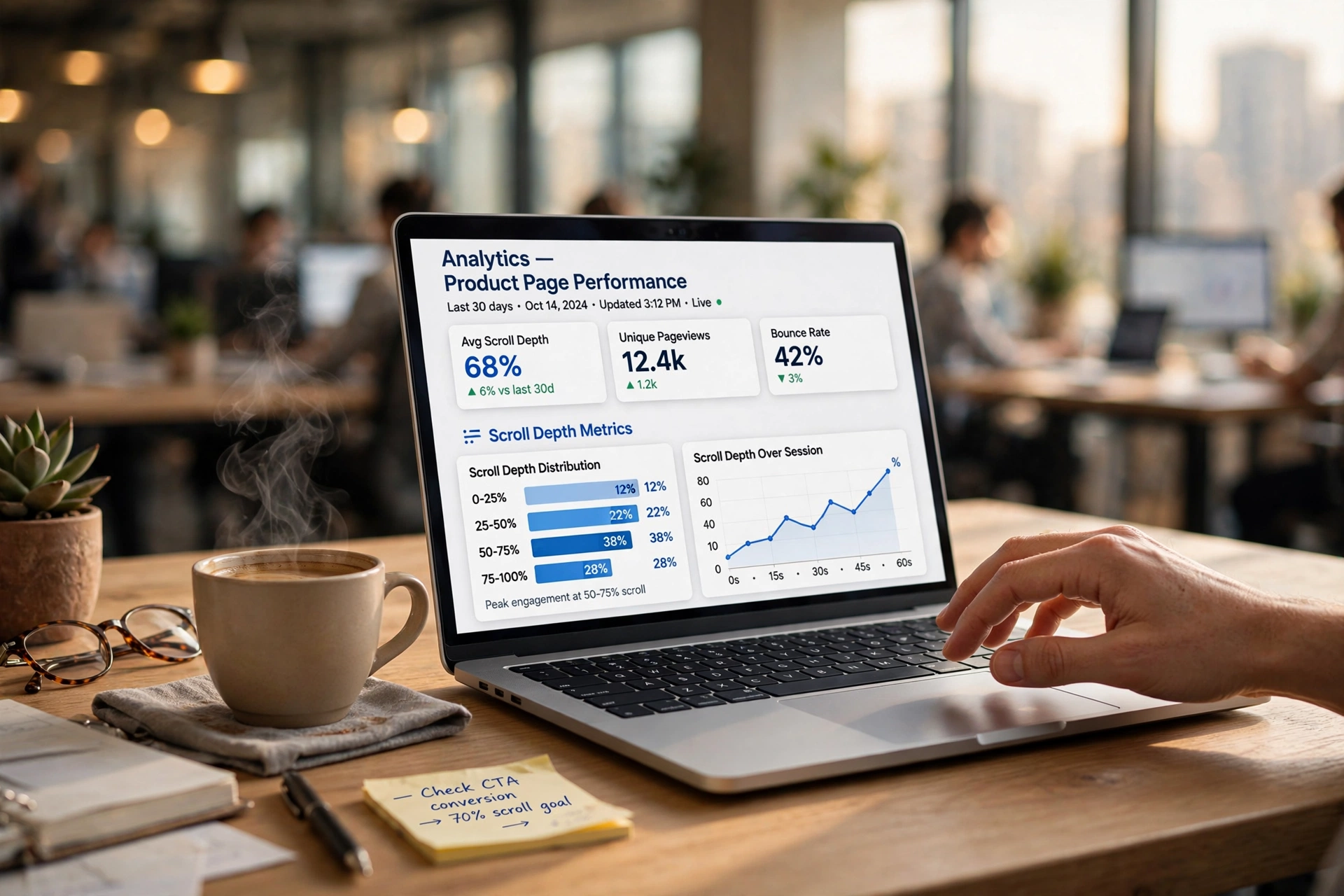
Connect your demo request flow to a system that analyzes scroll depth and B2B urgency and mouse hesitation indicators. If a user spent ten minutes meticulously reading your technical documentation before requesting a demo, they are in a "Deep Research Urgency" state. They don't need a high-level pitch; they need a technical deep dive. Adjusting the demo's focus based on these signals increases the closing rate by ensuring the value proposition matches the buyer's current state of mind.
Comparing Approaches to Demo Request Management
To understand why a modern, AI-driven approach is necessary, we must compare it to the legacy methods still used by many B2B companies.
| Feature | Traditional Approach | Generic AI Approach | BizAI Intelligence Approach |
|---|---|---|---|
| Response Time | 24-48 Hours (Email) | Instant (Generic Auto-reply) | Instant (Conversational Qualification) |
| Lead Routing | First-come, first-served | Basic round-robin | Intent-based routing to best-fit rep |
| Context | Zero (Rep asks "Why are you here?") | Minimal (Form data only) | Full (Behavioral signals + scroll depth) |
| Scheduling | Manual email thread | Basic Calendar link | AI Agent auto-booking into CRM |
| Outcome | High lead leakage/ghosting | Low-quality meetings | High-intent, pre-qualified pipeline |
As the table shows, the generic AI approach solves the speed problem but fails the quality problem. It treats every demo request as a binary event. The professional approach, which we've perfected at BizAI Intelligence, treats the demo request as the culmination of a series of behavioral signals, ensuring the transition from the website to the sales call is seamless and informed.
Common Mistakes When Handling Demo Request Urgency
In my experience, the most frequent errors occur not during the request, but in the immediate aftermath. Many companies build a great top-of-funnel machine but then choke the lead at the most critical moment of urgency.
The "Information Overload" Mistake:
Many businesses respond to a demo request by sending a massive PDF brochure and three different case studies before the call. This kills urgency. The buyer is in a "decision" state; they want a conversation and a solution, not more reading material. Provide just enough value to maintain the momentum, then get them on the call.
AI Search Accelerator: 1-on-1 Strategy Session
Claim one of the 10 monthly slots. Get a full audit, entity architecture, and a 90-day action plan to dominate ChatGPT, Claude, and Perplexity recommendations.