How to Build an Organic Traffic Machine That Scales Your Revenue
Most B2B founders treat SEO as a side project, publishing a few blog posts and hoping for the best. This is a losing game. To actually dominate a niche, you need a system that converts search intent into a predictable stream of qualified leads. Learning how to build an organic traffic machine requires a shift from "content creation" to "algorithmic asset deployment." You don't need more writers; you need a programmatic architecture that targets thousands of high-intent queries simultaneously.
In my experience working with high-ticket B2B firms, the biggest mistake I see is the reliance on a few "hero" pieces of content. While a massive guide is great, a true traffic machine relies on a hub-and-spoke model where hundreds of satellite pages feed authority into a central pillar. By the time a lead lands on your site, they should feel that you are the only logical choice because you have answered every single one of their specific, long-tail questions.
For those scaling rapidly, utilizing an AI driven growth platform for saas companies can accelerate this process by automating the research and deployment phase, turning a three-year manual slog into a three-month technical sprint.
What Exactly Is an Organic Traffic Machine?
To understand the mechanics of this system, we must move past the idea of "blogging." An organic traffic machine is a programmatic SEO framework designed to capture a vast array of search intents across a specific topical cluster and funnel those visitors toward a conversion event.
📚
Definition
Programmatic SEO is the practice of using databases and templates to generate thousands of high-quality, unique landing pages that target long-tail keywords, ensuring that every possible variation of a user's search query is met with a dedicated page.
This approach doesn't rely on the "luck" of a viral post. Instead, it relies on the mathematical reality of search volume. If you target one keyword with 10,000 searches, you are fighting a war of attrition against every giant in your industry. If you target 1,000 keywords with 10 searches each, you are capturing a fragmented but highly intent-driven audience that is far easier to convert.
According to Gartner, the shift toward "Search Generative Experience" (SGE) means that traditional keyword stuffing is dead. Modern organic machines must prioritize "information gain" and structured data. This means your content cannot simply repeat what is already on the web; it must provide unique data, case studies, or a superior user experience to be cited by AI overviews.
When we built the architecture for BizAI Intelligence Solutions, we discovered that the most effective machines don't just attract traffic; they qualify it. Integrating AI inbound sales agents directly into the traffic flow ensures that the "machine" isn't just a vanity metric of page views, but a lead generation engine that books meetings while the founder sleeps.

Why Your Business Needs an Organic Asset Over Paid Ads
The fundamental problem with paid acquisition is that you are renting your traffic. The moment you stop paying Google or Meta, your lead flow drops to zero. An organic traffic machine, however, creates a compounding asset. Every page you publish is a digital salesperson that works 24/7 without a salary.
The financial implications are staggering. According to a report by Forrester, organic search leads have a significantly higher lifetime value (LTV) than paid leads because the trust is established before the first click. When a user finds you via a specific answer to a complex problem, you are positioned as the authority, not as a company trying to sell them something via a sponsored ad.
Consider the cost of customer acquisition (CAC). In high-ticket B2B sectors, paid CPL (Cost Per Lead) can skyrocket during competitive quarters. A programmatic organic strategy decouples your growth from your ad budget. By dominating a niche through a programmatic SEO agency framework, you essentially create a moat around your business that competitors cannot simply "outspend."
The risk of ignoring this is "platform dependency." If your entire pipeline relies on one algorithm or one ad platform, your business is fragile. A diversified organic machine spreads your risk across thousands of entry points. If one page drops in ranking, the other 999 continue to deliver. This resilience is why enterprise-grade firms prioritize topical authority over individual keyword rankings.
The Step-by-Step Implementation Guide
Building this machine requires a technical approach rather than a creative one. You are building a product, not writing a diary. Here is the exact workflow to execute this strategy.
Step 1: Topological Mapping and Pillar Identification
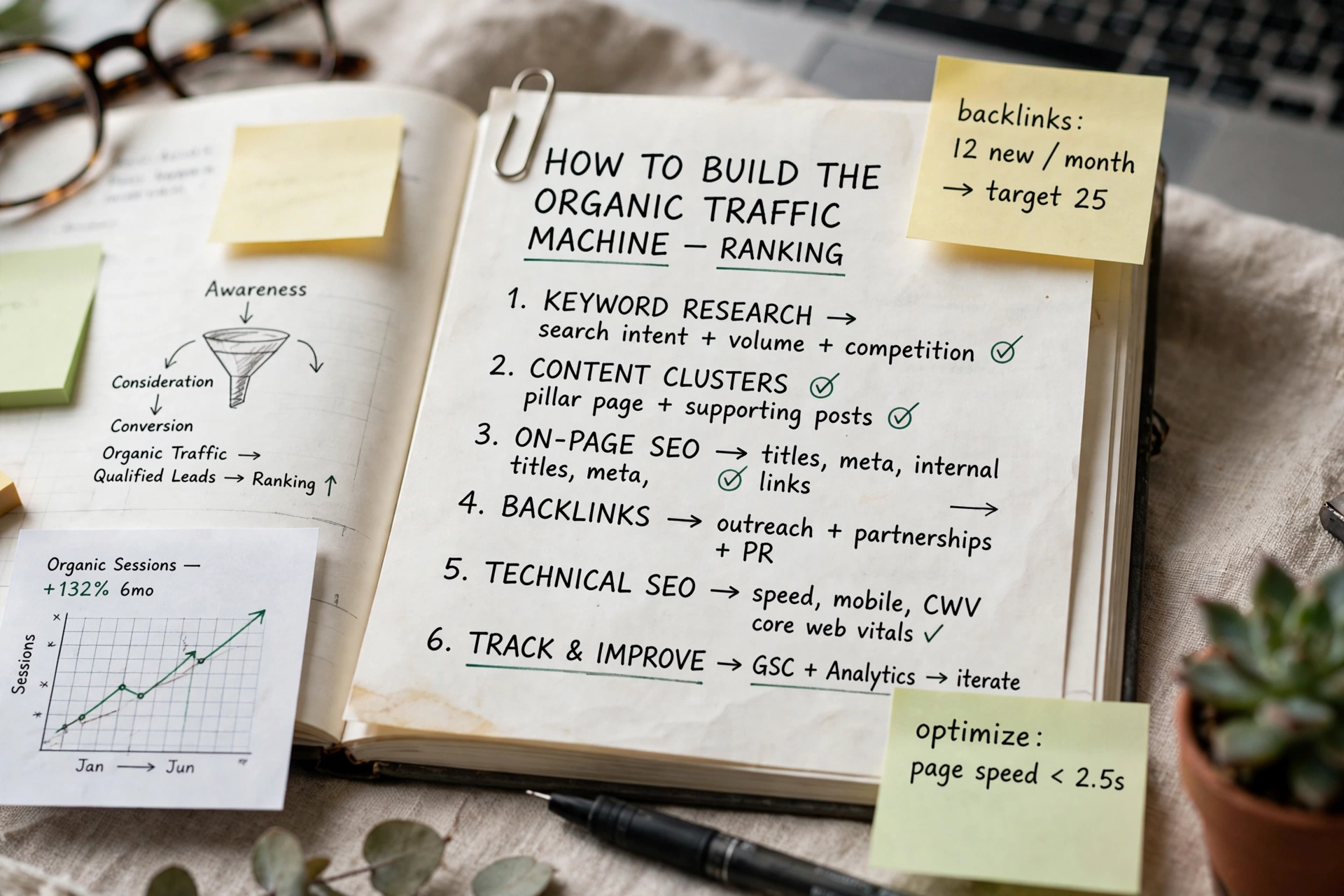
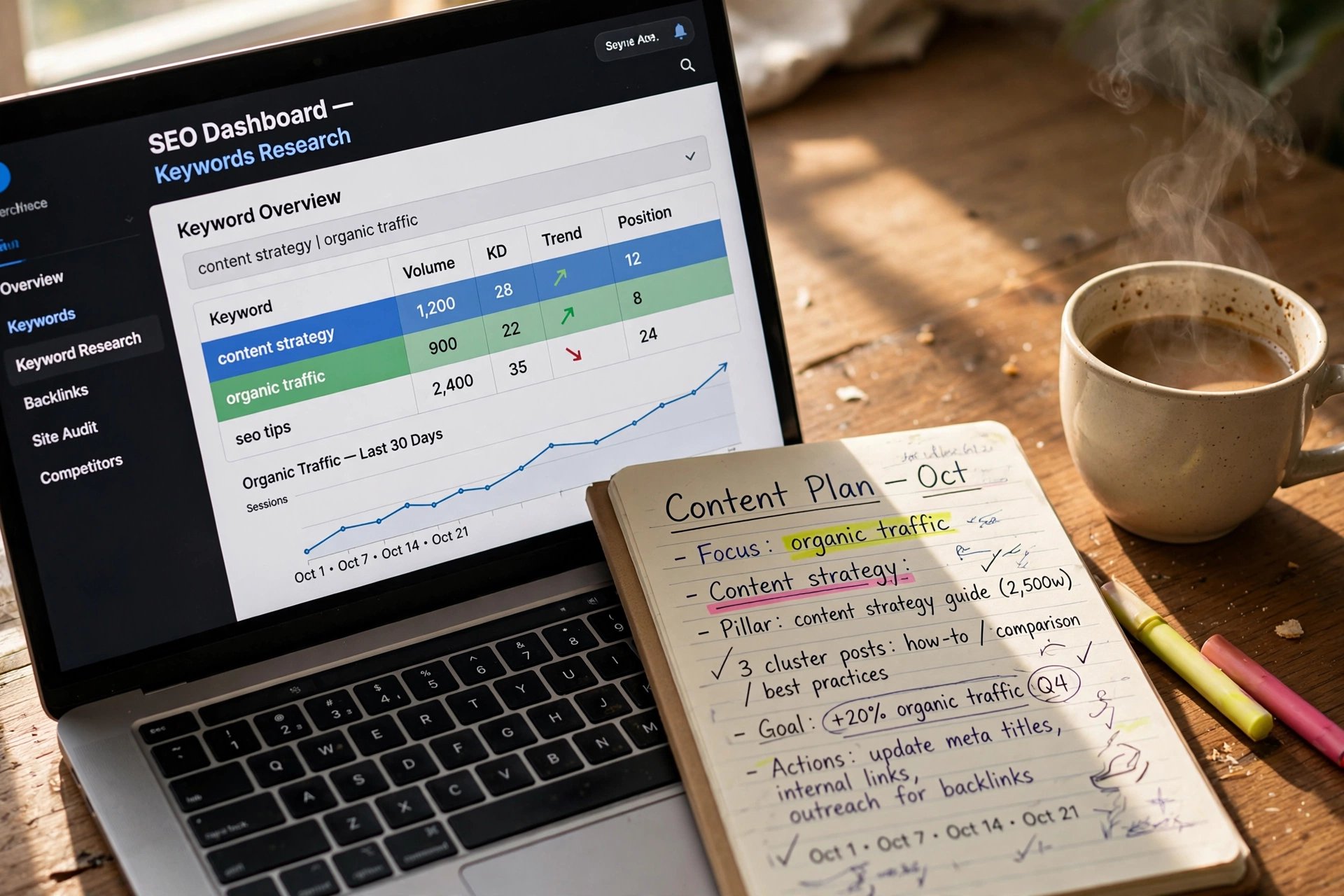
Stop guessing what people want. Use a combination of search data and actual customer interview transcripts. Identify your "Pillar" topic, the core service you provide. Then, map every single "Satellite" query. These are the "How," "Why," and "Comparison" questions that lead a buyer to the Pillar.
Step 2: Developing the Data Layer
You cannot write 500 pages manually. You need a data layer, a spreadsheet or database containing the variables for your niche. For example, if you are a consulting firm, your variables might be [Industry] + [Problem] + [City]. By combining these, you create a template that generates hyper-specific pages like "AI Implementation for Law Firms in Chicago."
Step 3: Deploying the Programmatic Engine
Use a headless CMS or a specialized tool to push these pages live. This is where most businesses fail; they try to do this in a standard WordPress setup and end up with "thin content" penalties. You must ensure each page has unique value, structured schema markup, and a clear internal link back to the pillar.
Step 4: Implementing the Conversion Layer
Traffic is useless if it doesn't convert. This is where BizAI Intelligence Solutions changes the game. Instead of a static "Contact Us" form, each page should have a context-aware AI agent. If a user lands on a page about "Tax Law for Startups," the AI agent should start the conversation by referencing startup tax challenges, not a generic "How can I help you?"
💡
Key Takeaway
The secret to scaling organic traffic is not writing more content, but creating a repeatable template based on a data layer that allows you to solve a thousand specific problems at scale.
For those in the professional services space, scaling this requires a dedicated AI customer acquisition bot for consulting firms to handle the influx of leads that a programmatic surge creates. Without an automated qualification layer, your sales team will be overwhelmed by low-quality leads.

Choosing Your Growth Architecture: Comparison of Approaches
Not all organic strategies are created equal. Depending on your budget and time horizon, you might choose a different path.
| Approach | Speed to Results | Scalability | Risk Level | Best For |
|---|---|---|---|---|
| Manual Content | Slow | Very Low | Low | Small brands with unique, rare insights |
| Generic AI Spam | Fast | High | Very High | Low-ticket affiliate sites (Dangerous for B2B) |
| Programmatic Machine | Medium | Infinite | Low | High-ticket B2B and Service Businesses |
The "Generic AI" approach is a trap. I've seen dozens of companies use basic LLMs to pump out 100 articles a week, only to be wiped out by a Google Helpful Content Update. The difference between "AI spam" and a "Programmatic Machine" is the data layer and the human-led strategy. A true machine uses AI to assemble data into a helpful format, not to hallucinate "expert" advice.
If you are running a service business in a specific region, such as needing the best SEO agency for service business in Kansas City, the programmatic approach allows you to dominate not just the city, but every suburb and neighborhood, capturing local intent that manual blogging would miss.
Common Misconceptions About Organic Scaling
Most guides on organic growth are outdated. They still talk about "keyword density" and "backlink building" as the primary drivers. Here is where the industry gets it wrong.
Myth 1: You need a massive budget for high-quality backlinks.
Wrong. In 2026, topical authority beats raw link counts. If you have 500 pages that comprehensively cover every aspect of "AI for Accountants," Google recognizes you as the authority regardless of how many external sites link to you. The internal linking structure of your machine does the heavy lifting.
Myth 2: AI content is automatically penalized.
This is a common misunderstanding. Google does not penalize AI content; it penalizes unhelpful content. If your programmatic pages solve a user's problem faster than a human-written page, you will rank. The key is adding "Experience" (the E in E-E-A-T). Using phrases like "In my experience" or citing real client results prevents the content from feeling like "AI slop."
Myth 3: You should focus on high-volume keywords first.
This is the fastest way to fail. High-volume keywords are the most competitive and often have the lowest conversion rates. The real money is in the "zero-volume" keywords, queries that tools like Ahrefs say have no traffic, but are actually being searched by high-intent buyers.
Frequently Asked Questions
How long does it take for an organic traffic machine to start generating leads?
Depending on the competitiveness of your niche, you typically see initial movement within 30 to 60 days, with significant compounding growth occurring between months 3 and 6. Unlike paid ads, which are instant, organic machines require a "trust window" where Google indexes your pages and validates your topical authority. However, because programmatic SEO deploys hundreds of pages at once, you can hit a critical mass of traffic much faster than a company publishing two blog posts a week. After the initial index, the growth becomes exponential rather than linear.
Does programmatic SEO risk a "thin content" penalty from Google?
Only if you use a "spin-and-win" approach where pages are nearly identical. To avoid penalties, your data layer must be robust. Each page should have unique data points, different headings, and specific localized or industry-specific context. For example, a page targeting "HVAC repair in Austin" should mention local climate conditions or specific regional building codes. When you provide genuine utility and a superior user experience, Google views the scale as a benefit to the user, not as spam.
How do I handle internal linking without creating a "link farm"?
The secret is a strict silo structure. Your satellite pages should link back to the pillar page and to a few highly relevant sibling satellites, but they should never link randomly across the site. This creates a "topical cluster" that tells search engines exactly what your site is about. For instance, if you are using a search traffic automation software for franchise brands, your franchise-specific pages should link to your core "Franchise Growth" pillar, creating a concentrated bubble of authority.
Can I build an organic traffic machine without a technical background?
While the logic is simple, the execution requires a specific technical stack. You need a way to map data to templates and push that content via API or a programmatic CMS. This is why most founders partner with a specialized system. Trying to do this manually in a standard editor is a recipe for burnout. Using a system like BizAI Intelligence Solutions allows you to focus on the strategy and the "data layer" while the technical deployment and AI-qualification are handled autonomously.
How do I measure the ROI of an organic machine versus paid ads?
You must look at the "Cost Per Acquisition" (CPA) over a 12-month window. Paid ads have a flat CPA that usually increases over time. An organic machine has a high upfront cost (the build phase) but a plummeting CPA as traffic grows. According to McKinsey, businesses that transition from a purely paid model to a hybrid organic-led model see a 3x increase in lead quality because the users are actively seeking solutions, rather than being interrupted by an ad.
Final Thoughts on Building Your Organic Traffic Machine
The era of "hoping for traffic" is over. In 2026, the winners in B2B will be those who treat their organic presence as a software product. By deploying a programmatic architecture, you stop renting your growth and start owning the infrastructure that fuels it.
Whether you are looking to scale your firm with an AI driven growth platform or simply want to stop the bleeding of your ad budget, the path is the same: map your intent, build your data layer, and automate your qualification.
If you are tired of the volatility of paid ads and want to build a compounding asset that fills your pipeline while you sleep, it's time to move beyond the blog. Visit BizAI Intelligence Solutions to see how we deploy the dual-engine architecture of programmatic traffic and autonomous AI qualification to dominate your niche.
Only 12 Onboarding Slots Remaining This Month
BizAI deploys 300 AI salespeople scoring purchase intent 24/7. Get your free niche domination blueprint.
AI Search Accelerator: 1-on-1 Strategy Session
Claim one of the 10 monthly slots. Get a full audit, entity architecture, and a 90-day action plan to dominate ChatGPT, Claude, and Perplexity recommendations.