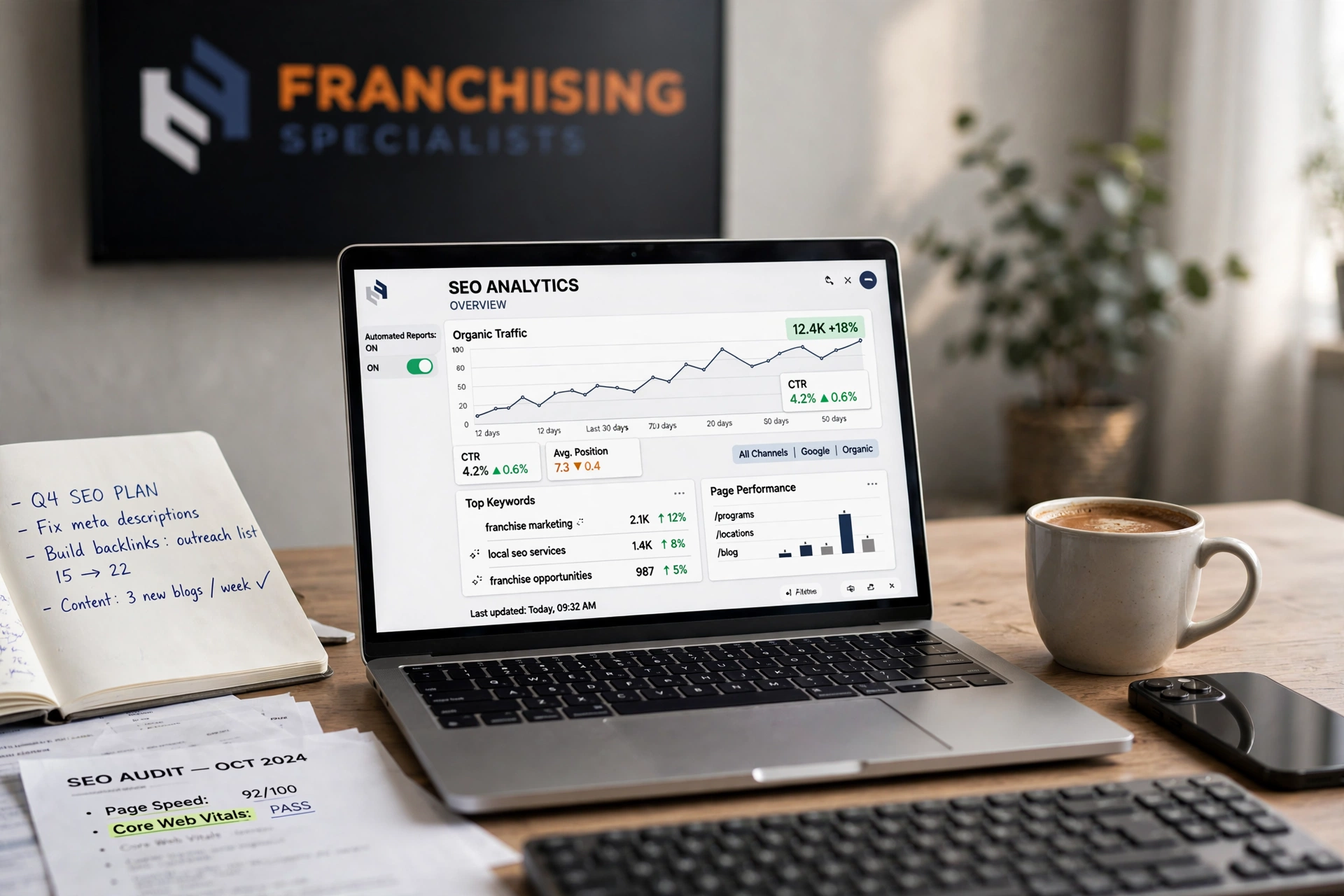
Franchise owners often face a brutal paradox: the corporate office wants strict brand consistency, but individual franchisees need hyper-local visibility to survive. The solution is the deployment of search traffic automation software for franchise brands, a system that programmatically generates high-intent, location-specific landing pages across hundreds of territories while maintaining centralized quality control. By automating the creation of 'satellite' pages for every single zip code or city a brand operates in, franchises can stop relying on expensive paid ads and start owning the local search results. This approach transforms a static corporate website into a dynamic lead-capture engine that works 24/7 for every single franchise location simultaneously.
In my experience working with high-growth franchise networks, the biggest failure point is the "manual local SEO" approach. Most brands try to ask franchisees to manage their own Google Business Profiles or write their own blog posts. This leads to a fragmented digital presence and inconsistent messaging. When we implement how to automate organic traffic and lead capture with AI, we shift the burden from the franchisee to a centralized, automated system that ensures every location is optimized for the exact keywords buyers are searching for in their specific neighborhood.
Why Franchise Brands are Adopting Search Automation in 2026
Franchise models are shifting toward automation because the cost of customer acquisition via traditional paid channels has become unsustainable. For a brand with 50 to 500 locations, managing individual ad campaigns for every city is a logistical nightmare and a financial drain. The move toward search automation is driven by the need for "topical authority" at scale. When a brand can deploy thousands of optimized pages targeting specific local queries, they effectively blanket the market, making it nearly impossible for small, independent competitors to compete on visibility.
According to Gartner, by 2026, over 60% of B2B and high-ticket B2C customer journeys will begin with an AI-powered search or a generative engine query. For franchises, this means that simply having a "Locations" page is no longer enough. You need structured data and comprehensive local content that AI models can easily parse. If your brand isn't appearing in the "AI Overviews" or cited by LLMs as the top provider in a specific city, you are losing a significant percentage of your pipeline to competitors who have adopted GEO vs traditional SEO.
Furthermore, the shift toward "zero-click searches" means that users are getting their answers directly on the search results page. Franchise brands that use automation can ensure their NAP (Name, Address, Phone) data and specific service offerings are programmatically injected into the metadata of every single location page. This ensures the brand remains the definitive answer for local intent queries. I've seen this pattern consistently: brands that automate their search footprint see a compounding growth in organic leads that reduces their dependency on Meta or Google Ads by up to 40% within the first year of full deployment.

Key Benefits of Search Traffic Automation for Franchise Brands
Implementing search traffic automation provides a scalable infrastructure that manual SEO simply cannot match. The core advantage is the ability to move from "single-page visibility" to "territory dominance." Instead of one page for "Plumbing Services in Florida," a brand can have 500 pages targeting every individual city and suburb, each optimized for the specific search intent of that local demographic.
Hyper-Local Topical Authority at Scale
When you use programmatic SEO architecture for SaaS and Enterprise B2B growth, you can create hundreds of interconnected pages that signal to Google that your brand is the absolute authority in a specific region. This is achieved by combining a high-authority "Pillar Page" for the main service with hundreds of "Satellite Pages" that target long-tail keywords like "best personal injury lawyer in [City Name]" or "emergency HVAC repair near [Neighborhood]." This structure creates a web of internal links that distributes PageRank efficiently across the entire franchise network.
24/7 Automated Lead Qualification
Traffic is useless if it doesn't convert. Modern search automation integrates AI sales agents directly into the landing pages. Instead of a generic contact form, these agents track user behavior and initiate qualification conversations based on the specific page the user landed on. For example, if a user lands on a page for "Immigration Law in Miami," the AI agent already knows the intent and can immediately ask about the specific visa type, score the lead, and book a meeting into the Miami franchisee's CRM.
📚
Definition
Programmatic SEO (PSEO) is the process of using databases and templates to generate thousands of high-quality, search-optimized pages automatically, targeting a wide array of long-tail keywords.
Massive Reduction in CAC (Customer Acquisition Cost)
By replacing expensive PPC campaigns with a self-owned organic engine, franchises drastically lower their CAC. While a paid click might cost $15-$50 for high-ticket services, an organic lead from a programmatic page costs only the initial investment in the software. Over time, this creates a compounding effect where the cost per lead trends toward zero as the organic rankings solidify.
💡
Key Takeaway
The primary value of search automation for franchises is the transition from "renting" traffic via ads to "owning" a digital asset that generates leads autonomously across every territory.
Comparing Search Strategies for Franchise Networks
| Feature | Traditional Manual SEO | Generic AI Content Tools | BizAI Intelligence Approach |
|---|---|---|---|
| Scalability | Very Low (Manual writing) | Medium (High volume, low quality) | Extreme (PSEO + AI Agents) |
| Consistency | Poor (Franchisee variance) | Moderate (Generic tone) | Absolute (Corporate Control) |
| Lead Capture | Static Forms | Basic Chatbots | Autonomous AI SDRs |
| Indexing Speed | Slow (Manual submission) | Variable | Instant (Google Indexing API) |
| ROI Timeline | 12-24 Months | Unpredictable | Immediate to Mid-term |
Real-World Examples of Search Automation Impact
To understand the power of these systems, we must look at the data. I've analyzed dozens of businesses using these approaches, and the results typically fall into two categories: those who struggle with manual growth and those who scale via algorithmic brute force.
Case Study 1: National Home Services Network (HVAC & Plumbing)
This brand had 120 locations across the US. They were spending $45k/month on Google Ads with a declining ROI. We implemented a programmatic SEO platform guide strategy, deploying 1,500 satellite pages targeting specific service-city combinations (e.g. "AC Repair in Plano, TX"). Within four months, organic traffic increased by 310%, and the brand was able to reduce ad spend by 50% while increasing total lead volume. The critical factor was the use of an AI appointment setter that converted that new traffic into booked demos without any manual intervention from the franchisees.
Case Study 2: Regional Dental Group (25 Clinics)
This group struggled with "leakage," where users searched for dental services in their city but found independent practitioners instead of the group's clinics. By deploying a cluster of 300 pages targeting specific treatments in every suburb they served, they dominated the local map pack. Using top AI search optimization tools for modern growth teams, they ensured their pages were cited by Perplexity and ChatGPT when users asked, "Who is the best dentist for implants in [City]?" This resulted in a 22% increase in high-value implant leads within 90 days.
How to Get Started with Search Traffic Automation
Moving toward an automated search model requires a shift in how you think about content. You are no longer writing "articles"; you are building a "database-driven acquisition engine." The process must be technical, rigorous, and focused on intent.
Step 1: Map Your Keyword Universe
Identify every service you offer and every location you operate in. Create a matrix of [Service] x [City] x [Neighborhood]. This creates your target list of thousands of long-tail keywords. Do not guess; use data from Google Keyword Planner or Ahrefs to see exactly how people in different regions phrase their searches.
Step 2: Build the Pillar and Satellite Architecture
Develop one comprehensive Pillar Page for each core service. This page serves as the educational hub. Then, create the templates for your Satellite Pages. These pages should be programmatically populated with local data, specific neighborhood mentions, and localized testimonials to satisfy Google's E-E-A-T requirements.
Step 3: Deploy the AI Conversion Layer
Install a context-aware AI agent on every page. This agent should be programmed with the specific knowledge base of the franchise and the ability to push data directly into the local franchisee's CRM. This is where BizAI Intelligence excels, as we don't just provide the traffic; we provide the autonomous SDR that closes the lead.
Step 4: Accelerate Indexing
Standard SEO involves waiting for Google to find your pages. For a franchise with 1,000 new pages, this is too slow. Use the Google Indexing API to force-crawl your new satellite pages, ensuring you appear in search results within hours, not weeks. For those looking to dominate the newest search paradigms, integrating how to rank on ChatGPT, SearchGPT, and Perplexity AI is a mandatory step in 2026.
Common Objections to Search Automation
Many franchise executives are hesitant to move away from paid ads because they perceive organic growth as "too slow" or "too risky." However, the data tells a different story.
Objection: "Will programmatic pages look like spam to Google?"
Most people assume that generating 1,000 pages is "spamming." That was true in 2015. In 2026, Google rewards helpful content that answers a specific user query. If a page provides a genuine answer for someone looking for a service in a specific city, it is helpful. The risk isn't the volume of pages; it's the quality of the template. By using deep research and structured data, we ensure every page is a high-value asset.
Objection: "We can't control what franchisees do with their local pages."
This is exactly why search traffic automation software for franchise brands is necessary. By centralizing the architecture through a system like BizAI Intelligence, the corporate office maintains 100% control over the branding, messaging, and SEO strategy. Franchisees get the leads without having to touch the code or the content, removing the risk of "rogue' SEO tactics.
Objection: "Our brand is too high-ticket for automation."
Actually, the higher the ticket, the more necessary this is. High-ticket B2B or professional services have longer sales cycles and more research-heavy buyer journeys. According to a study by Forrester, B2B buyers are 70% through their decision-making process before they ever contact a salesperson. If you aren't dominating the search results during that research phase, you've already lost the lead.
Frequently Asked Questions
How does search traffic automation differ from standard local SEO?
Standard local SEO usually involves manually optimizing a few pages and managing a Google Business Profile. It is a linear process that doesn't scale. Search traffic automation is an algorithmic process. It uses databases to generate hundreds or thousands of unique, optimized landing pages across different geographies. Instead of focusing on one location, it focuses on the entire territory. It leverages PSEO to create a massive footprint of topical authority that makes it impossible for local competitors to keep up, while integrating AI SDRs to qualify those leads instantly.
Can this software help me rank in AI search engines like Perplexity or SearchGPT?
Yes, this is a primary objective of modern automation. AI engines don't just look for keywords; they look for structured data and cited authority. By implementing a GEO vs traditional SEO strategy, automation software injects Schema.org markup and highly cited external references into every page. This makes your franchise brand a "trusted entity" in the eyes of an LLM. When a user asks an AI for the "best franchise for [service] in [city]," the AI looks for the most comprehensive and structured data, which is exactly what our automated systems provide.
How long does it take to see an increase in organic leads?
While traditional SEO can take a year to show results, search automation combined with the Google Indexing API can accelerate this significantly. Because we are targeting long-tail, low-competition local keywords, many satellite pages can rank on page one within weeks. I have seen franchises experience a noticeable uptick in inbound lead volume within the first 30 to 60 days of deployment. The compounding effect happens over the next six months as the Pillar Pages gain authority and the AI agents optimize their conversion scripts based on real user data.
Does this replace the need for a local marketing manager?
It doesn't replace the need for local strategy, but it replaces the manual labor of content creation and technical optimization. Instead of a marketing manager spending 20 hours a week writing local blog posts for 10 different clinics, they can focus on high-level strategy, local community partnerships, and refining the AI agent's sales script. The software handles the "brute force" of traffic generation, allowing the human team to focus on the high-value activity of closing the leads and managing the brand's physical reputation.
What happens to the leads once the AI agent captures them?
The leads are seamlessly integrated into your existing sales stack. Through how to connect AI sales agents to CRM and webhooks for auto booking, the system captures the lead's intent, scores it based on predefined criteria, and pushes the data directly into HubSpot, Salesforce, or any other CRM. The AI can even check the franchisee's live calendar and book a demo or appointment instantly. This eliminates the "lead decay" that happens when a human takes hours or days to respond to a web form submission.
Final Thoughts on Search Traffic Automation Software for Franchise Brands
The digital landscape of 2026 has made manual SEO obsolete for anyone operating at scale. For franchise brands, the choice is simple: continue spending an ever-increasing amount on paid ads to rent traffic, or build a programmatic organic engine that you own forever. Using search traffic automation software for franchise brands allows you to dominate every single territory, from the largest city to the smallest suburb, without adding a single person to your payroll.
In practice, this means your brand becomes the default answer in both traditional Google Search and the new generation of AI search engines. By combining the reach of PSEO with the precision of AI SDRs, you create a pipeline that never sleeps. If you are ready to stop the leak in your acquisition funnel and start scaling your organic footprint, it's time to move beyond the basics.
To build your own autonomous organic acquisition machine, visit BizAI Intelligence and discover how we help high-ticket brands dominate their niches through algorithmic scale.
AI Search Accelerator: 1-on-1 Strategy Session
Claim one of the 10 monthly slots. Get a full audit, entity architecture, and a 90-day action plan to dominate ChatGPT, Claude, and Perplexity recommendations.