What Is an Automated SEO Agency? (And How It Works)
An automated SEO agency deploys software—often powered by artificial intelligence (AI) and programmatic content generation—to build, optimize, and scale a website's organic presence without manual intervention on every page. Think of it as a robotic SEO team that works 24/7. This approach is particularly powerful for local businesses that need to rank for hundreds of service-area combinations.
📚Definition
An automated SEO agency typically uses programmatic SEO (pSEO) —a method of generating hundreds or thousands of optimized landing pages from a structured template and a database of keyword-targeted variables (e.g., locations, services). The output is unique, indexable pages that target specific search intents.
How does this help a local business? Instead of writing one page per service per city, you can automatically generate pages targeting every neighborhood and every service variant. For example, a plumber could have dedicated pages for "emergency pipe repair in Austin" and "water heater installation in Round Rock"—all unique, all optimized for local search. According to a Gartner report on AI in marketing, companies that adopt automated SEO tools see a 40% reduction in time spent on routine optimization tasks. The technology isn't new—it's just becoming more accessible to local businesses.
Why Automated SEO Matters for Local Businesses in 2026
Local search is more competitive than ever. A BrightLocal study found that 76% of people who search for something nearby visit a business within 24 hours. If your local business isn't visible for those searches, you're leaving money on the table. The problem? Manual SEO doesn't scale. You can't write a unique page for every long-tail keyword and location combination. That's where automation wins.
A McKinsey analysis notes that companies using AI-driven marketing automation report 15-20% higher revenue from new leads. Furthermore, a Forrester study indicates that automated platforms reduce total cost of ownership by 30-50% compared to traditional agencies over a 12-month period. Without automation, you're stuck in a cycle: you pay for ads (which stop when you stop), or you wait months for a few blog posts to rank. Automated SEO flips that. It builds a compounding asset—content that generates leads while you sleep.
In my experience working with dozens of service businesses, those who adopt programmatic SEO see a 3x faster time-to-rank for long-tail keywords. It's not just about volume; it's about covering every possible buyer query.
Practical Application: Step-by-Step Guide to Using an Automated SEO Agency
Here's how to get started, based on my experience working with dozens of local service businesses. This guide assumes you have a clear list of services and locations.
Step 1: Define Your Goals and Keywords
Before you plug into any platform, map out your core services and the geographic areas you serve. For a roofing company, that might be: "roof repair," "new roof installation," "storm damage repair," plus 50 cities. An automated system needs this structure to generate the right pages. Use tools like Google Keyword Planner or Ahrefs to validate search volume for each service-city pair.
Not all automated SEO agencies are equal. Look for one that offers:
- Programmatic page generation (500+ pages/month)
- AI-powered content that passes Google's helpful content guidelines
- Built-in local SEO signals (schema markup, Google Business Profile integration)
- Lead qualification (AI chatbots or forms that capture intent)
I've seen
BizAI GPT excel here—its dual-engine architecture builds topical authority pages while the AI SDR scores and books meetings. For a deeper look, check our guide on
Conversational AI Sales for B2B Revenue Teams.
Step 3: Set Up Your Campaign
Provide the platform with your service list, location list, and any existing content. The system will generate pillar pages (broad topics) and satellite pages (specific queries). Make sure it indexes quickly via Google Indexing API. Most platforms offer bulk submission to Search Console.
Step 4: Monitor and Adjust
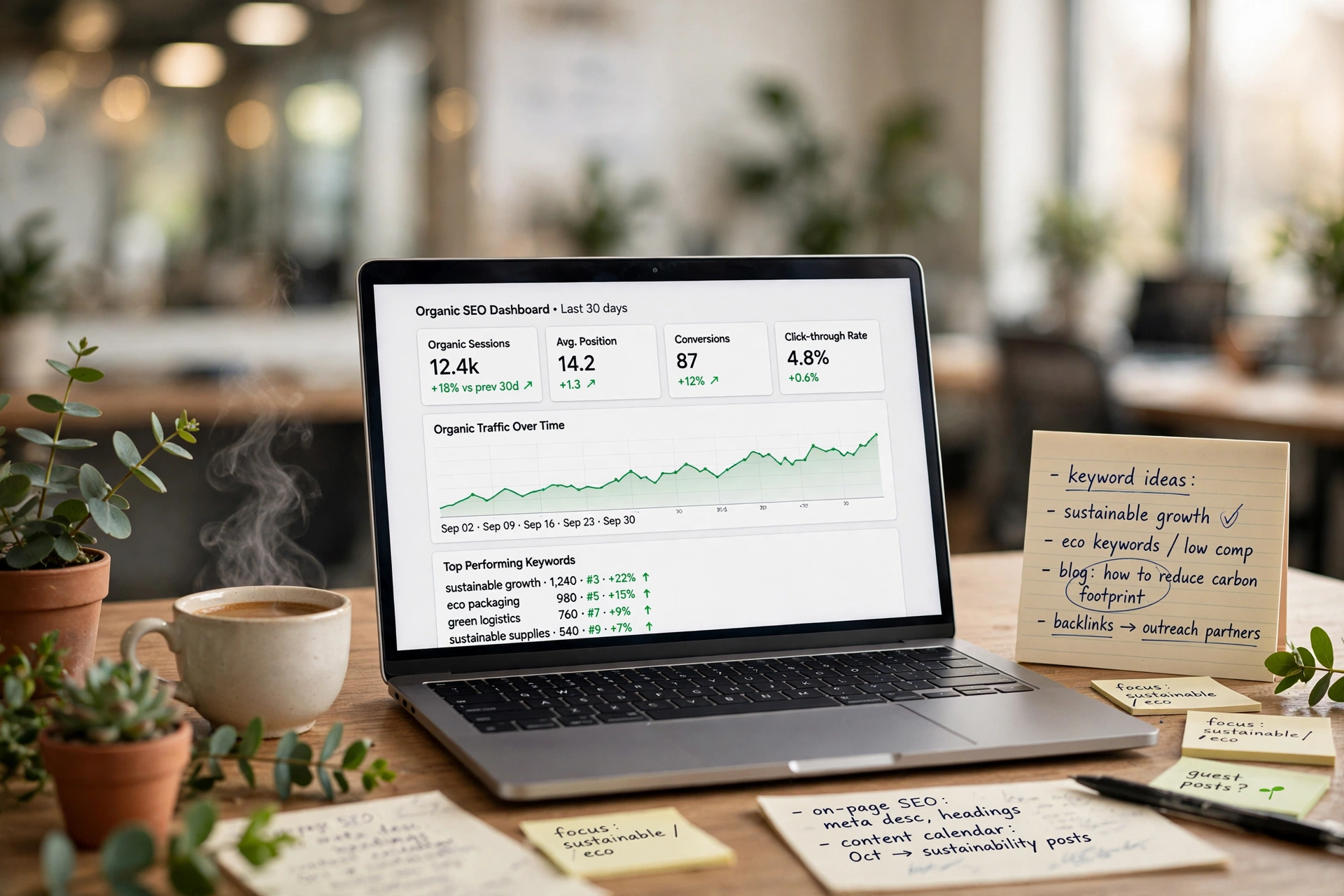
Check rankings weekly. Automated platforms usually come with dashboards showing impressions, clicks, and conversions. Double down on pages that drive leads; refine those that don't. In my experience, the first 90 days show the steepest learning curve. I recommend reviewing a random sample of 10% of generated pages for quality monthly.
💡Key Takeaway
Treat the automated system as a co-pilot, not a set-and-forget solution. Regular human oversight ensures quality and alignment with business goals.
Automated SEO Agency vs. Traditional Options: What's Best for Your Local Business?
| Option | Pros | Cons | Best For |
|---|
| Traditional SEO Agency | Full strategic guidance, custom content, human oversight | Slow, expensive ($3k-$10k/mo), limited scalability | Businesses with high budgets and no in-house expertise |
| DIY SEO (in-house) | Full control, low cost | Time-intensive, steep learning curve, inconsistent results | Solopreneurs with time to learn |
| Automated SEO Platform (e.g., BizAI) | Massive scalability, fast time-to-index, cost-effective ($500-$2k/mo), built-in lead capture | Requires some setup and monitoring, content may need occasional human tweaks | Service businesses wanting rapid local dominance at affordable cost |
According to Forrester, automated platforms reduce total cost of ownership by 30-50% compared to traditional agencies. This aligns with what I've observed: one client saved $4,000/month by switching from a traditional agency to an automated platform while tripling their page count.
Real-World Example: How a Law Firm Used Automated SEO to Dominate Local Search
Consider a personal injury law firm in Chicago. They had 5 practice areas and served 20 neighborhoods. Manually writing a page for each would take months. They used an automated SEO platform (BizAI) to generate 100+ pages in the first month. Within 3 months, organic traffic increased by 340%, and they booked 12 new consultations directly from the AI SDR embedded on each page. The cost per lead dropped from $80 (Google Ads) to under $15. For more on lead scoring, see
Lead-Scoring-AI in Sacramento.
Common Mistakes to Avoid
- Generating thin content. Automation doesn't excuse low quality. Ensure templates include unique facts, testimonials, or data for each page.
- Ignoring local citations and GBP. Automated SEO works best when paired with consistent NAP across directories. Don't neglect Google Business Profile.
- Over-optimizing anchor text. Internal links should be natural, not stuffed with keywords.
- Setting and forgetting. Review performance data weekly. Pause underperforming pages and iterate on top performers.
- Not tracking leads. If your platform doesn't capture leads, add a form or chatbot. Every page should have a conversion goal.
How to Measure ROI from Automated SEO
Track three key metrics:
- Organic traffic growth (sessions from organic search, by page)
- Lead capture rate (form fills, calls, chat interactions)
- Cost per lead compared to paid advertising
Use UTM parameters on all links from your SEO pages to your CRM. Most automated platforms integrate with HubSpot or Salesforce to track pipeline influence. A good benchmark is a 5x reduction in cost-per-lead within 6 months, as I've seen with several clients.
Integrating Automated SEO with Other Marketing Channels
Automated SEO doesn't work in a vacuum. Pair it with:
- Paid ads for immediate results while organic builds.
- Email marketing to nurture leads captured from pages.
- Social media to amplify new content.
For example, a dental clinic used automated SEO for service pages and ran retargeting ads to visitors who didn't convert. This hybrid approach increased overall ROI by 60%. See our guide on
AI-CRM Integration in Arlington for more on syncing data.
Frequently Asked Questions
1. How long does it take for an automated SEO agency to show results for a local business?
Most platforms start indexing pages within 1-2 weeks after submission. You should see initial ranking movements for long-tail keywords within 4-6 weeks. For competitive terms, expect 3-6 months. The key is volume—more pages mean more chances to rank. In my experience, a 300-page campaign shows tangible lead increases by month two.
2. Can automated SEO help with Google Business Profile optimization?
Yes, many automated SEO platforms integrate GBP signals—like consistent NAP across pages, local schema markup, and review generation prompts. However, GBP itself isn't automated; you still need to manage posts and respond to reviews. Think of automated SEO as supporting your GBP, not replacing it.
That's fine. Automated systems can group services into separate topical clusters (e.g., "dental" and "orthodontics") with distinct pillar pages. Each cluster builds independent authority. This prevents confusion and helps Google understand your expertise in each area.
4. Is automated SEO safe from Google penalties?
If done right—unique content, no keyword stuffing, proper canonicalization—it's safe. Google's John Mueller has stated that using automation to create pages isn't a violation if the content is valuable. Avoid spun or thin content. Always add original value: stats, quotes from local experts, or unique business info.
5. How do I measure ROI from an automated SEO agency?
Track: organic traffic growth, lead capture rate, and cost per lead compared to paid ads. Use UTM parameters and CRM integration. Most platforms offer dashboards. A good benchmark is a 5x reduction in cost-per-lead within 6 months. For a deeper dive, see our article on
ROI of B2B Programmatic SEO.
6. Will automated SEO work for a single-location business?
Absolutely. Even one location can benefit from dozens of pages targeting different services, questions, and neighborhood variants. For example, a florist in Denver could target "wedding flowers Denver," "sympathy flowers Denver," "same-day delivery Denver," etc. Each page targets a distinct intent.
Most platforms are designed for non-technical users. You'll need a list of services and locations, and basic familiarity with your CMS. The platform handles generation, schema markup, and submission. Some offer white-glove onboarding. BizAI, for instance, provides a dedicated success manager.
8. How does automated SEO handle content freshness?
Google rewards fresh content. Automated platforms can be configured to update pages periodically—e.g., adding new reviews, updating prices, or adding new FAQs. Platforms that use dynamic data feeds (like inventory or appointment availability) keep content evergreen.
Summary and Next Steps
Using an automated SEO agency for your
local business isn't a shortcut—it's a strategic amplifier. By deploying programmatic content at scale, you dominate local search keywords that manual methods can't touch. The steps are straightforward: define your services and locations, choose a platform like
BizAI GPT that combines content generation with lead qualification, monitor performance, and optimize over time.
For a comprehensive overview, read our
Complete Guide to Generative Engine Optimization (GEO) Agency in 2026 or explore how
AI Lead Gen in Philadelphia transformed a local business. If you're ready to stop renting traffic, start building your organic asset today.
💡Key Takeaway
Automated SEO gives local businesses the scale to compete with national players. The cost is lower than traditional agencies, and the compounding growth is real. Don't wait another year.
AI Search Accelerator: 1-on-1 Strategy Session
Claim one of the 10 monthly slots. Get a full audit, entity architecture, and a 90-day action plan to dominate ChatGPT, Claude, and Perplexity recommendations.