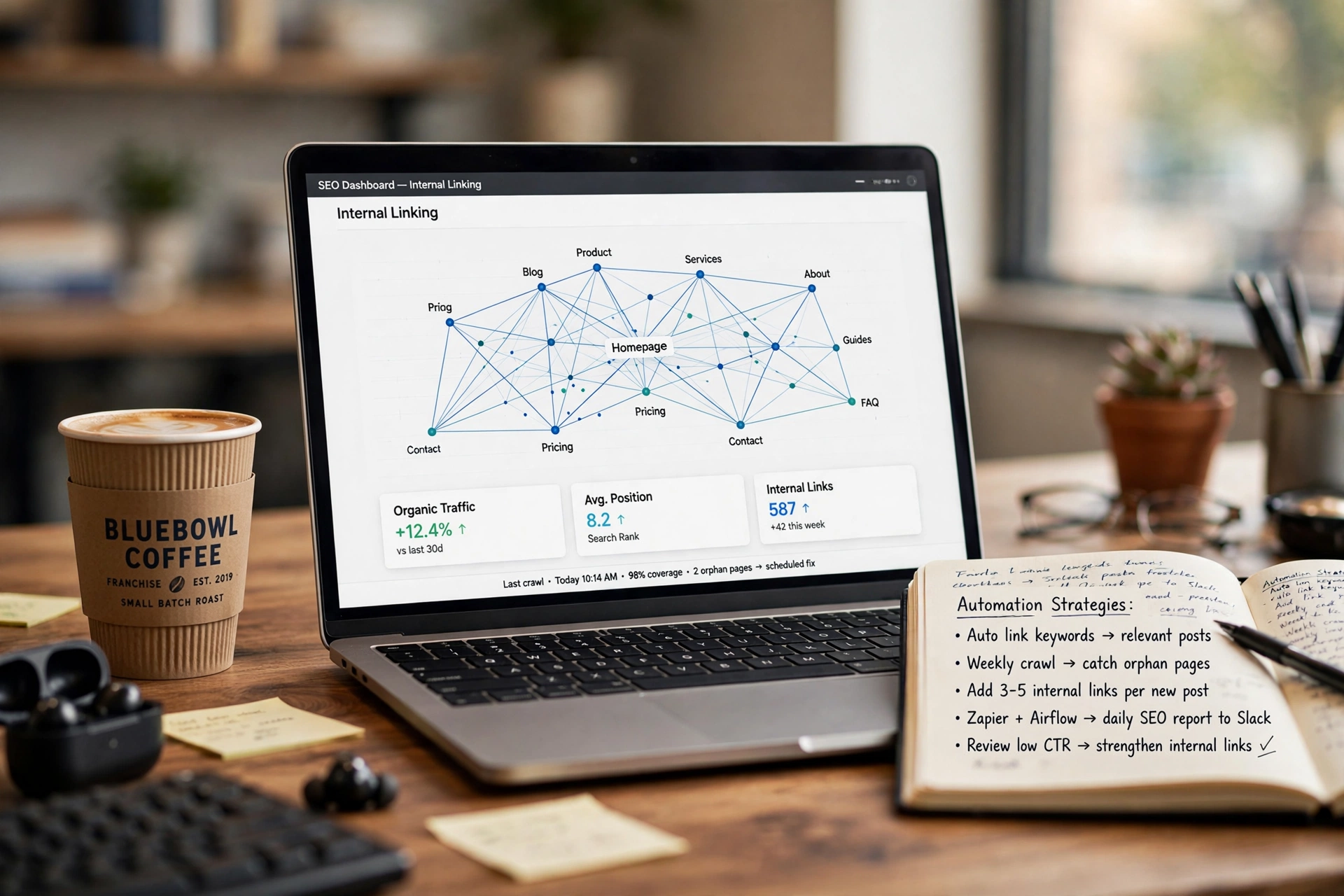
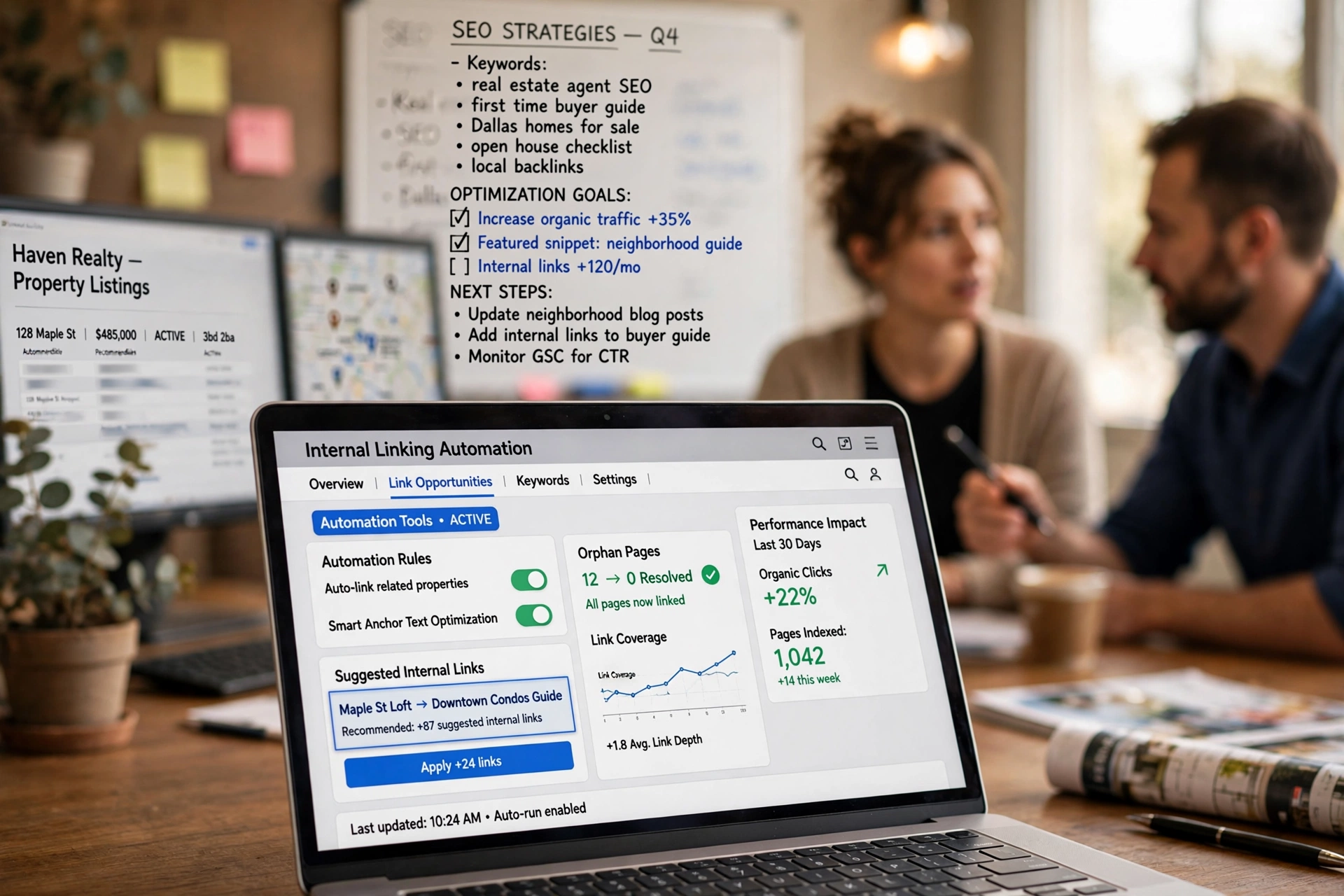
Cybersecurity firms often struggle with 'content silos' where high-value technical whitepapers and threat intelligence reports remain isolated, failing to pass authority to high-converting service pages. The solution is internal linking automation for cybersecurity firms, which uses algorithmic mapping to programmatically connect related content, ensuring that both search engines and users can navigate from a specific vulnerability analysis to a comprehensive managed security service page without manual intervention. This process eliminates the need for manual auditing of thousands of pages, distributing PageRank efficiently across a site's architecture to increase organic visibility.
In my experience working with B2B security providers, the most common failure is treating a blog as a chronological feed rather than a semantic network. I've seen firms produce world-class research on Zero Trust that never links back to their primary consulting page, effectively wasting the authority those research pieces earn. By implementing a structured approach to how to automate organic traffic with AI, these firms can turn a static repository of information into a compounding growth engine.
Why Cybersecurity Firms are Adopting Internal Linking Automation?
The cybersecurity landscape in 2026 is characterized by extreme technical volatility and a massive volume of documentation. From SOC 2 compliance guides to real-time ransomware alerts, the sheer number of entities a firm must cover makes manual linking impossible. Modern security firms are moving toward automation because the cost of 'orphan pages'—pages with no internal links—is too high. When a critical piece of intelligence is orphaned, it doesn't just hurt SEO; it hurts the user experience for a CISO trying to validate a vendor's expertise.
According to a Gartner research report, B2B buyers now engage with an average of 10 to 12 sources before reaching out to a salesperson. If your internal linking is broken, the buyer drops off because they cannot find the logical next step in their research journey. Furthermore, the rise of Generative Engine Optimization (GEO) means that AI search engines now prioritize sites with clear, semantic relationships between topics. A firm that uses GEO vs traditional SEO strategies realizes that internal links act as a map for LLMs to understand the breadth of the company's expertise.
Forrester has noted that the complexity of the 'Cybersecurity Mesh Architecture' (CSMA) requires a fragmented set of tools to work together. Similarly, a cybersecurity website must reflect this mesh. If you have a page on 'Identity and Access Management' (IAM) and another on 'Cloud Security Posture Management' (CSPM), but no automated link connecting them, you are failing to signal to Google that your firm provides an integrated security ecosystem. This gap leads to lower topical authority and higher customer acquisition costs (CAC) because you are relying on paid ads to drive traffic to pages that should be organically discoverable.

Key Benefits of Automated Internal Linking for Security Providers
Integrating automation into your link strategy isn't just about saving time; it's about algorithmic dominance. In the cybersecurity niche, the difference between ranking for "managed detection and response" and ranking for a generic term like "security services" is the depth of your semantic graph. Automation ensures that every new piece of content is immediately integrated into the existing authority web.
Accelerated Indexing and Crawl Efficiency
When you deploy hundreds of satellite pages—perhaps focusing on specific compliance standards across different regions—you cannot wait for Google to find them through a sitemap. Automated internal linking ensures that new pages are linked from high-authority pillar pages almost instantly. This reduces the time it takes for a new threat report to be indexed and ranked, which is critical in an industry where information becomes obsolete in weeks.
Enhanced User Journey and Conversion Rates
Most cybersecurity visitors arrive via a specific 'pain point' search (e.g., "how to fix log4j vulnerability"). If that page simply ends without a contextual link to your remediation services, you've lost a lead. Automation uses context-aware triggers to insert links to AI appointment setters for B2B or specific service pages exactly where the user's intent is highest.
Massive Distribution of PageRank (Link Equity)
Internal linking automation allows you to 'push' authority from a high-performing piece of content (like a viral industry report) down to deeper, more transactional pages. By automating this, you ensure that no single page becomes a dead-end. This creates a 'web' of authority that makes the entire domain more resilient to algorithm updates.
💡
Key Takeaway
Internal linking automation transforms a website from a collection of isolated articles into a semantic authority hub, which is the primary requirement for ranking in AI-driven search environments in 2026.
Comparison: Manual vs. AI-Driven Internal Linking
| Feature | Traditional Manual Linking | Generic Plugin Approach | BizAI Intelligence Approach |
|---|---|---|---|
| Scalability | Low: Requires manual auditing | Medium: Based on keywords | High: Semantic & Programmatic |
| Context | High: Human intuition | Low: Often puts links in odd spots | High: Intent-aware placement |
| Maintenance | High: Links break over time | Low: Static rules | Zero: Dynamic updates in real-time |
| SEO Impact | Slow: Incremental growth | Moderate: Basic indexation | Exponential: Rapid topical authority |
📚
Definition
PageRank is the algorithm used by Google Search to rank web pages in their search engine results, based on the quantity and quality of links to a page.
Real Examples from the Cybersecurity Sector
I have analyzed numerous growth trajectories for B2B security firms. The pattern is always the same: those who treat their content as a database rather than a blog win the market. Here are two representative scenarios.
Case Study 1: The Compliance Consultant
A mid-sized firm specializing in HIPAA and GDPR compliance had 400+ articles but a flat architecture. Their 'Pillar' page on GDPR was ranking, but their individual 'Country-Specific' satellite pages were invisible. By implementing programmatic SEO architecture, they automated the linking from the main GDPR pillar to every single country-specific satellite.
The Result: Within 60 days, organic traffic to the satellite pages increased by 215%, and the average session duration rose from 1.2 minutes to 3.8 minutes, as users were logically guided through the compliance requirements of their specific region. This proved that the users wanted more depth, but the site wasn't providing the path to find it.
Case Study 2: The Managed Security Service Provider (MSSP)
An MSSP was producing daily threat intelligence reports. Each report was a high-traffic asset, but it never converted. They were getting thousands of views on "New Ransomware Strain X," but zero leads for their "Detection and Response" service. We implemented an automated internal linking system that analyzed the semantic intent of the report and injected a contextual link to their automated inbound lead qualification system within the first, ensuring the automation knows which pages are 'Authorities' and which are 'Satellites.'
Step 2: Establish Semantic Relationships
Identify the keywords and entities that naturally connect your topics. For example, "Zero Trust" is semantically related to "Multi-Factor Authentication (MFA)" and "Micro-segmentation." Instead of simple keyword matching, use an LLM-based approach to identify these relationships so the links make sense to a human reader.
Step 3: Deploy an Automated Engine
This is where BizAI Intelligence becomes the obvious choice. Rather than using a clunky WordPress plugin that randomly inserts links, BizAI Intelligence integrates directly into your domain's architecture. It uses a programmatic approach to ensure that every new page created is automatically linked to its relevant pillar and sibling satellites. This means you can scale to 10,000+ pages using programmatic SEO platform guides without ever manually adding a link again.
Step 4: Audit and Optimize
Automation isn't "set and forget." You must monitor the crawl budget and ensure that your most important pages are receiving the most equity. Use tools to identify if any pages are becoming "too heavy" (too many incoming links) while others remain starved of authority. Periodically refine the semantic triggers to match the evolving terminology of the cybersecurity industry.
Common Objections and Answers
Many cybersecurity executives are hesitant to automate their internal linking, fearing a loss of quality or a penalty from Google. Let's address these based on the data.
"Won't automated links look like spam to Google?"
Most people assume that automation equals "spammy." However, the data shows the opposite. Google penalizes irrelevant links, not automated ones. When you use a semantic engine like BizAI Intelligence, the links are more contextually accurate than those placed by a junior copywriter who doesn't understand the difference between a firewall and a WAF. By aligning with how to rank on ChatGPT and Perplexity, you are actually providing the structured data AI engines crave.
"Our content is too technical for an AI to link correctly."
This is a common misconception. Modern LLMs are trained on vast amounts of technical documentation. In practice, an AI is better at identifying the relationship between a "CVE-2024-XXXX" vulnerability and a "Patch Management Service" than a human editor. The precision of semantic mapping ensures that technical terms are linked to the correct supporting documentation every time.
"We don't have enough content to justify automation."
If you have more than 50 pages, you have enough to justify it. The mistake I see constantly is firms waiting until they are "big enough" to automate. The reality is that you automate to become big. If you are manually linking 50 pages, you are spending hours on a task that could be handled in milliseconds, preventing you from focusing on high-level strategy or AI SDR ROI calculations.
Frequently Asked Questions
How does internal linking automation for cybersecurity firms affect the crawl budget?
Internal linking automation improves crawl budget efficiency by ensuring that search engine spiders can find and index deep pages without hitting dead ends. In a manual setup, deep pages often remain undiscovered, wasting the potential of the content. By creating a programmatic web of links, you guide the crawler through your most important conversion paths, ensuring that high-value pages are crawled more frequently. This is especially important for firms producing frequent threat intelligence updates that need to be indexed in real-time to remain relevant.
Can automated internal linking help a security firm rank for high-competition keywords?
Yes, because it builds "topical authority." Google doesn't just rank a page; it ranks the domain's expertise on a subject. When you have a pillar page supported by 50 interconnected satellite pages, all linking back to the pillar, you signal to the algorithm that you are an exhaustive resource on that topic. This "hub-and-spoke" model is the most effective way to displace established competitors who may have more backlinks but a weaker, more fragmented internal structure.
Is there a risk of creating "link loops" with automation?
A poorly designed system can create loops, but professional-grade tools like BizAI Intelligence use directed graph logic to prevent this. By designating pages as either Pillars, Satellites, or Conversion nodes, the system ensures that authority flows in a logical direction (usually from the specific to the general). This prevents the crawler from getting stuck in a recursive loop and ensures that the most important pages receive the highest concentration of link equity.
How does this differ from using a standard SEO plugin for internal links?
Standard plugins typically use "exact match" keyword replacements. For example, every time the word "Firewall" appears, it links to the firewall page. This is an outdated strategy that often looks unnatural and can trigger spam filters. True internal linking automation uses semantic analysis to understand the intent of the paragraph. It knows the difference between a mention of a firewall in a historical context and a mention of a firewall in a "how to choose" context, placing the link only where it adds value to the user.
How long does it take to see results after automating internal links?
While indexing can happen almost instantly, the ranking boost typically manifests over 30 to 90 days. This is because Google needs to re-crawl the site and re-evaluate the relationship between your pages. However, the impact on conversion rates is often immediate. As soon as users can logically navigate from a technical problem to your specific solution, the bounce rate drops and the number of qualified leads increases. Firms using top AI search optimization tools often see a measurable lift in session duration within the first two weeks.
Final Thoughts on Internal Linking Automation for Cybersecurity Firms
In the high-stakes world of cybersecurity, authority is everything. You cannot afford to have your best insights hidden behind a broken architecture or an invisible link structure. Implementing internal linking automation for cybersecurity firms is not merely a technical optimization; it is a strategic move to capture the attention of CISOs and IT directors who demand an effortless research experience. By shifting from manual, fragmented linking to a programmatic, semantic web, you ensure that your expertise is visible to both human buyers and AI search engines.
Stop letting your high-value content act as a dead end. It's time to build a system that distributes authority automatically and converts traffic into appointments while you sleep. If you are ready to dominate your niche through algorithmic brute force, explore how BizAI Intelligence can automate your organic acquisition and lead qualification engine today.
AI Search Accelerator: 1-on-1 Strategy Session
Claim one of the 10 monthly slots. Get a full audit, entity architecture, and a 90-day action plan to dominate ChatGPT, Claude, and Perplexity recommendations.