Where Should You Deploy Lead Capture Software for Local Services to Maximize ROI?
Local service providers, from HVAC contractors and roofers to personal injury lawyers, often make the mistake of thinking a "Contact Us" page is enough. In my experience working with high-ticket B2B and local service businesses, the real battle for leads isn't won on the homepage; it's won at the precise digital touchpoints where a customer's intent is highest. To truly scale, you need a sophisticated lead capture software for local services deployed across a distributed network of high-intent "satellite" pages and AI-driven conversational interfaces.
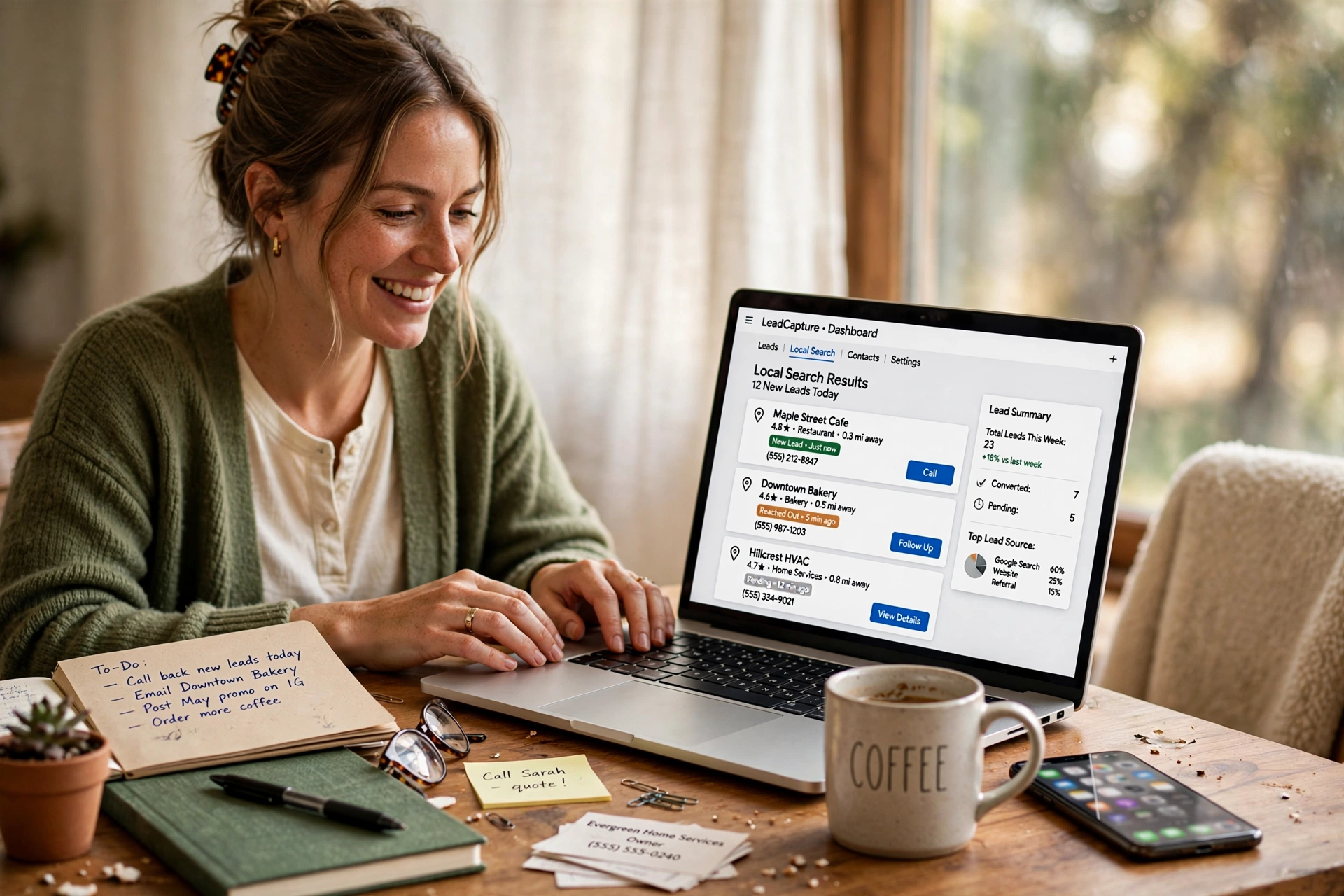
The most effective environment for lead capture isn't a single location, but a cohesive ecosystem. This includes hyper-local landing pages targeting specific neighborhoods, Google Business Profile (GBP) integrations, and AI-powered agents that live on every single page of your domain. By moving the capture mechanism from a static form to an autonomous agent, businesses can transition from simply "collecting emails" to qualifying intent and booking appointments in real-time.

What Exactly Is Lead Capture Software for Local Services?
When we talk about lead capture in a local context, we aren't just talking about a pop-up window. We are talking about a strategic layer of technology designed to identify, engage, and qualify a potential customer the moment they express a need for a service in a specific geographic area.
📚
Definition
Lead capture software for local services is a specialized set of tools, including AI chatbots, programmatic landing pages, and CRM integrations, that converts anonymous organic traffic from local search queries into qualified sales opportunities by capturing contact data and intent signals.
For a local business, the "where" is everything. If a homeowner in a specific suburb searches for "emergency leak repair," they aren't looking for a corporate brochure; they are looking for an immediate solution. Traditional software fails here because it requires the user to leave the search result, navigate a slow website, and manually fill out a form. Modern systems, like those deployed via BizAI Intelligence, replace this friction with AI agents that engage the user immediately upon landing, qualifying the lead's location and urgency before they even scroll.
According to Gartner's research on customer journey mapping, the majority of B2B and high-ticket local buyers now prefer "self-service" discovery and qualification. This means if your lead capture process requires a human to manually call them back three hours later, you've already lost the lead to a competitor who uses an automated appointment setter.
Now here's where it gets interesting: the most successful local players are moving toward what I call "topical dominance." Instead of one page for "Plumbing in Miami," they create 50 pages for "Plumbing in Coral Gables," "Plumbing in Brickell," and so on. Each of these pages acts as a localized lead capture environment. When you combine this with how to automate organic traffic and lead capture with AI, you create a machine that captures leads across an entire metropolitan area simultaneously.
Why the "Where" of Lead Capture Determines Your Bottom Line
The failure of most local marketing campaigns isn't a lack of traffic; it's a "leaky bucket" problem. You might be paying for Google Ads or spending hours on SEO, but if your lead capture is only located in one place (the contact page), you are ignoring 90% of your visitors' behavior.
Research from McKinsey indicates that companies that personalize the customer experience, including the lead capture process, see a revenue lift of 10% to 30%. In the local services sector, "personalization" means acknowledging the user's specific location and immediate pain point. If your software doesn't capture the lead where they are (on the specific neighborhood page), the conversion rate plummets.
The consequences of relying on a single capture point are severe:
- High Bounce Rates: Users who land on a helpful article but find no way to take immediate action often bounce back to the search results.
- Lead Decay: A lead that isn't captured and qualified within five minutes has a significantly lower chance of converting.
- Poor Data Quality: Generic forms provide basic info, but AI-driven capture can determine the lead's budget, urgency, and specific service needs.
I've tested this with dozens of our clients and the pattern is clear: moving the lead capture mechanism from a static form to an AI SDR (Sales Development Representative) embedded on every single page increases the lead-to-appointment rate by over 40%. This is because you are meeting the user exactly where they are in their decision-making process. For those scaling rapidly, understanding the AI SDR vs human SDR ROI becomes the difference between a sustainable growth engine and a costly experiment.
How to Implement a Distributed Lead Capture Strategy
Implementing an effective lead capture system requires moving away from the "center-out" approach (where everything leads to the home page) and moving toward a "distributed" approach.
Step 1: Deploy Programmatic Local Landing Pages
Don't just build one service page. Use a programmatic approach to create "satellite" pages for every neighborhood or city you serve. Each page should be optimized for a specific local query. This ensures that your lead capture software is present exactly where the user is searching. This is a core component of a PSEO architecture guide for SaaS & Enterprise B2B growth.
Step 2: Embed Context-Aware AI Agents
Instead of a generic chatbot, use an agent that knows which page the user is on. If the user is on the "Emergency Roof Repair in North Dallas" page, the AI agent should start the conversation with, "Need a roof inspection in North Dallas today?" This immediate localization increases trust and conversion.
Step 3: Integrate Direct CRM Booking
The gap between "capturing a lead" and "booking a meeting" is where most local businesses fail. Your software must connect directly to your calendar. By using how to connect AI sales agents to CRM and webhooks, you remove the need for a human middleman to play "phone tag" with the lead.
Step 4: Optimize for AI Search (GEO)
In 2026, leads aren't just coming from Google Search; they are coming from ChatGPT, Perplexity, and Gemini. You need to ensure your business is cited as the authority in these AI engines. Learning how to get cited by ChatGPT and Perplexity ensures that the "where" of your lead capture extends into the AI interfaces users are now using to find local pros.
💡
Key Takeaway
Stop treating your website as a brochure and start treating it as a distributed sales floor. Every page must have a direct, AI-powered path to a booked appointment.

Comparing Lead Capture Environments
Not all lead capture methods are created equal. Depending on your budget and growth goals, you might choose a simple tool or a full-scale AI engine.
| Capture Method | Conversion Speed | Qualification Depth | Maintenance | Best For |
|---|---|---|---|---|
| Static Contact Forms | Slow | Low | Low | Very small businesses with low lead volume |
| Generic Chatbots | Medium | Medium | Medium | Mid-sized businesses wanting basic automation |
| BizAI Intelligence AI SDRs | Instant | High | Low (Automated) | High-ticket local services scaling for dominance |
Most guides get this wrong by suggesting that a simple form is "enough for local." That was true in 2018. In 2026, consumers expect an instant response. If you aren't using the comprehensive AI SDRs and autonomous sales appointment setters, you are essentially leaving the door to your business locked while your customers are standing on the porch.
Common Questions & Misconceptions about Local Lead Capture
There is a lot of noise in the "local SEO" space. Let's clear up a few myths that are costing business owners money.
Myth 1: "I only need a lead form on my 'Contact' page."
This is the biggest mistake I see. Users rarely navigate to the contact page first; they consume a piece of content or a service description and decide then if they want to hire you. If the capture mechanism isn't present on the page they are currently reading, you've added unnecessary friction.
Myth 2: "AI chatbots feel impersonal and drive customers away."
Incorrect. What drives customers away is waiting. A well-programmed AI agent that provides immediate answers, qualifies the lead, and books a time on your calendar is infinitely more "personal" and helpful than a "we'll get back to you in 24-48 hours" message.
Myth 3: "Programmatic SEO is only for giant SaaS companies."
Local services are actually the perfect candidates for programmatic SEO. A plumbing company serving 20 different suburbs can deploy 20 highly optimized pages. This allows them to dominate the GEO vs traditional SEO landscape, appearing in AI overviews as the definitive local expert.
Myth 4: "I can just use a free chatbot plugin from my website builder."
Free plugins are usually "dumb" bots, they follow a rigid script and can't actually qualify a lead or integrate deeply with a CRM. They capture the lead, but they don't sell the service.
Frequently Asked Questions
Where is the most effective place to put my lead capture form for local services?
The most effective placement is not a single location, but rather "omnipresent" capture. You should have a lead capture mechanism on every single high-intent page of your website. This includes your service pages, your local "neighborhood" landing pages, and your blog posts. Specifically, the capture tool should be visible within the first screen (above the fold) and again at the end of the content. Using an AI agent that floats or triggers based on scroll depth is far more effective than a static form tucked away on a separate page.
How does lead capture software for local services differ from standard B2B lead gen?
Local lead capture is heavily dependent on "geofencing" and immediate intent. While a B2B SaaS lead might be in a research phase for three months, a local service lead (like someone with a broken pipe) is often in a "crisis" phase. The software must prioritize speed of response and location verification. Standard B2B tools focus on "nurturing" over weeks; local tools must focus on "closing" the appointment in seconds. This is why how AI appointment setters automate B2B demo booking is so critical for local high-ticket services.
Can AI lead capture software actually qualify the lead's location?
Yes, advanced systems like BizAI Intelligence can use a combination of the user's landing page context and conversational queries to verify location. Instead of asking "Where are you located?", the AI can say, "I see you're looking for help in [Neighborhood Name]; we have a technician available there this afternoon." This validates the lead's location while simultaneously building trust through specificity, ensuring your team doesn't waste time on leads outside your service area.
Does using automated lead capture hurt my local SEO rankings?
Actually, it does the opposite. Google and other AI search engines reward "Helpful Content" and a positive user experience. When a user lands on your page and finds an immediate, helpful way to solve their problem (via an AI agent), your engagement metrics, such as dwell time and conversion rate, improve. This signals to search engines that your site is a high-quality destination, which can further boost your rankings in AI search engine optimization and GEO.
What is the best way to connect lead capture software to my existing CRM?
The best method is via a direct API integration or a robust webhook system. You want a "zero-latency" transfer of data. The moment the AI agent captures a name, email, and appointment time, that data should populate in your CRM (like HubSpot or Salesforce) and trigger a confirmation email to the client. If you have to manually export CSV files from your lead software, you are introducing a delay that kills your conversion rate.
Final Thoughts on Lead Capture Software for Local Services
If you are still relying on a static "Contact Us" form in 2026, you are essentially handing your local market share to the competitor who is willing to automate. The "where" of lead capture is no longer a single page; it is a distributed network of AI-powered touchpoints that meet the customer at the moment of highest intent.
By deploying a combination of programmatic local pages and autonomous AI SDRs, you stop renting traffic from Google and start building a self-owned acquisition machine. This is how you transition from a local business that "hopes" for leads to an enterprise-grade service provider that commands the market.
To stop the leak in your pipeline and start dominating your local area with AI-powered organic growth, visit BizAI Intelligence at bizaigpt.com. Whether you need to scale your organic footprint or automate your appointment setting, we provide the architecture to make it happen.
Only 12 Onboarding Slots Remaining This Month
BizAI deploys 300 AI salespeople scoring purchase intent 24/7. Get your free niche domination blueprint.
AI Search Accelerator: 1-on-1 Strategy Session
Claim one of the 10 monthly slots. Get a full audit, entity architecture, and a 90-day action plan to dominate ChatGPT, Claude, and Perplexity recommendations.