How Much Does Lead Capture Software For Local Services Cost in 2026?
Most local service providers are bleeding revenue because they treat their website like a digital brochure rather than a conversion engine. In my experience working with high-ticket local businesses, the real cost of lead capture software isn't the monthly subscription fee, but the "opportunity cost" of every visitor who leaves without booking. For a standard professional setup in 2026, you can expect to pay anywhere from $49 to $499 per month, depending on whether you are using simple form-based tools or autonomous AI-driven agents. However, the most aggressive growth engines now integrate programmatic SEO with automated qualification, shifting the cost from a "tool expense" to a "customer acquisition investment" that often yields a 5x to 10x return on spend.
If you are still relying on a "Contact Us" page, you are likely losing 95% of your potential traffic. To fix this, businesses are moving toward automated inbound acquisition systems that capture and qualify leads in real-time, effectively replacing the need for a manual SDR team.
What Exactly Is Lead Capture Software for Local Services?
When we talk about lead capture software for local services, we aren't just talking about a box where people leave their email. We are talking about the entire technical layer that intercepts a user's intent and converts it into a scheduled appointment or a verified lead. In a local context, such as for HVAC contractors, law firms, or medical clinics, this software must handle "high-urgency" intent. A person with a burst pipe or a legal emergency will not wait 24 hours for a callback; they will click the next result on Google.
📚
Definition
Lead capture software is a suite of digital tools designed to identify, engage, and collect contact information from anonymous website visitors, transforming them into actionable sales opportunities through triggers like pop-ups, chatbots, and interactive forms.
The architecture of modern lead capture has evolved into two distinct categories. First, there are the "Passive Capturers," which are standard forms and static widgets. Second, there are "Active Capturers," which utilize artificial intelligence to engage users based on their scroll depth and behavior. For example, if a user spends three minutes reading about "Personal Injury Claims in Miami," an AI agent can trigger a specific qualification question about their case before they even reach the footer.
According to research by Gartner, by 2026, the majority of B2B and professional service interactions will be initiated via AI-driven interfaces rather than manual form submissions. This shift means that simply having a form is no longer a competitive advantage; it is the bare minimum. The real winners are those using AI lead generation tools that can score a lead's intent based on the specific "satellite page" they landed on.
Why High-Conversion Lead Capture Is Non-Negotiable for Local Growth
The financial implications of poor lead capture are staggering. Most local business owners focus on "getting more traffic," but traffic is a vanity metric if your conversion rate is 1%. If you pay for ads or spend months on SEO to get 1,000 visitors, but only 10 people fill out a form, you have a leak in your bucket.
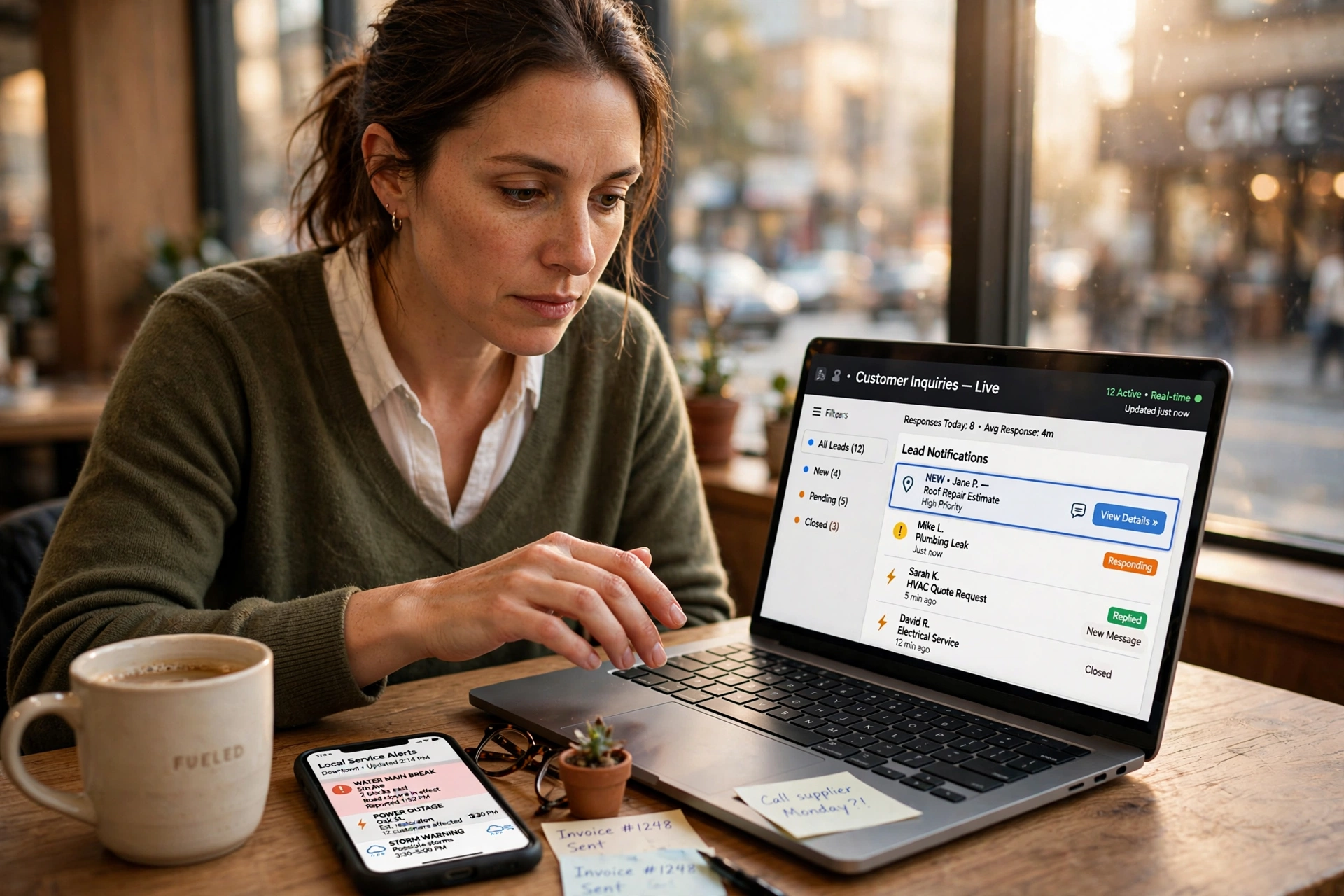
According to a report by Forrester, lead response time is the single greatest predictor of conversion success; businesses that respond within five minutes are 21 times more likely to qualify a lead than those that wait 30 minutes. This is where the "cost" of the software becomes irrelevant compared to the "cost of delay." If your software doesn't instantly capture, qualify, and notify you, the lead is already calling your competitor.
The business impact of upgrading to an autonomous system is seen in three primary areas:
- Lower Customer Acquisition Cost (CAC): By increasing the conversion rate from 2% to 6%, you effectively triple your lead volume without spending an extra dime on traffic.
- Higher Lead Quality: Passive forms attract everyone. AI-driven capture asks qualifying questions (e.g. "Do you have homeowner's insurance?" or "What is your budget?"), ensuring your calendar is filled with high-ticket clients, not tire-kickers.
- 24/7 Availability: Local services often lose leads during "off-hours." An autonomous agent captures the lead at 2 AM and books the meeting for 9 AM the next morning.
The mistake I see constantly is business owners buying the cheapest software available and then wondering why their "leads" are low-quality. A $15/month form builder doesn't qualify anyone; it just collects emails. A professional system, like those deployed by BizAI Intelligence, integrates the capture process with the content strategy, ensuring that the person landing on a specific service page is met with a tailored conversion path. This is how you convert website visitors into WhatsApp leads with a significantly higher ROI.
How to Implement a Professional Lead Capture System Step-by-Step
Implementing a high-tier lead capture system requires more than just pasting a piece of code into your header. It requires a strategic alignment between your traffic source and your conversion trigger. If you are using a programmatic SEO approach, you have hundreds of pages targeting different intents. A "one-size-fits-all" pop-up will actually hurt your conversion rate because it feels generic and intrusive.
Here is the professional blueprint for deployment:
- Map Intent to Offer: Determine what the user wants on each page. A user on a "Pricing" page wants a quote; a user on a "How-to" guide wants a consultation. Your software should change the call-to-action (CTA) based on the URL.
- Deploy Behavioral Triggers: Instead of showing a pop-up the second someone lands, set triggers for "60% scroll depth" or "exit intent." This ensures you only engage users who have demonstrated genuine interest.
- Integrate Autonomous Qualification: Use an AI SDR to ask 3-5 qualifying questions. This filters out low-value leads and automatically pushes high-value leads into your CRM (HubSpot, Salesforce, etc.).
- Automate the "Thank You" Sequence: The moment a lead is captured, the software should trigger an immediate confirmation via SMS or Email. This "locks in" the lead and prevents them from continuing their search.
- Connect to a Scalable Traffic Engine: Lead capture software is useless without eyes on the page. This is why we combine these tools with a strategy to make your business show up on Google Search through high-authority pillar pages and satellite content.
💡
Key Takeaway
The most effective lead capture systems don't "interrupt" the user experience; they "enhance" it by providing an immediate, automated path to the solution the user is searching for.
At BizAI Intelligence, we don't just provide a tool; we build a "Lead Machine." We deploy hundreds of optimized pages that attract high-intent traffic and embed context-aware AI agents on every single one. This eliminates the "revenue gap" that occurs when you have great SEO but a terrible conversion process. If you have traffic but no leads, you have a conversion problem, not a traffic problem. This is precisely why programmatic SEO fails without embedded AI SDRs.
Comparing Lead Capture Options: From Basic to Autonomous
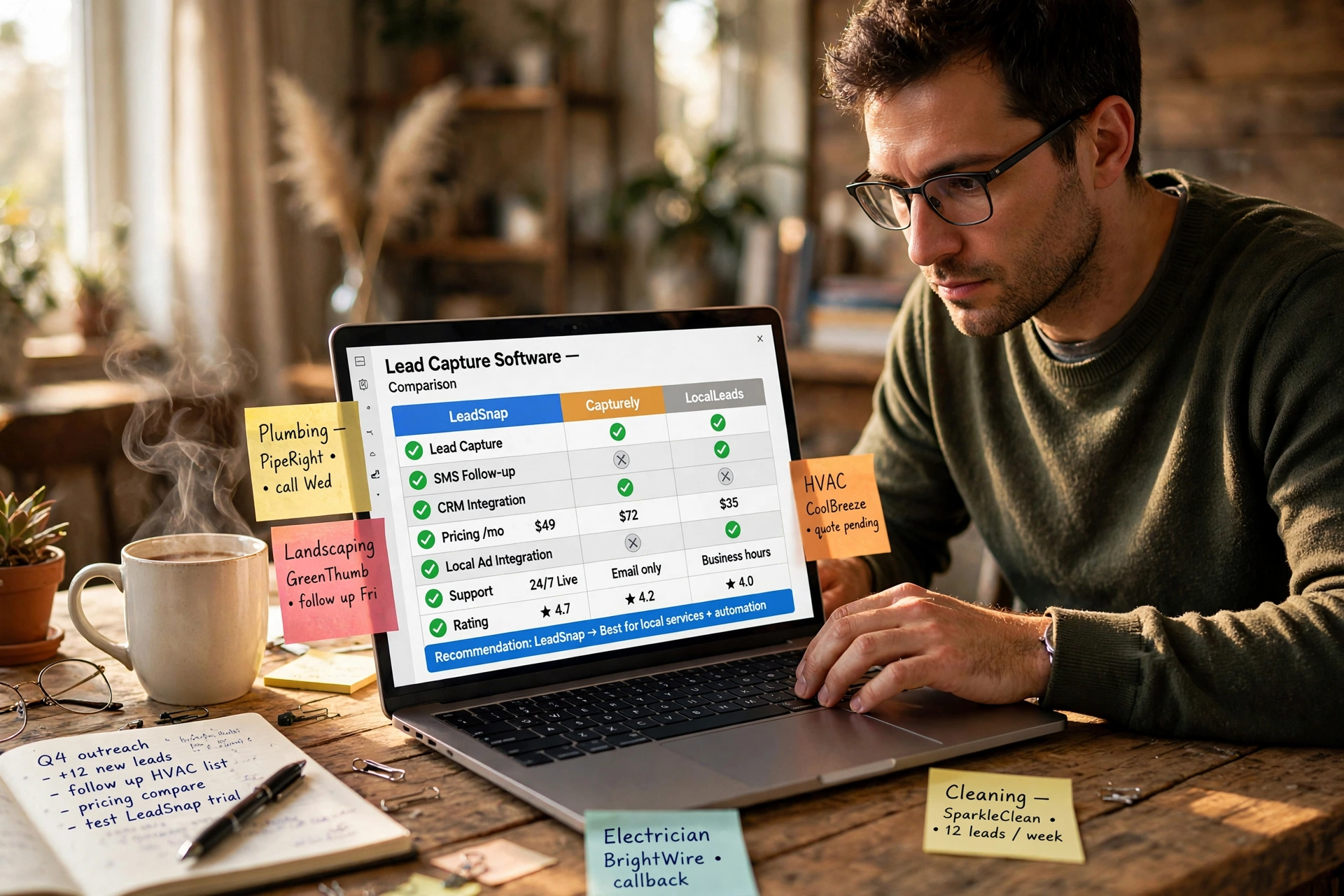
Not every business needs a full-scale AI engine on day one, but you must understand the trade-offs. Choosing the wrong tier of software can either waste your budget or stifle your growth.
| Option | Average Monthly Cost | Pros | Cons | Best For |
|---|---|---|---|---|
| Basic Form Builders | $0 - $29 | Low cost, easy to set up. | Zero qualification, high friction, manual follow-up. | Very small businesses with low traffic. |
| Advanced Marketing Suites | $50 - $200 | Pop-ups, A/B testing, email integration. | Still passive, requires manual setup for every page. | Mid-sized agencies with a dedicated marketing person. |
| Autonomous AI Engines (BizAI) | $200 - $500+ | 24/7 qualification, instant booking, behavioral triggers. | Higher initial investment, requires a traffic strategy. | High-ticket B2B/Local services scaling for aggressive growth. |
Now, here is where it gets interesting: the "Cheap AI" approach. Many businesses try to use generic, off-the-shelf chatbots that simply answer FAQs. These are not lead capture tools; they are glorified search bars. A real lead capture engine is designed for aggressive capture. It doesn't just answer questions; it steers the conversation toward a booking.
If you are choosing between a traditional SEO agency and an automated system, the math is simple. An agency charges a monthly retainer to write a few blogs. An automated system, like the one we build at BizAI Intelligence, allows you to replace freelance copywriters with an AI content engine while simultaneously automating the capture of every single visitor.

Common Misconceptions About Lead Capture Costs
Most guides get this wrong by focusing solely on the sticker price of the software. They tell you that "Free" tools are the best way to start. That is a dangerous lie for a local service provider.
Myth 1: "I just need a simple contact form; a chatbot is too aggressive."
Correction: A contact form is the highest-friction element on your website. It requires the user to stop what they are doing, type in their details, and hope someone calls them back. A conversational agent reduces friction by guiding the user through a series of simple clicks. In an era of "instant gratification," friction is the primary reason for lead abandonment.
Myth 2: "More leads always equal more revenue."
Correction: This is the biggest mistake I see. More leads often mean more "junk" leads that waste your time. The goal isn't more leads; it's more qualified leads. A professional lead capture system acts as a filter, not a funnel. It is better to have 10 leads who are ready to buy a $5,000 service than 100 leads who are looking for a free consultation.
Myth 3: "AI software is too complex to set up for a local business."
Correction: The complexity has shifted from the user to the provider. In 2026, the "set it and forget it" model is real. When you use a system like BizAI Intelligence, the programmatic architecture handles the deployment across hundreds of pages automatically. You don't need to be a coder; you just need to define your qualifying questions.
Frequently Asked Questions
How much does professional lead capture software for local services actually cost?
For a professional-grade system, you should budget between $150 and $500 per month. While there are "free" options, they lack the behavioral triggers and AI qualification necessary to actually increase your ROI. A professional system includes not just the form, but the AI agent, CRM integration, and behavioral tracking. When you factor in that one high-ticket local lead (like a roof replacement or a corporate legal retainer) can be worth thousands of dollars, the software pays for itself with a single converted lead per month.
Can I use a free chatbot instead of paid lead capture software?
You can, but you are sacrificing conversion rates. Free chatbots are typically "reactive", they wait for the user to ask a question. Professional lead capture software is "proactive", it uses scroll velocity and reading speed to initiate the conversation. According to industry benchmarks, proactive engagement can increase lead volume by up to 300% compared to reactive bots. If your goal is growth, using a free tool is essentially leaving money on the table for your competitors.
How do I know if my lead capture software is working?
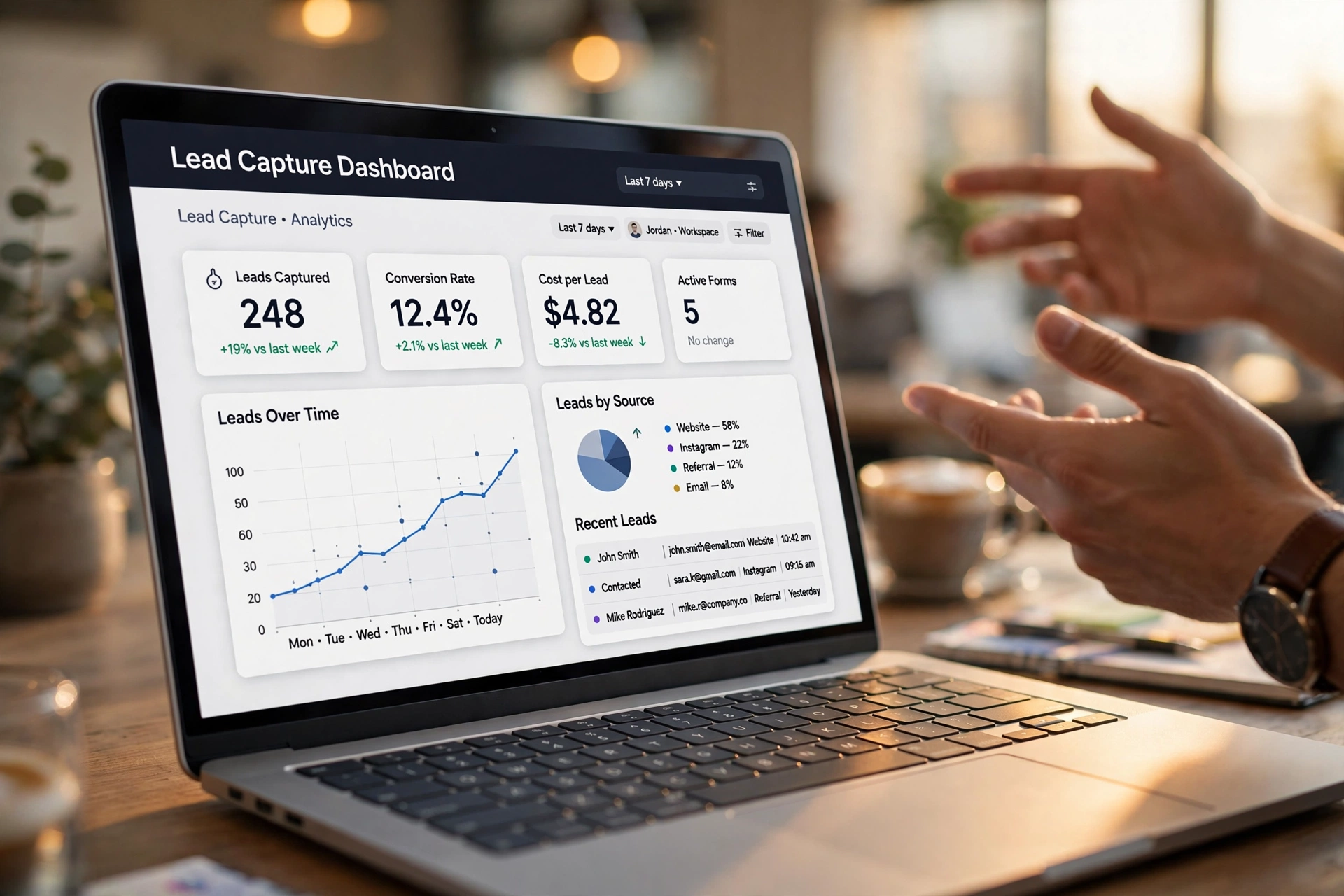
You should track three specific KPIs: Conversion Rate (Visitors to Leads), Lead Quality Score (Percentage of leads that meet your criteria), and Speed to Lead (How quickly the lead is contacted). If your conversion rate is below 3% for local services, your capture system is failing. A healthy AI-driven system should push you toward 5-10%. Use tools that provide "Heatmaps" and "Scroll Maps" to see exactly where users are dropping off before they hit your capture trigger.
Does the software integrate with my existing CRM?
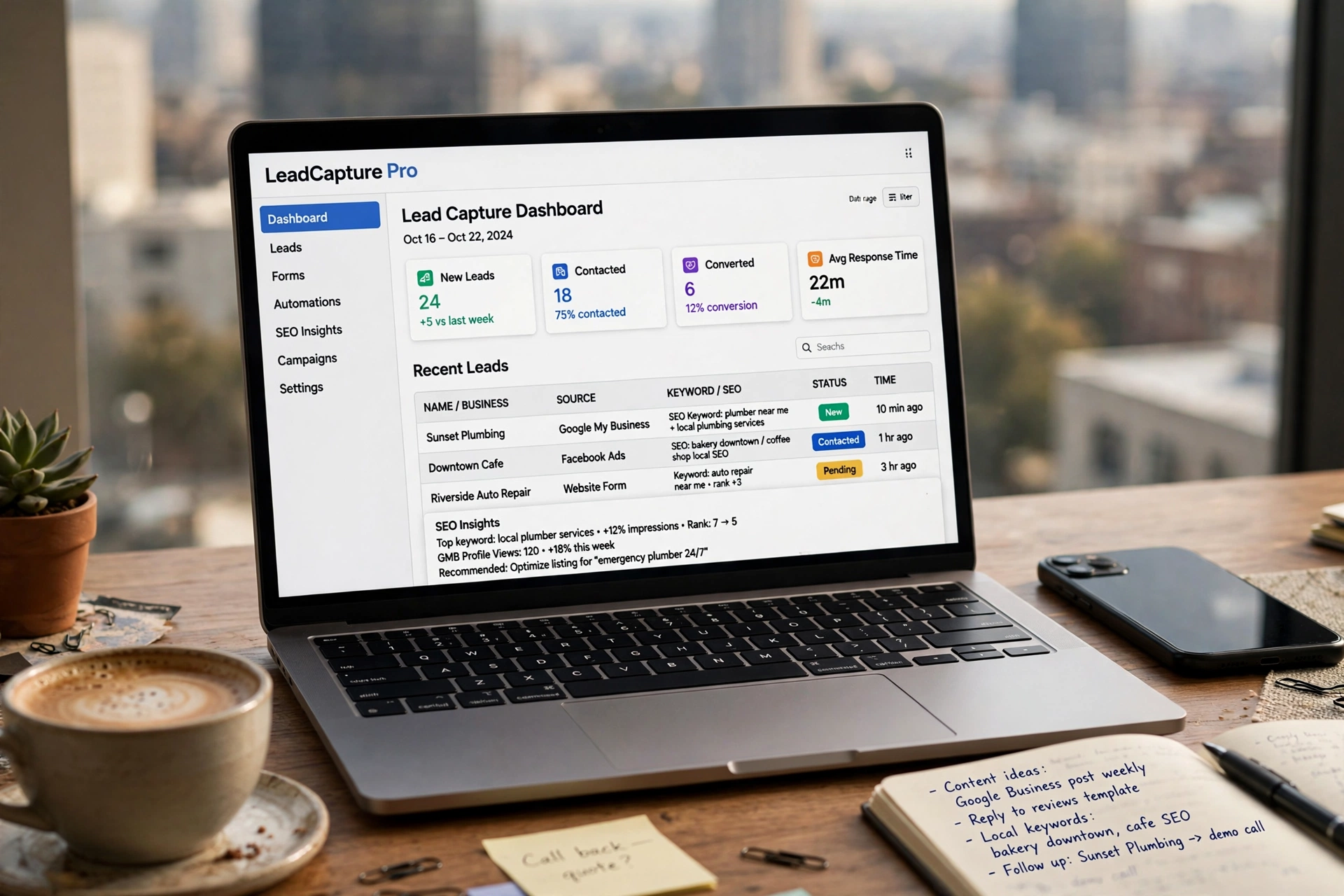
Any lead capture software for local services worth its salt in 2026 must have native integrations with tools like HubSpot, Salesforce, or GoHighLevel. If a tool requires you to manually export CSV files, it is obsolete. The goal of an autonomous system is to move the lead from "Visitor" to "Scheduled Appointment" without a human ever touching the keyboard. Ensure your chosen software supports Webhooks or Zapier for seamless data flow.
Is a pop-up better than a chatbot for local leads?
Neither is "better" in isolation; the best approach is a hybrid. Pop-ups are excellent for "hard offers" (e.g. "Get a Free Quote Now"), while chatbots are superior for "soft qualification" (e.g. "Not sure which service you need? Let me help you decide"). The most successful local businesses use behavioral triggers to deploy the right tool at the right time. For instance, a pop-up for a discount on a landing page, but a chatbot for a complex service page.
Final Thoughts on Lead Capture Software for Local Services
Investing in lead capture software for local services is no longer about "adding a feature" to your website, it is about building an automated sales force. In the 2026 landscape, the gap between the "digitally mature" businesses and the "digital brochures" is widening. If you are still manually chasing leads or relying on a static form, you are operating with a massive handicap.
The most efficient way to scale is to stop treating your traffic and your conversion as two separate problems. By combining programmatic SEO, which floods your site with high-intent visitors, with an autonomous AI SDR, you create a compounding growth engine. Instead of renting expensive traffic through paid ads, you build a self-owned asset that works while you sleep.
If you are ready to stop the revenue leak and start capturing every possible lead on your site, it is time to move beyond basic tools. Explore how BizAI Intelligence can transform your website into a 24/7 lead generation machine.
Visit bizaigpt.com to start building your organic traffic and lead qualification engine today. For those looking to maximize their visibility first, see our guide on how to rank on Google first page fast for small businesses.
Only 12 Onboarding Slots Remaining This Month
BizAI deploys 300 AI salespeople scoring purchase intent 24/7. Get your free niche domination blueprint.
AI Search Accelerator: 1-on-1 Strategy Session
Claim one of the 10 monthly slots. Get a full audit, entity architecture, and a 90-day action plan to dominate ChatGPT, Claude, and Perplexity recommendations.