📖This article is part of the complete guide to Mastering B2B Buyer Urgency Signals: Complete Guide.
In my experience working with high-ticket B2B firms, the most dangerous mistake a sales team can make is treating a first-time visitor and a fifth-time visitor with the same level of priority. When a lead returns to your pricing page three times in 48 hours, they are no longer just researching; they are validating a decision. This specific pattern of return visits buyer intent is the strongest leading indicator of a compressed buying window.
For a comprehensive overview, explore our guide on b2b buyer urgency signals.
What is Return Visit Frequency in B2B Intent?
📚
Definition
Return visit frequency is the number of times a unique anonymous or identified user returns to a specific set of high-intent pages (such as pricing, case studies, or demo request pages) within a defined temporal window, typically 7 to 14 days.
Return visit frequency is a behavioral metric that tracks the repetition of engagement. Unlike a single session with high dwell time, return visits signal a psychological shift from passive exploration to active evaluation. In the context of 2026 B2B sales, this is often referred to as "clustering," where a buyer returns to the site repeatedly as they move through internal stakeholder approvals.
When we analyzed the data at BizAI Intelligence Solutions, we found that buyers who return to a site 3 or more times within a week are 4.2x more likely to convert within the next 10 days than those who visit once for a long duration. This happens because B2B purchases are rarely impulsive; they are a series of validations. Each return visit represents a new question being answered or a new stakeholder being convinced.

This frequency must be mapped to specific page types. A return visit to a blog post is a signal of interest in a topic, but a return visit to a "Compare X vs Y" page is a signal of a narrowing shortlist. By leveraging artificial intelligence and advanced tracking, firms can now distinguish between a "browser" and a "buyer" based on the velocity of these returns.
Why Does Return Visit Frequency Matter for Your Revenue?
Return visit frequency matters because it allows sales teams to move from reactive outreach to predictive intervention. Most companies wait for a lead to fill out a form to signal intent. However, by the time a lead fills out a form, they may have already visited your site 10 times and are already 80% convinced. If you only react to the form, you miss the window to influence the decision-making process during those 10 visits.
According to research by the B2B Institute, the majority of the buyer's journey happens before the first contact with a sales representative. This means that tracking return visits buyer intent is the only way to identify "dark funnel" activity. If a prospect returns to your site frequently, they are effectively signaling that your solution is under active consideration, even if they remain anonymous.
Integrating this data into a lead scoring model creates a massive competitive advantage. For instance, a lead who visits once and stays for 10 minutes is valuable, but a lead who visits once a day for five days is urgent. The latter is likely coordinating with a team, sharing links, and building a business case. This is where the concept of "cluster intent" becomes a primary driver of pipeline velocity.
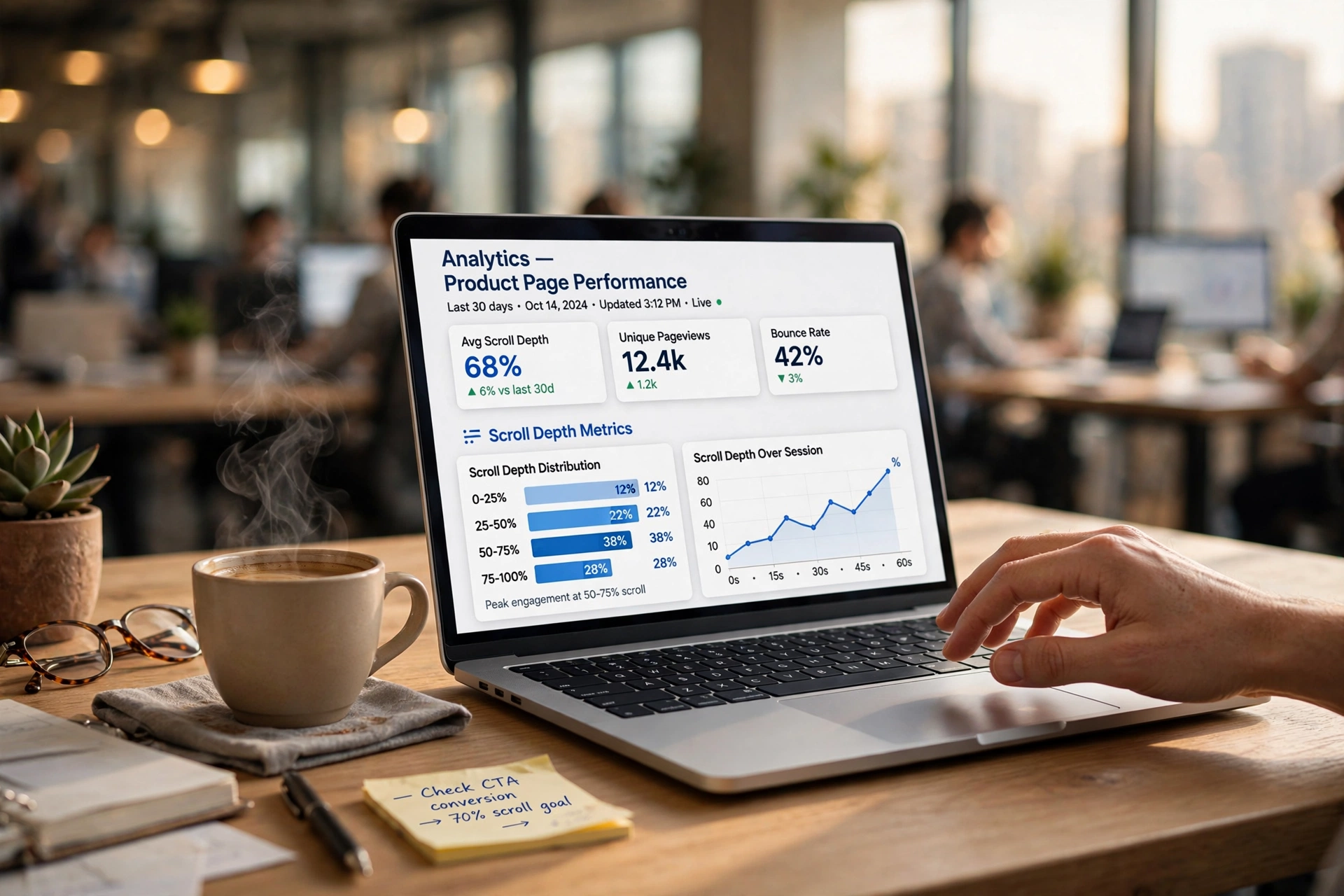
Furthermore, high return frequency often correlates with specific behavioral markers. When combined with how scroll depth reveals B2B buyer urgency, you can determine not just that they came back, but that they are diving deeper into the technical specifications every time they return. This level of granularity allows for hyper-personalized outreach that feels like mind-reading rather than spam.
How to Track and Action Return Visit Intent
To effectively utilize return visit data, you must shift from session-based analytics to user-based identity resolution. The goal is to associate disparate sessions into a single user journey.
Step 1: Establish Intent Thresholds
First, define what constitutes "urgency." In my experience, a "High Urgency Threshold" is typically 3 visits within 72 hours to any page categorized as "Bottom of Funnel" (BoFu). You must categorize your URLs into:
- Top of Funnel (Educational/Blog)
- Middle of Funnel (Case Studies/Comparison Tables)
- Bottom of Funnel (Pricing/Demo/Contact)
Step 2: Implement Identity Resolution
Use a combination of first-party cookies and AI-driven identity resolution to track the user. When an anonymous user hits the High Urgency Threshold, they should be flagged in your CRM as a "Warm Prospect." If they eventually identify themselves (via a newsletter signup or whitepaper download), the system should retroactively apply their return visit history to their lead score.
Step 3: Deploy Contextual AI Agents
This is where BizAI Intelligence Solutions changes the game. Instead of waiting for a human SDR to notice the return visit, an autonomous AI agent can trigger a specific conversational prompt based on the visit count. For a third-time visitor, the agent might shift from "How can I help you?" to "Ready to see how we solve [specific pain point] for companies like yours?"
Step 4: Coordinate Outreach Velocity
Match the speed of your outreach to the frequency of the visits. If a lead's return frequency spikes, your sales team should reach out within 2 hours. According to data from the Harvard Business Review, the odds of qualifying a lead drop by 10x if the outreach happens after 60 minutes. When return visit frequency is high, the window of opportunity is at its smallest.

Return Visit Intent vs. Standard Web Traffic
Many businesses confuse general traffic growth with intent growth. A spike in total visitors is a marketing win; a spike in return visit frequency is a sales win. The difference lies in the stability of the user base.
| Metric | Traditional Traffic Approach | Cheap AI/Bot Approach | BizAI Modern Approach |
|---|---|---|---|
| Focus | Total Pageviews & Sessions | Volume of AI-generated pages | Frequency & Intent Clustering |
| Lead Signal | Form submission only | Low-quality bot leads | Behavioral return patterns |
| Response | Generic follow-up email | Automated spam sequences | Context-aware AI intervention |
| Accuracy | Low (misses dark funnel) | Very Low (hallucinations) | High (based on real behavior) |
As shown in the table, the traditional approach is too slow, and the cheap AI approach is too noisy. The modern approach, utilized by BizAI Intelligence Solutions, focuses on the pattern of the visit. If a user is visiting your site frequently, they are essentially performing a "digital audit" of your company. They are checking for consistency, looking for proof of results, and validating the ROI.
This is why you should also monitor mouse hesitation as a key B2B urgency indicator. A user who returns for the fourth time and then hesitates over the "Book a Demo" button is in a state of high tension. They want to buy, but they have one final doubt. Solving that doubt in real-time via a chatbot or a timely a human intervention is how you close high-ticket deals.
Common Mistakes in Analyzing Return Visits
One of the most frequent errors I see is the "Over-Automation Trap." This occurs when a company sets up an automated email sequence that triggers after the second visit. If the user is returning frequently but hasn't converted, an aggressive automated email can actually push them away by signaling that you are tracking them too closely, creating a "creepy" user experience. The outreach must feel helpful, not surveillance-based.
Another mistake is ignoring the "Decay Rate." Return visit intent has a half-life. If a lead visited 5 times in two days but hasn't returned in two weeks, their urgency has likely plummeted or they have signed with a competitor. Many CRM systems keep these leads marked as "Hot" forever, wasting sales resources on dead leads. You must implement a decay function where the urgency score drops if the return frequency ceases.
Additionally, avoid treating all return visits as equal. A return visit to a "Careers" page does not indicate a buyer. A return visit to a "Technical Documentation" page indicates a technical buyer (the implementer), while a return visit to "Pricing" indicates the economic buyer. Your outreach should vary based on the page type. For the implementer, send a technical whitepaper. For the economic buyer, send a ROI calculator. This level of sophistication is what we bake into our AI customer acquisition bot for consulting firms: 2026 strategy.
Finally, do not overlook the role of the device. In 2026, buyers often research on mobile during transit and then return on a desktop to share the link with their team. If your tracking is not cross-device, you are missing half of the return visit signal. Ensuring your system recognizes the user across platforms is essential for an accurate urgency map.
Deep Dive: The Psychology of the Return Visit
To truly master return visits buyer intent, you must understand the psychological trigger of the "Validation Loop." In B2B, the buyer isn't just buying a product; they are buying a lack of risk. Every return visit is an attempt to reduce that risk.
First return visit: Curiosity and initial fit assessment.
Second return visit: Feature validation and comparison with alternatives.
Third return visit: Social proof and case study verification.
Fourth return visit: Pricing alignment and internal budget justification.
Fifth return visit: Final confirmation before the "ask" (the demo request).
When a lead is in the "Social Proof" phase (third visit), sending them a generic "Contact Us" link is a mistake. Instead, you should present them with a case study that mirrors their specific industry. This is why we recommend integrating detecting urgency language in B2B buyer communications alongside return visit tracking. If they return frequently AND their emails use high-urgency words, you have a "Gold Lead."
This behavior is often mirrored in other high-intent signals. For example, if a lead is returning frequently, you will likely see a corresponding increase in exact search terms indicating B2B urgency. They may search for "[Your Company] vs [Competitor]" and then return to your site to verify the claim. By capturing this entire loop, you can position your brand as the only logical choice.
For those scaling professional services, this is the foundation of a growth engine. Whether you are looking for the best SEO agency for service business in Kansas City (2026) or scaling a global SaaS, the physics of buyer intent remain the same: frequency equals urgency.
Frequently Asked Questions
How many return visits signify a high-intent B2B buyer?
While it varies by industry, a general benchmark is 3 to 5 visits within a 7-day window. A lead who returns three times specifically to bottom-of-funnel pages (pricing, demo, or a specific service page) is typically in an active buying cycle. At this point, the probability of conversion increases significantly, and they should be prioritized for immediate sales outreach.
Does a high return visit frequency always mean the lead is urgent?
Not necessarily. You must distinguish between "educational returns" and "transactional returns." If a user returns frequently to read blog posts, they are in the research phase. If they return to the pricing page or a specific product comparison tool, they are in the transactional phase. Urgency is tied to the destination of the return visit, not just the count.
How do I track return visits for anonymous users?
This is achieved through first-party cookies and AI-driven identity resolution. By assigning a unique ID to the browser session, you can track the number of times that specific browser returns to your domain. When the user eventually identifies themselves (e.g. by filling out a form), the system merges the anonymous behavioral history with the known identity.
What is the best way to contact a lead showing high return frequency?
Avoid an aggressive "I saw you visiting our site" approach, which can feel invasive. Instead, use "helpful timing." Trigger an AI chatbot to offer a specific resource related to the page they are visiting, or have a sales rep reach out with a value-added insight like: "I noticed you're researching [Topic], I thought this specific case study on [Result] might be helpful."
How does return visit frequency relate to the B2B sales cycle?
Return frequency is usually an inverse indicator of the remaining sales cycle length. As the frequency of visits increases within a short timeframe, the time to close typically decreases. This "clustering" of activity signals that the buyer has moved from the evaluation stage to the decision stage and is likely finalizing their internal approval process.
Conclusion
Understanding return visits buyer intent is the difference between guessing where your leads are in the funnel and knowing exactly when to strike. In the 2026 B2B landscape, the winner is not the one with the most leads, but the one who responds to urgency signals with the highest precision. By tracking frequency, mapping it to high-intent pages, and responding with AI-driven agility, you can effectively shorten your sales cycle and increase your win rate.
If you are still relying on static lead forms and manual follow-ups, you are leaving revenue on the table. The transition to an autonomous acquisition system is no longer optional; it is a requirement for survival in a competitive B2B market. To refine your strategy further, we recommend mastering the full spectrum of triggers by reading our Mastering B2B Buyer Urgency Signals: Complete Guide.
Ready to stop renting traffic and start building an automated lead engine? Visit BizAI Intelligence Solutions to deploy the most advanced B2B Organic Traffic and AI-Powered Lead Qualification Engine on the market.
Only 12 Onboarding Slots Remaining This Month
BizAI deploys 300 AI salespeople scoring purchase intent 24/7. Get your free niche domination blueprint.
AI Search Accelerator: 1-on-1 Strategy Session
Claim one of the 10 monthly slots. Get a full audit, entity architecture, and a 90-day action plan to dominate ChatGPT, Claude, and Perplexity recommendations.