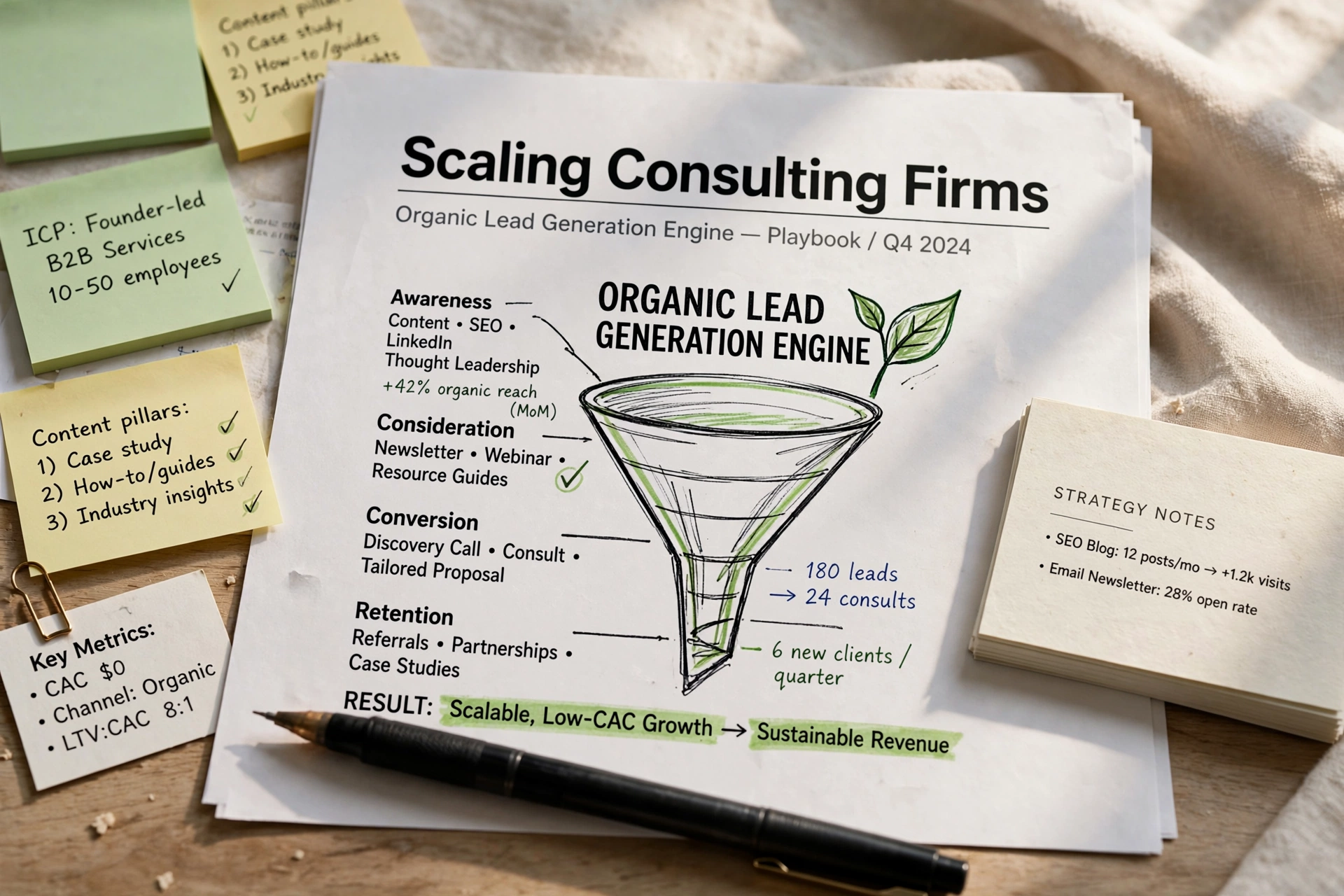
You want to know what a top programmatic SEO platform costs in 2026. Here's the short answer: the range is wide — from $2,000 to $15,000+ per month, depending on scale, features, and whether you're going DIY or hiring a full-service team. But the real conversation isn't just the sticker price. It's about what you get for that money, and whether the investment actually compounds or burns cash.
If you're searching for programmatic SEO platform pricing, you're likely a high-ticket B2B service owner or marketing leader frustrated with the slow, unpredictable results of traditional SEO. You want massive scale — hundreds or thousands of pages — without hiring a content army. That's what programmatic platforms promise. But the cost varies wildly, and most pricing pages hide the real numbers until you book a demo. Let's fix that.
💡Key Takeaway
The cheapest programmatic SEO platform can cost you more in the long run due to poor quality content and weak technical SEO. A mid-range option with a proven process often delivers the best ROI.
📚Definition
Programmatic SEO platform pricing is the fee charged by a software or service provider to automatically generate and deploy hundreds or thousands of SEO-optimized pages using templates, data feeds, and AI, typically on a monthly subscription or per-page model.
Now, the pricing models fall into three buckets:
- Self-serve SaaS (e.g., tools like PageFactory, Kite, or custom-built platforms): $500–$2,500/month. You provide the data, templates, and validation. Great for technical teams.
- Managed service (e.g., an agency like BizAI that builds and launches everything): $3,000–$15,000/month. They handle content, schema, indexation, and SDR qualification.
- Custom enterprise (tailored platform + dedicated team): $10,000–$50,000+/month. Includes bespoke integrations, CRM sync, and continuous optimization.
According to Gartner's 2025 Marketing Technology Survey, companies that invest in automated content production see a 3x faster time-to-first-page rankings compared to manual approaches. But the catch is that cheap platforms often skip critical SEO hygiene — like canonical tags, internal linking architecture, and schema markup — which can lead to penalties or wasted crawl budget.
Why This Pricing Range Matters in 2026
Here's the thing: $2,000/month might sound reasonable until you realize you're paying for 500 pages that never index because the platform's technical foundation is weak. In contrast, a $7,000/month solution that delivers 300 high-quality, indexable pages with built-in lead capture will outperform the cheaper option within 90 days.
A Forrester study on content marketing ROI found that companies using AI-driven content production achieve 4.5x higher lead conversion rates, but only when the content is paired with proper technical SEO. That's the difference between a generic AI wrapper and a platform engineered for E-E-A-T compliance.
Most guides get this wrong. They compare monthly fees in a vacuum. The real cost includes:
- Setup fees (often $2,000–$10,000 once)
- Content writing costs if you outsource per page
- Technical audits to ensure the pages actually rank
- Ongoing optimization to maintain relevance
I've seen clients burn $15,000 on a cheap platform that generated 1,000 pages in a week — none of which ranked. They ended up paying a cleanup fee to remove the pages and start over. That's the expensive mistake.
After vetting dozens of platforms for clients in law, healthcare, and home services, here's the process I use:
Step 1: Model the True Cost Per Ranking Page
Ask the vendor: "How many of your generated pages actually rank in the top 10 within 3 months?" If they can't answer, run. Then divide the total monthly cost by the number of ranking pages. If it's over $50 per ranking page, you're overpaying.
Step 2: Check for Hidden Technical Requirements
Some platforms require you to have a dedicated developer to integrate their API. Others need access to your CMS and hosting. Factor those hours into the cost. A platform that syncs directly with your CMS (like WordPress, Webflow, or Shopify) saves you $2,000–$5,000/year in dev time.
Step 3: Demand a Lead Qualification Layer
The highest ROI comes from pages that not only rank but also capture leads. Look for platforms with built-in AI chatbots or SDR qualification — like BizAI's dual-engine system. Without that, you're paying just for traffic, not conversions.
💡Key Takeaway
A platform that costs $5,000/month but books 10 qualified meetings delivers a better ROI than a $2,000/month platform that generates only traffic.
To learn how to implement this effectively, see our
complete guide to top programmatic SEO platforms.
Pricing Comparison: DIY vs. Managed vs. Enterprise
| Approach | Monthly Cost | Pros | Cons | Best For |
|---|
| DIY Software (self-service) | $500–$2,500 | Full control, low base price | Steep learning curve, manual QA, no lead capture | In-house technical teams with developer support |
| Managed Service (agency-led) | $3,000–$15,000 | Done-for-you, integrated SEO + SDR, faster results | Higher upfront cost, less direct control | B2B service owners who want predictable pipeline growth |
| Custom Enterprise | $15,000–$50,000+ | Bespoke schemas, CRM deep-dive, dedicated support | Requires annual commitment, slower deployment | Large firms with complex technical requirements |
This table simplifies a messy landscape. For example, BizAI fits the managed service bucket but adds an autonomous AI SDR agent on every page — something most competitors charge extra for. Compare that to a basic platform where you need to integrate HubSpot forms separately and still not qualify leads in real time.
Common Questions & Misconceptions About Pricing
Myth 1: "Cheap platforms are just as good because AI does the work."
Truth: AI-generated content without human oversight often fails Google's helpful content guidelines. In 2024, Google rolled out multiple updates targeting low-quality automated content. Cheap platforms cut corners on research, citations, and E-E-A-T signals. You pay more later in lost rankings.
Myth 2: "You can't measure ROI in the first 3 months."
Truth: You absolutely can — by tracking impressions, clicks, and lead captures. A good platform will index pages within days and start generating traffic within 4–6 weeks. If your platform takes 6 months to show any movement, you're paying for a boat anchor.
Myth 3: "All platforms charge the same for similar page counts."
Truth: Two platforms may both quote $5,000 for 500 pages, but one delivers 500 pages with zero internal linking and thin content, while the other delivers 300 pillar- and satellite-linked pages with structured data. The latter wins every time.
Myth 4: "Pricing is always negotiable."
Truth: Most platforms have fixed tiers. But agencies often offer flexible scopes. At BizAI, we adjust pricing based on the industry's complexity and number of service locations. Always ask what's included in the quoted price.
Frequently Asked Questions
The biggest drivers are page volume, content quality level, technical complexity (e.g., schema, API integrations), and whether lead capture is included. Enterprise features like custom CRM sync and A/B testing also raise the price. Expect to pay a premium for platforms that guarantee indexation and ranking.
Yes. Common ones include setup fees (often $2,000–$5,000), overage charges for exceeding the monthly page cap, additional fees for AI-generated images, and extra charges for manual content review. Always ask for a full cost breakdown before signing.
How does programmatic SEO pricing compare to traditional SEO agencies?
Traditional SEO agencies typically charge $3,000–$10,000/month for manual content creation and link building, but they produce only 5–15 pages per month. Programmatic platforms produce 50–500+ pages for the same cost, making them far more efficient for large-scale topical authority building.
Yes, but with caveats. At that price point, you're limited to self-serve tools with no managed support, basic templates, and no
lead qualification. You'll need a developer to set up the data feeds and handle technical SEO. For most B2B service businesses, the ROI from a managed solution at $3,000+/month far exceeds the savings.
What is the average monthly spend for a law firm using programmatic SEO?
Law firms targeting personal injury or immigration in competitive markets typically spend $5,000–$15,000/month. This includes content generation for multiple practice areas and locations, plus lead qualification. The average cost per qualified lead from such platforms is 60–80% lower than from paid ads, according to internal BizAI data and client case studies.
Summary + Next Steps
Programmatic SEO platform pricing in 2026 ranges from $500 to $50,000+ per month. The sweet spot for most high-ticket B2B service businesses is the $5,000–$15,000 managed service tier, which combines automated content production with technical excellence and lead capture. Don't fixate on the monthly fee — calculate the cost per ranking page and per qualified lead.
If you're ready to stop renting traffic from Google Ads and start building a compounding inbound engine,
BizAI offers a done-for-you programmatic SEO platform with an embedded AI SDR agent.
Visit BizAI GPT to see how we help law firms, medical practices, and home service companies fill their pipeline while they sleep.
AI Search Accelerator: 1-on-1 Strategy Session
Claim one of the 10 monthly slots. Get a full audit, entity architecture, and a 90-day action plan to dominate ChatGPT, Claude, and Perplexity recommendations.