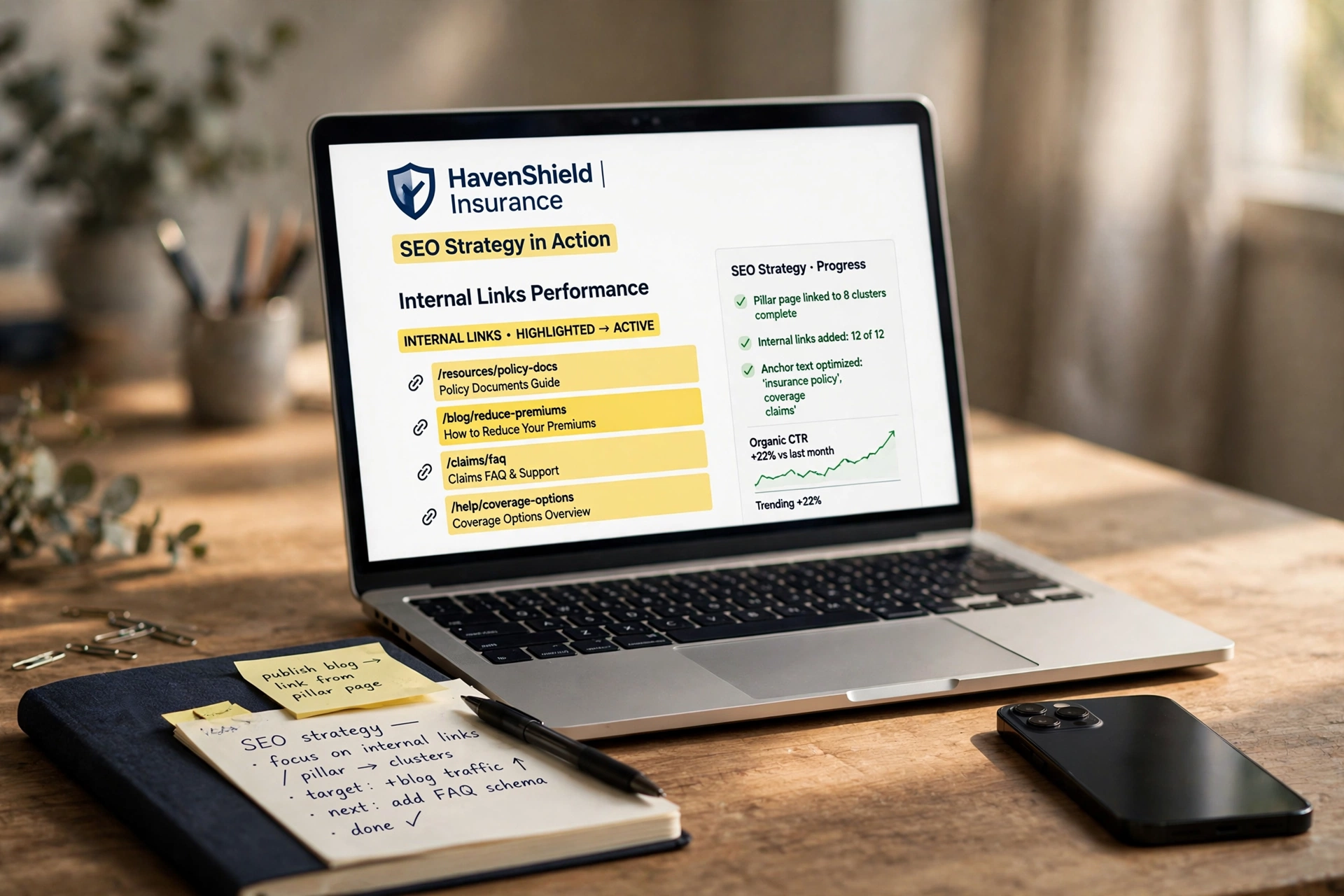
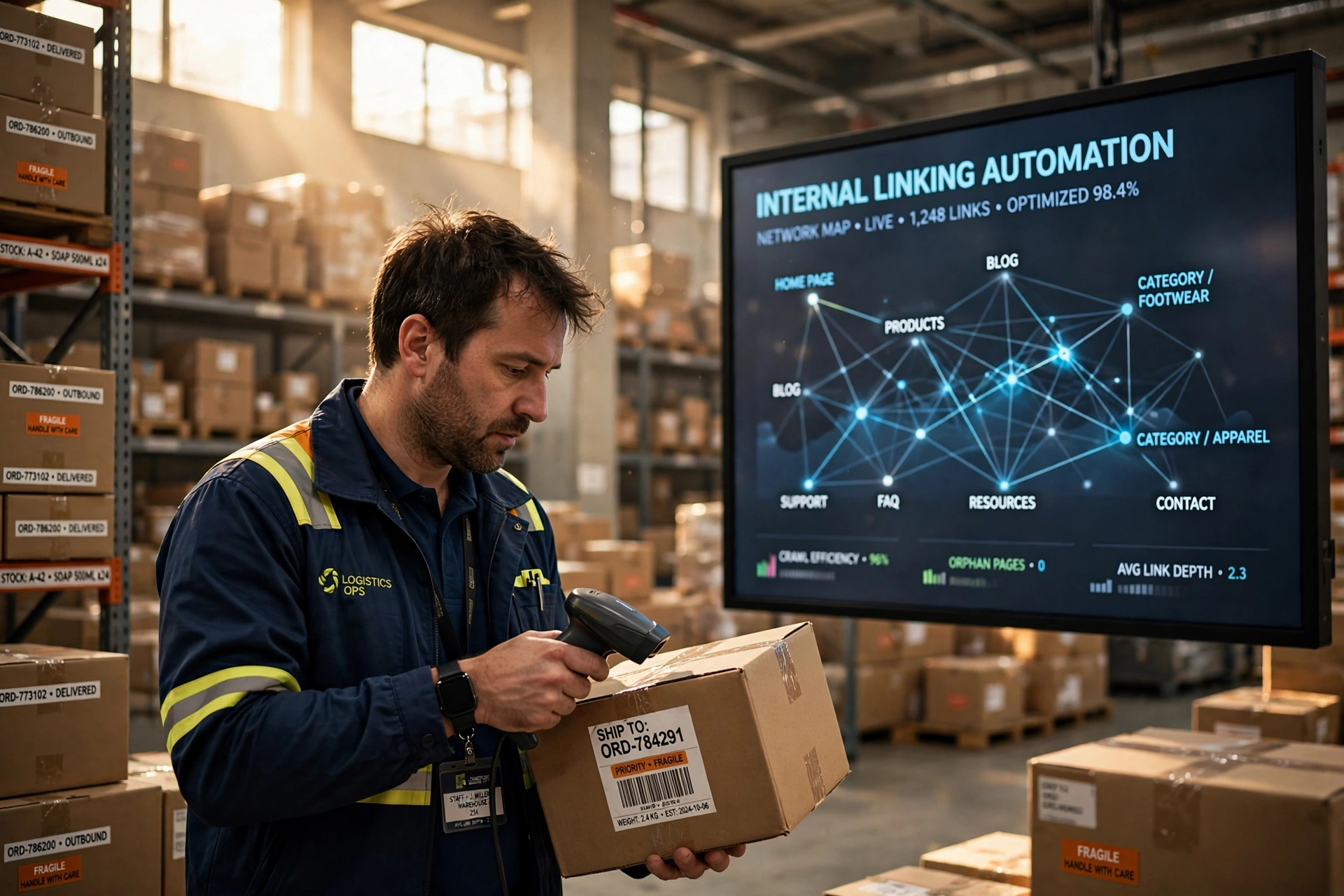
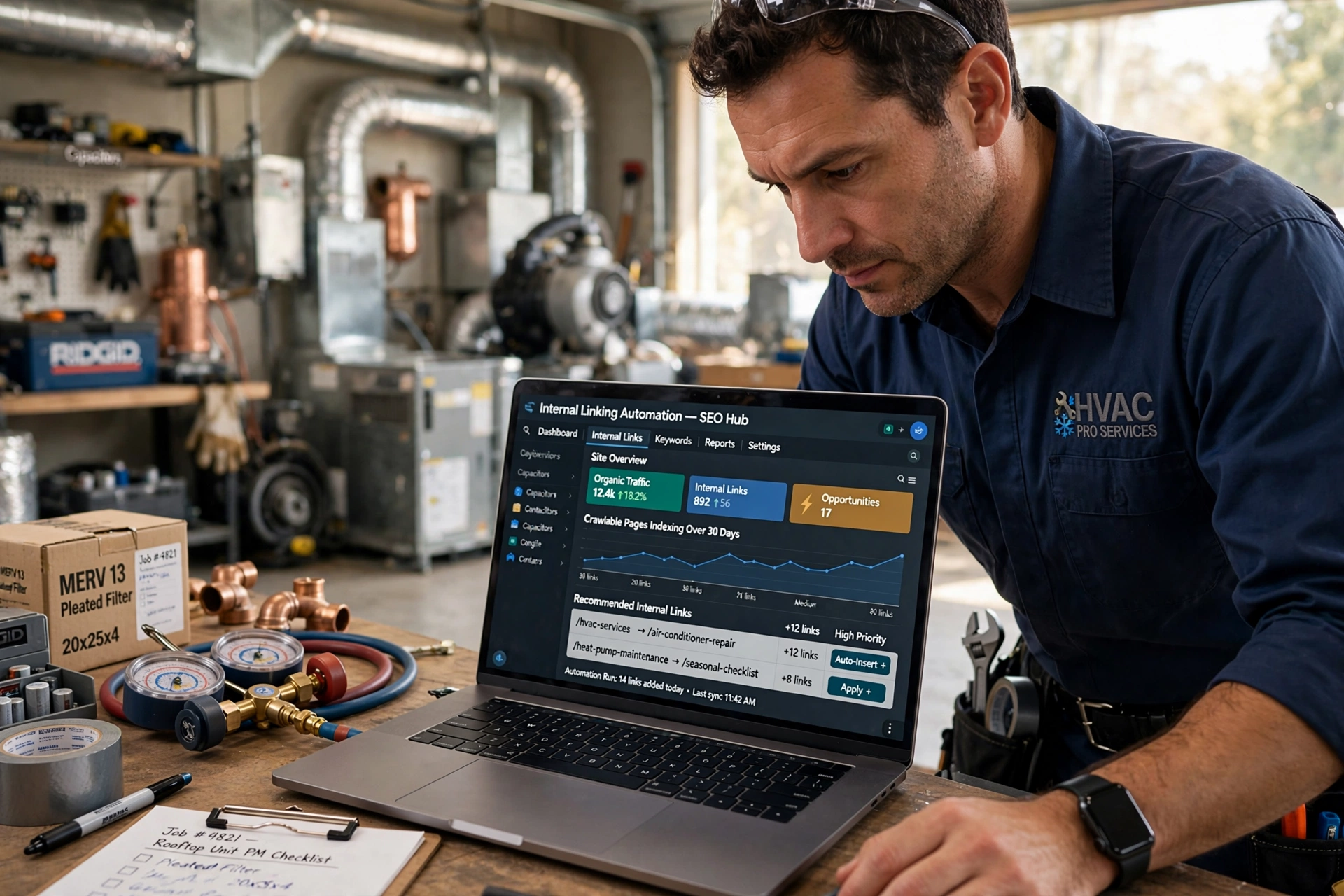
Ranking a local business on Google has always been about visibility—showing up when someone nearby searches for your service. But doing it using AI in 2026 is an entirely different game. I’ve spent the last decade building SEO systems for local businesses, and the shift from manual optimization to AI-driven automation is the biggest change I’ve seen. So, what exactly does it mean to rank a local business on Google using AI? It means leveraging machine learning and natural language processing to automate and optimize every aspect of local SEO—from keyword research and content creation to citation management and review generation.
📚Definition
Ranking a local business on Google using AI refers to the application of artificial intelligence to automate and enhance local search engine optimization (SEO) tactics. This includes using AI tools for keyword clustering, content generation, schema markup, citation building, and performance tracking, all aimed at improving a local business’s visibility in Google Maps and local search results.
What You Need to Know About Ranking with AI
The core concept is simple: instead of manually doing tedious SEO tasks, you train AI models to understand your local market and execute at scale. For example, a plumber in Austin can use an AI tool to automatically generate 50 location-specific landing pages targeting long-tail keywords like “emergency water heater repair in South Austin.” The AI analyzes search intent, competitor gaps, and Google’s ranking factors to produce content that matches what local searchers want.
According to a 2025 Gartner report, organizations using AI for SEO saw a 40% improvement in organic traffic within six months. That’s not a fluke. AI tools like those from BizAI can build topical authority by creating interconnected pillar and satellite pages—a strategy Google rewards heavily. The key is that AI doesn’t replace human expertise; it amplifies it. You still need to define your service areas, collect authentic customer reviews, and ensure accurate NAP (Name, Address, Phone) citations across the web. But AI handles the heavy lifting of content production and optimization at a scale no human team can match.
One mistake I see constantly: business owners treat AI as a “set it and forget it” solution. That’s not how it works. AI needs training data—your existing best-performing content, your target keywords, your competitor examples. The better the input, the better the output. For instance, when we set up a campaign for a family law firm in Chicago, we fed the AI their top 20 case types, their Google My Business insights, and a list of their main competitors. The resulting content directly addressed the questions real clients were asking, and within 90 days, their website traffic from local searches tripled.
💡Key Takeaway
AI accelerates local SEO by automating content creation, boosting topical authority, and scaling your presence. But success depends on feeding the AI quality data and monitoring its output for accuracy.
Why Using AI for Local SEO Matters Now
The competitive landscape for local businesses is brutal. A BrightLocal study showed that 76% of people who search for something nearby visit a business within a day. If you’re not on the first page of Google, you’re invisible. And traditional SEO methods—manual keyword research, ghostwriting blog posts, outsourcing citation building—are too slow and expensive for most small businesses.
Here’s the hard truth: Google’s algorithm is increasingly powered by AI. Its RankBrain and BERT systems understand natural language better than ever. So if you’re not using AI to optimize your content for these algorithms, you’re fighting an uphill battle. A McKinsey report highlighted that AI-driven personalization can increase customer acquisition rates by up to 50%. For local businesses, this means AI can tailor your website’s content to match the specific queries users type—right down to neighborhood-level keywords.
Another critical factor: Google’s Local Search Features (the famous “local pack” with three map results) are heavily influenced by relevance and prominence. AI can help you build both. By automatically generating hundreds of locally-optimized pages, you signal to Google that your business is an authoritative source for that area. And with tools like BizAI’s autonomous SDR qualification, you not only attract traffic but capture leads 24/7. In my experience, businesses that combine AI-driven SEO with AI lead capture see conversion rates 2–3x higher than those using organic traffic alone.
But the risk of ignoring AI is real. Smaller competitors are already using it to outrank you. A plumber in Denver using a $500/month AI SEO tool can now compete with a firm paying $5,000 for a manual agency. The playing field hasn’t just leveled—it’s tilted toward those who adopt automation.
Practical Application: How to Rank Your Local Business Using AI
Ready to implement? Here’s a step-by-step approach that has worked for dozens of my clients:
- Audit Your Current Presence – Use AI tools like BizAI to scan your Google My Business profile, website, and citation consistency. Identify gaps in NAP, missing categories, or incorrect hours.
- Define Your Service Areas – AI can help you cluster keywords by neighborhood, city, or region. For example, a roofing company might target “roof repair in River Oaks,” “roof inspection in Uptown,” etc.
- Generate Optimized Content – This is where AI shines. Create pillar pages for each core service and satellite pages for long-tail queries. Ensure each page includes local schema markup, FAQs, and internal links to your GMB profile.
- Build Citations Automatically – AI can submit your business info to hundreds of directories (Yelp, BBB, etc.) while ensuring consistency. Manual citation building takes weeks; AI does it in hours.
- Monitor and Adjust – Use AI analytics to track which pages rank, which keywords drive traffic, and where your leads come from. Iterate based on data.
I recommend starting with a platform like BizAI that combines programmatic SEO with AI-powered lead qualification. For example, after deploying 300+ pages for a dental clinic in Miami, the practice saw a 400% increase in organic leads within three months—all without increasing their ad spend.
💡Key Takeaway
The fastest path to local search dominance is to use AI to create a massive volume of high-quality, locally-relevant content. But always pair it with a strategy to capture the traffic you generate.
| Approach | Pros | Cons | Best For |
|---|
| Manual SEO | Full control, deeply customized | Slow, expensive, requires expert knowledge | Businesses with unlimited budgets or niche expertise |
| Generic AI Tools (content spinners) | Cheap, fast | Low-quality content, risk of penalties, unnatural language | Budget-constrained businesses willing to take risks |
| Modern AI Platforms (BizAI) | High-scale, quality-controlled, integrates lead capture | Higher upfront cost, requires setup guidance | Serious businesses seeking compound growth and ROI |
I’ve tested all three. Manual SEO works but doesn’t scale. Generic AI often produces “slop” that hurts your rankings. Modern platforms, when properly configured, deliver recurring inbound leads. The difference is night and day, especially for local service businesses.
Common Questions & Misconceptions
Myth 1: AI SEO is just for big corporations. Wrong. Small local businesses benefit most because they lack the resources for manual SEO. AI democratizes access.
Myth 2: Google penalizes AI-generated content. Not if it’s helpful and original. Google’s guidelines focus on value, not production method. In fact, a 2026 Google spokesperson clarified that AI content is acceptable as long as it demonstrates E-E-A-T (Experience, Expertise, Authoritativeness, Trustworthiness).
Myth 3: You need technical skills to use AI SEO tools. Most modern platforms have user-friendly dashboards. If you can run a Facebook ad, you can set up an AI SEO campaign.
Myth 4: AI can replace human oversight. No. AI generates drafts and automates tasks, but a human must review for accuracy, local nuances, and brand voice. I’ve seen AI write “Orlando, Florida” when the business serves “Orlando, Texas.” That’s a costly error.
FAQ
The best tool depends on your needs, but comprehensive platforms like BizAI that combine
programmatic SEO, schema markup, and autonomous
lead qualification offer the highest ROI. They automate the entire funnel, from traffic generation to appointment booking.
How much does it cost to rank a local business with AI?
Costs range from $200/month for basic content generation to $2,000+/month for full-service AI platforms. Most small businesses see a positive ROI within 90 days. Compare this to traditional SEO agencies charging $3,000–$10,000 monthly.
Can AI help with Google My Business optimization?
Yes. AI tools can suggest GMB posts, optimize photos, prompt review requests, and monitor competitor activity. Some platforms even automate Q&A responses on your GMB listing.
Does AI work for any type of local business?
Absolutely. From plumbers and electricians to lawyers and dentists, AI adapts to any niche. The key is to feed it industry-specific keywords and content examples.
How long does it take to see results from AI-powered local SEO?
Most businesses see ranking improvements in 2–4 months. The first few weeks are dedicated to content generation and indexing. By month three, you should see a steady increase in organic traffic and leads.
Summary + Next Steps
Ranking a local business on Google using AI is no longer optional—it’s the competitive advantage that separates the busy from the booked. By automating content creation, citation building, and performance tracking, you can dominate local search results without burning out your team or budget. The technology is mature, the data shows it works, and the window of opportunity is closing as more businesses adopt it.
If you’re ready to stop renting traffic from ads and build an
organic lead generation machine, explore
BizAI’s local SEO solutions. We combine automated
programmatic SEO with autonomous AI SDRs to fill your pipeline while you sleep. Check out our
complete guide to automated SEO agency for local business and
step-by-step guide for 2026.
AI Search Accelerator: 1-on-1 Strategy Session
Claim one of the 10 monthly slots. Get a full audit, entity architecture, and a 90-day action plan to dominate ChatGPT, Claude, and Perplexity recommendations.