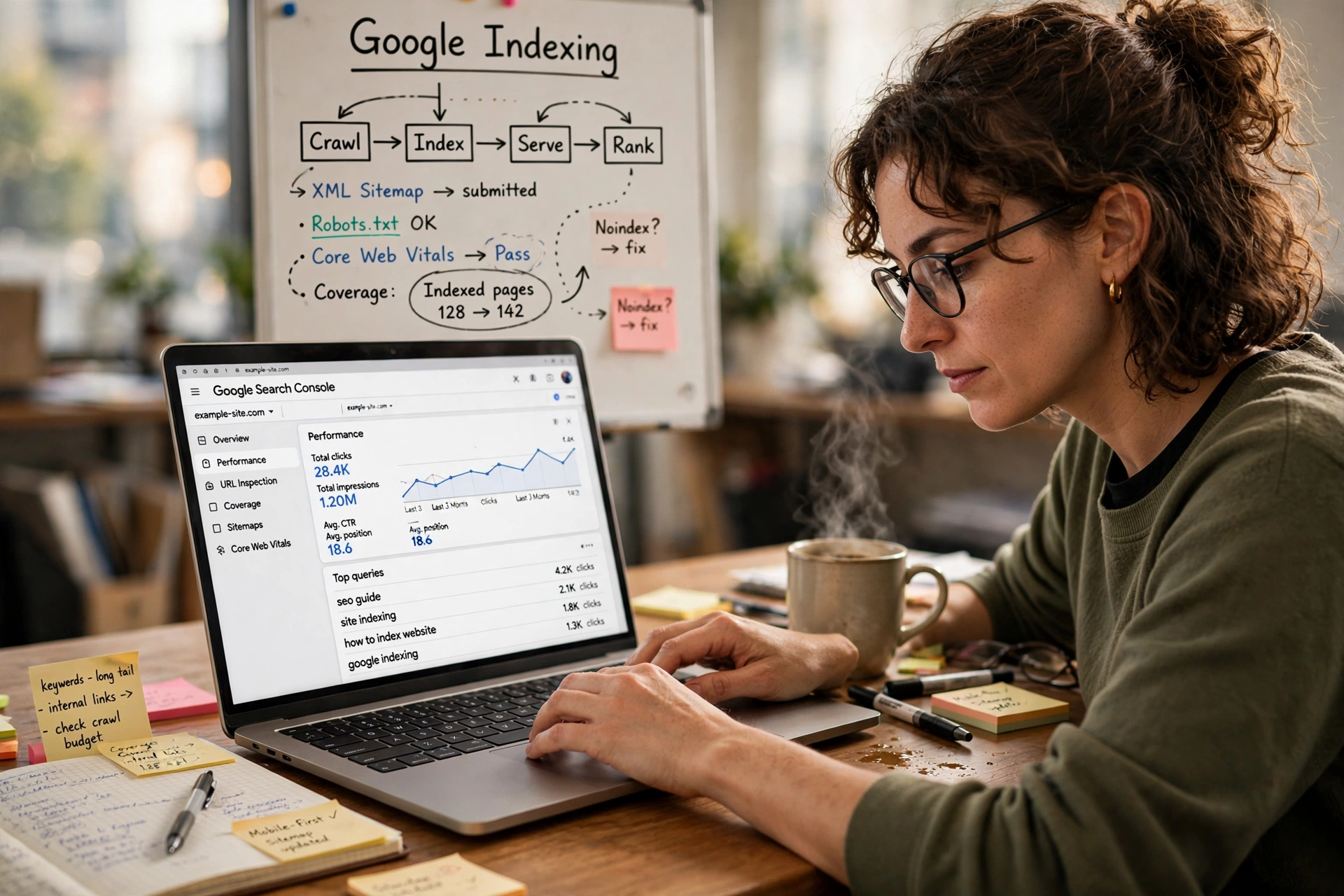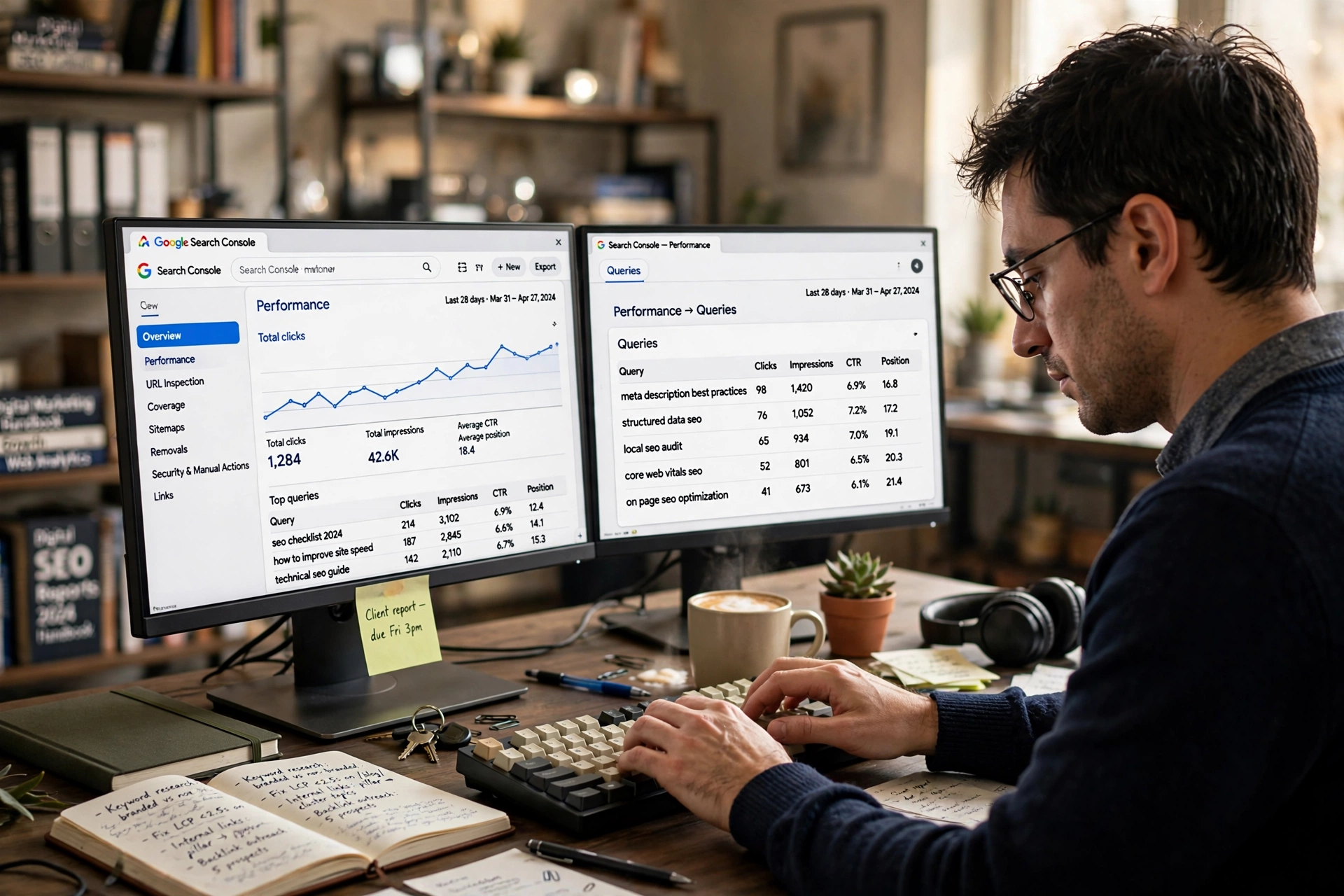
Where Do You Find the Infrastructure to Index Thousands of Pages on Google?
I have seen countless B2B founders build massive programmatic libraries only to realize that 90% of their pages are sitting in the "Discovered - currently not indexed" purgatory of Google Search Console. The frustration is real: you have the content, but you lack the pipeline to force Google to recognize it. If you are looking for where to find a solution for how to index thousands of pages on google, the answer isn't a single "buy" button, but rather a combination of Google's own Indexing API, high-authority programmatic architecture, and specialized indexing software.
Most people try to rely on the standard sitemap submission, which is effectively like sending a letter via snail mail and hoping the post office reads every page. For scale, you need an API-driven approach. When we developed the growth engine at BizAI Intelligence, we realized that without an active "push" mechanism, Google's crawl budget simply isn't enough for high-volume PSEO. To scale, you must move your operations into an environment that supports the Google Indexing API or utilizes a high-velocity internal linking structure that forces the bot's hand.
For those scaling rapidly, exploring a PSEO Architecture Guide for SaaS & Enterprise B2B Growth is the first step in ensuring your site is actually crawlable before you even worry about indexing.
Understanding the Mechanics of Mass Indexing
To understand where to find indexing solutions, we first have to define what is actually happening under the hood. Google does not index every page it finds; it indexes what it deems valuable and accessible.
📚
Definition
Indexing is the process by which Google Search analyzes a page, parses its content, and stores it in its massive database (the Index) so it can be served to users in response to a query.
The "where" of indexing happens in the gap between crawling and indexing. A page can be crawled (visited by Googlebot) but not indexed. In my experience working with large-scale directory sites, the primary bottleneck is usually "Crawl Budget." Google assigns a specific amount of time and resources to your domain. If your site is slow or your internal links are messy, Googlebot will leave before it reaches page 1,000 of your 5,000-page launch.
According to research by Gartner, the shift toward AI-generated content has led search engines to become significantly more selective about what they index to prevent "content pollution." This means that the old method of just "buying backlinks" to force indexing no longer works. Instead, you need a technical environment that signals high priority. This is why many enterprises are moving toward AI search engine optimization & GEO, ensuring their pages are structured for both humans and LLM crawlers.
The most effective environment for mass indexing is one that utilizes a "Hub and Spoke" model. By creating a powerful Pillar page that links to hundreds of satellites, you create a roadmap for the crawler. When the bot hits the Pillar, it sees 200 high-quality links and follows them. If those satellites are orphans (no internal links), they will likely never be indexed, regardless of which tool you use to "buy" indexing services.

Why Rapid Indexing is a Business Imperative in 2026
Waiting for Google to find your pages naturally is a luxury that high-ticket B2B businesses cannot afford. If you launch 2,000 landing pages targeting specific niches in your city or industry, every day those pages remain unindexed is a day your competitors are capturing those leads.
The business impact of slow indexing is measurable. According to a report by McKinsey on digital acceleration, businesses that achieve faster time-to-market for their digital assets see a significantly higher capture rate of early-adopter intent. In the context of PSEO, if you can index 5,000 pages in a week rather than six months, you effectively compress half a year of lead generation into seven days.
The risk of ignoring a professional indexing strategy is "Indexing Bloat." This happens when Google indexes your low-value pages (like tags or archive pages) but ignores your high-converting service pages. This dilutes your topical authority. When your site lacks a clear hierarchy, Google struggles to identify which page is the authoritative source for a specific keyword.
Furthermore, the rise of Generative Engine Optimization (GEO) means that if your pages aren't indexed in Google's core database, they won't be used as training data or citations for AI Overviews, SearchGPT, or Perplexity. According to Forrester, the visibility of a brand in AI-driven search is directly correlated with the depth and breadth of its indexed technical documentation and service pages. If you aren't indexed, you don't exist to the AI.
This is why we emphasize how to get cited by ChatGPT, SearchGPT, and Perplexity AI as a secondary goal to indexing. You cannot be cited by an AI if the underlying page hasn't been crawled and validated by the primary search index.
Practical Application: The Blueprint for Indexing Thousands of Pages
If you are wondering where to start the actual process, you need to move away from manual submissions. The following is the technical workflow I recommend for any business attempting to scale beyond 500 pages.
Step 1: API Integration
The fastest "where" is the Google Indexing API. While technically designed for Job Postings and Broadcast events, many SEO engineers use it to notify Google of new pages instantly. This bypasses the standard crawl queue. You set up a Service Account in the Google Cloud Console, grant it permission in Search Console, and send a POST request every time a new page is published.
Step 2: Internal Link Mapping
You cannot rely on the API alone. You must build an internal "web." I suggest a structure where every satellite page links back to the pillar and to at least two other related satellites. This creates a recursive loop for the bot. If you are using a programmatic SEO platform guide, this linking should be automated via your database logic.
Step 3: Quality Threshold Validation
Google will stop indexing your pages if it detects "thin content." Before pushing thousands of pages, ensure each page has a unique value proposition, a clear H1, and at least. |
| Generic Indexer Tools | Cheap, fast initial "hit." | High risk of temporary indexing, low longevity. | Low-stakes affiliate sites. |
| API-Driven PSEO (BizAI) | Instant discovery, high authority, sustainable. | Requires technical setup or a platform. | High-ticket B2B, Enterprise SaaS. |
The mistake I made early in my career was using generic "indexing services" that promised to index 10,000 pages for $50. What they actually did was ping the pages via low-quality forums and spammy directories. Google's bots visited the pages, but because the signals were spammy, the pages were never actually added to the index. I learned the hard way that the source of the discovery signal matters as much as the signal itself.
If you want sustainable growth, you need to focus on how to automate organic traffic & lead capture with AI, where the indexing is a byproduct of a high-quality system rather than a desperate attempt to "force" a bot to visit a page.
Common Questions and Misconceptions
Most guides on this topic get it wrong by suggesting that "more links equals more indexing." This is a dangerous oversimplification.
Myth 1: "I just need more backlinks to get indexed."
Correction: Backlinks help with ranking, but they are not the primary driver for indexing. Internal links and API notifications are far more effective for getting a page discovered. A page with zero external backlinks can be indexed in seconds via the API, while a page with 100 backlinks might take weeks to be discovered if it's orphaned from the main site navigation.
Myth 2: "If I use a sitemap, Google will eventually index everything."
Correction: Not necessarily. Google often ignores large portions of sitemaps if the site's overall "Quality Score" is low. If Google finds that the first 100 pages it crawled from your sitemap are thin or repetitive, it will stop crawling the rest of the sitemap to save resources. This is why content quality must precede the indexing push.
Myth 3: "Indexing tools can 'force' Google to rank my page."
Correction: Indexing and ranking are two entirely different processes. Indexing is just getting into the library; ranking is getting placed on the front shelf. You can be indexed in seconds but still be on page 10. To move from indexed to ranking, you need a strategy like GEO vs Traditional SEO to optimize for today's AI-driven search landscape.
Frequently Asked Questions
How long does it actually take to index 5,000 pages?
Using traditional sitemap methods, it could take anywhere from three weeks to three months, and you might only get 40% of the pages indexed. However, when using the Google Indexing API combined with a structured PSEO architecture, you can see the majority of your pages appear in the search results within 24 to 72 hours. The key is to stagger the submission to avoid triggering "unusual activity" flags, although the API is designed for high-volume updates.
Does using an indexing API violate Google's Terms of Service?
The Google Indexing API is officially supported for specific types of content, such as
JobPosting and BroadcastEvent. While using it for standard landing pages is a "grey hat" technique, it is widely used across the industry and rarely leads to penalties, provided the content itself is high-quality. The penalty comes from the content, not the notification method. If you push 5,000 pages of AI-generated slop, you will be penalized regardless of how you notify Google.Why are my pages "Discovered - currently not indexed"?
This is the most common pain point in mass indexing. It means Google knows the page exists (it found the link), but it decided that crawling it wasn't a priority. This usually happens for two reasons: either your crawl budget is exhausted, or the page looks too similar to other pages on your site. To fix this, improve your internal linking and ensure each page has unique, high-value data that distinguishes it from the rest of your cluster.
Can I use a third-party "indexing service" to speed up the process?
I strongly advise against cheap, third-party indexing services that don't provide transparency into their methods. Many of these services use "link farms" to ping Google. While this might get a page indexed temporarily, it sends a negative quality signal to Google's algorithms. If you want to scale, invest in a professional environment like BizAI Intelligence or build your own API integration.
Will indexing thousands of pages dilute my site's authority?
Only if those pages are low quality. If you create 1,000 pages that genuinely answer 1,000 different user intents, you are actually building "Topical Authority." Google views you as an expert in that niche. However, if you create 1,000 pages that all say essentially the same thing with slightly different city names, you risk a "helpful content" penalty. The secret is in the data variation and unique value on every single page.
Final Thoughts on Scaling Your Index
Understanding where to find the tools for how to index thousands of pages on google is the difference between a dormant website and a lead-generation machine. The infrastructure you choose, whether it's a manual slog or an automated API-driven system, will dictate your growth ceiling.
Stop renting your traffic from expensive ad platforms and start building an organic asset that compounds over time. If you are tired of seeing your hard work sit in the "not indexed" folder, it's time to upgrade your architecture.
Ready to dominate your niche with algorithmic force? Build your authority hub with BizAI Intelligence and turn your domain into a high-converting inbound engine. For more on optimizing your conversion pipeline, check out our guide on AI SDR vs Human SDR ROI.
Only 12 Onboarding Slots Remaining This Month
BizAI deploys 300 AI salespeople scoring purchase intent 24/7. Get your free niche domination blueprint.
AI Search Accelerator: 1-on-1 Strategy Session
Claim one of the 10 monthly slots. Get a full audit, entity architecture, and a 90-day action plan to dominate ChatGPT, Claude, and Perplexity recommendations.