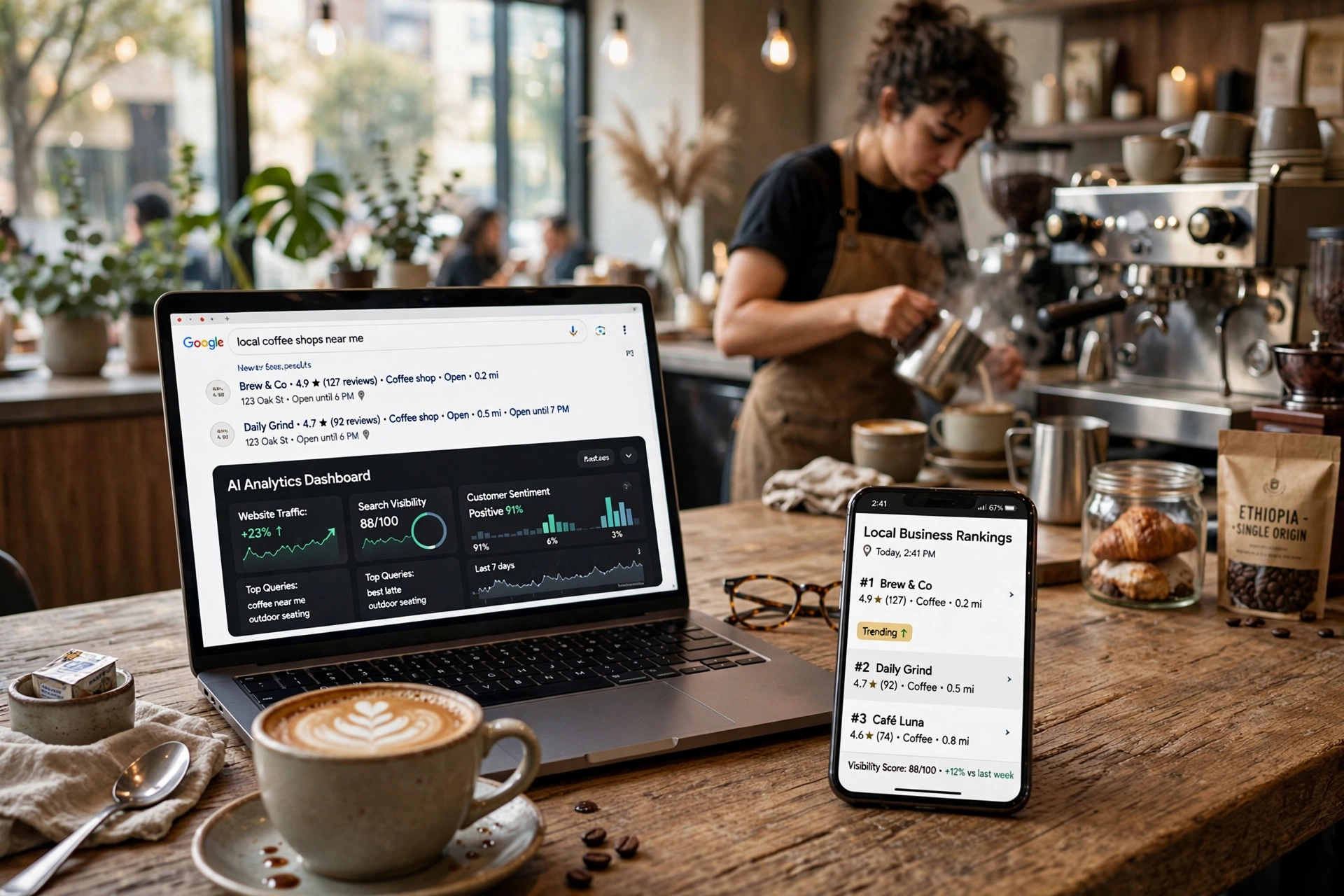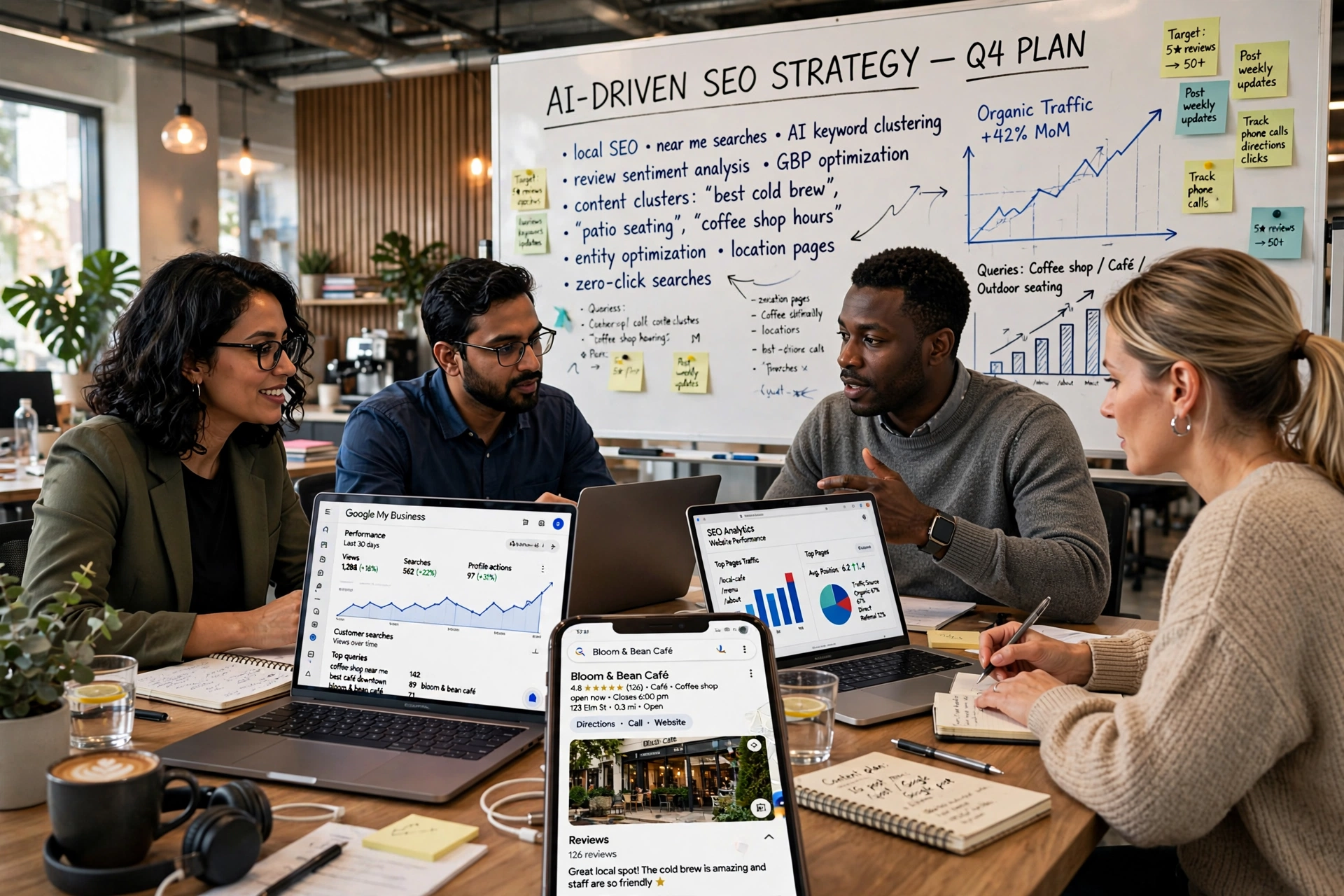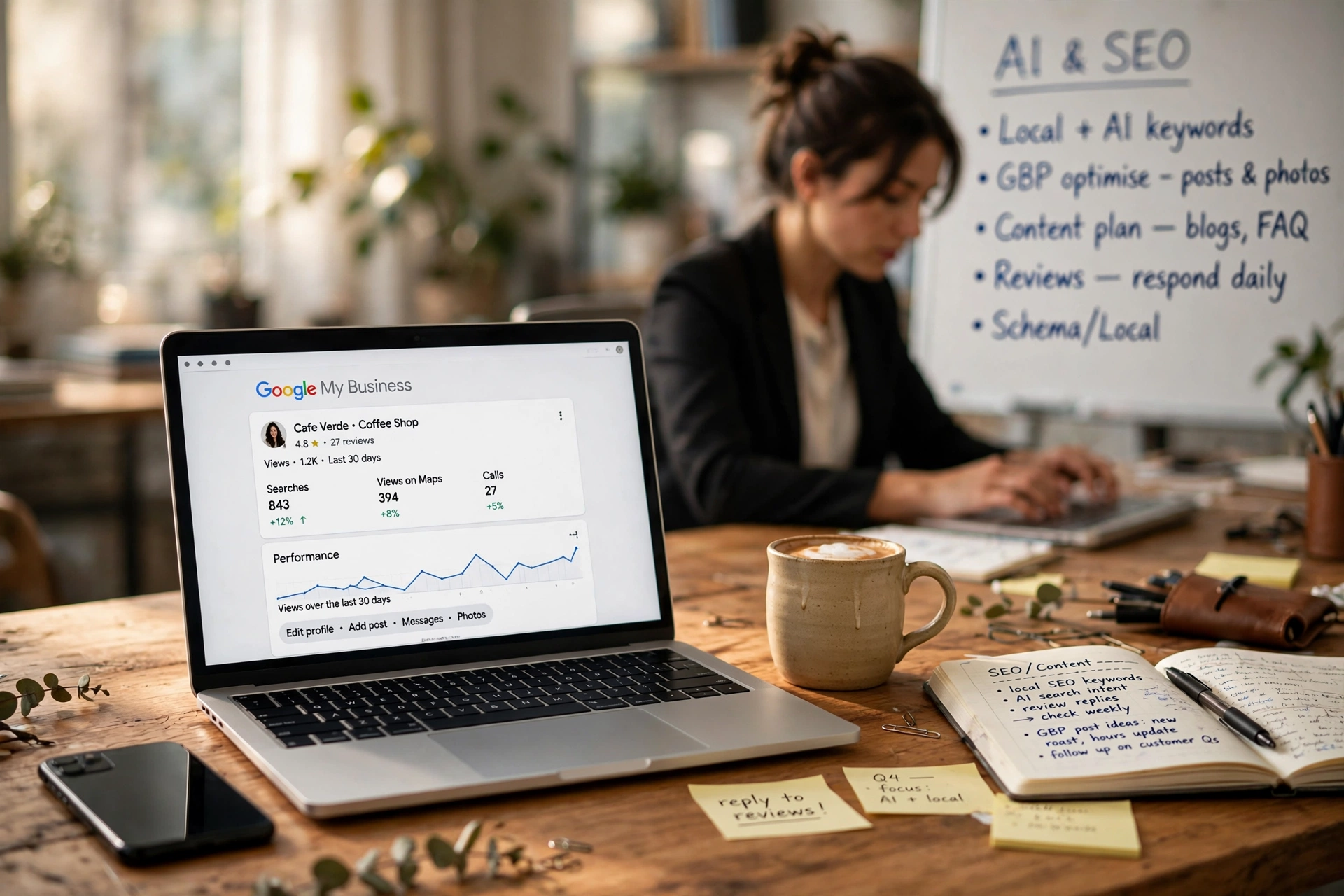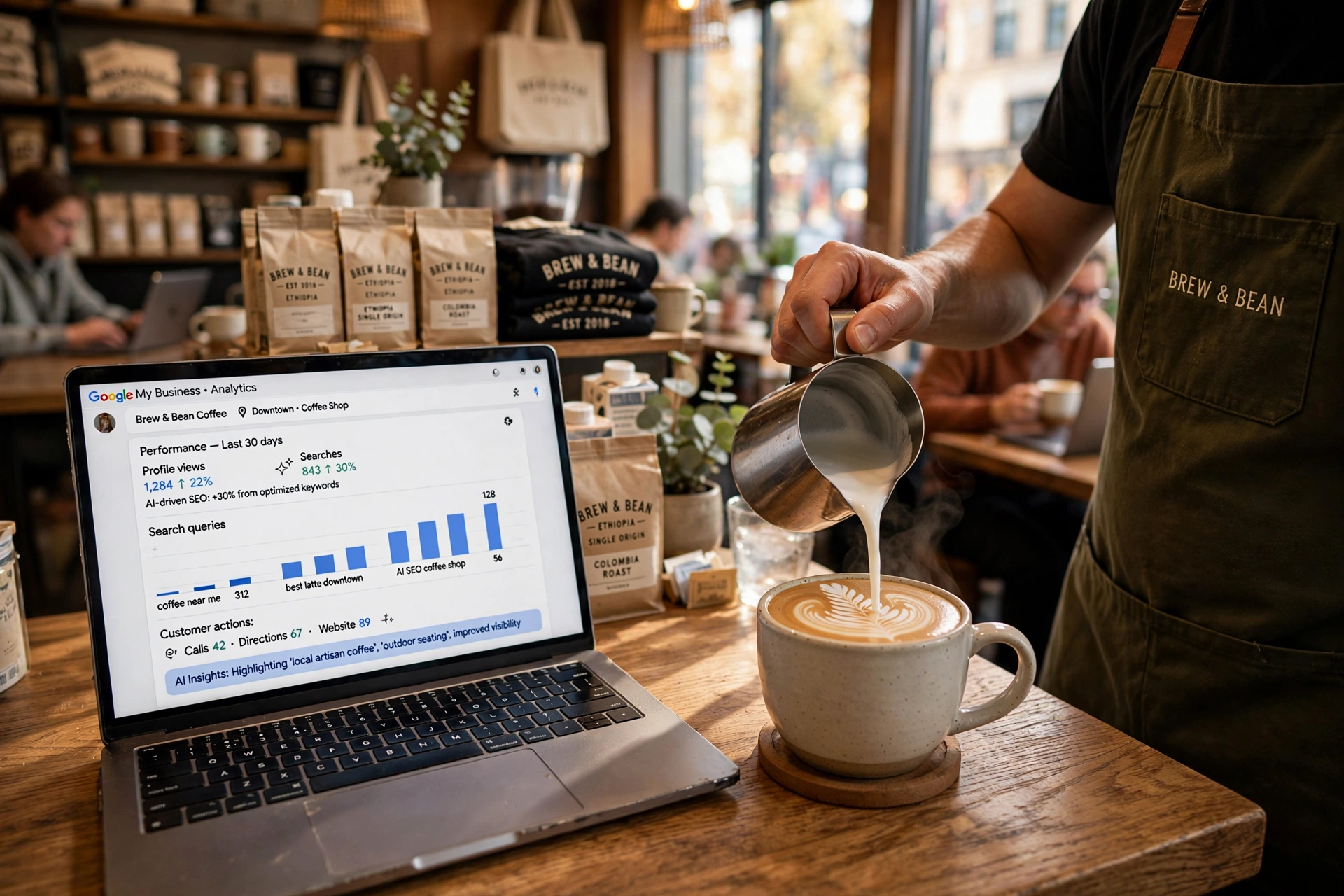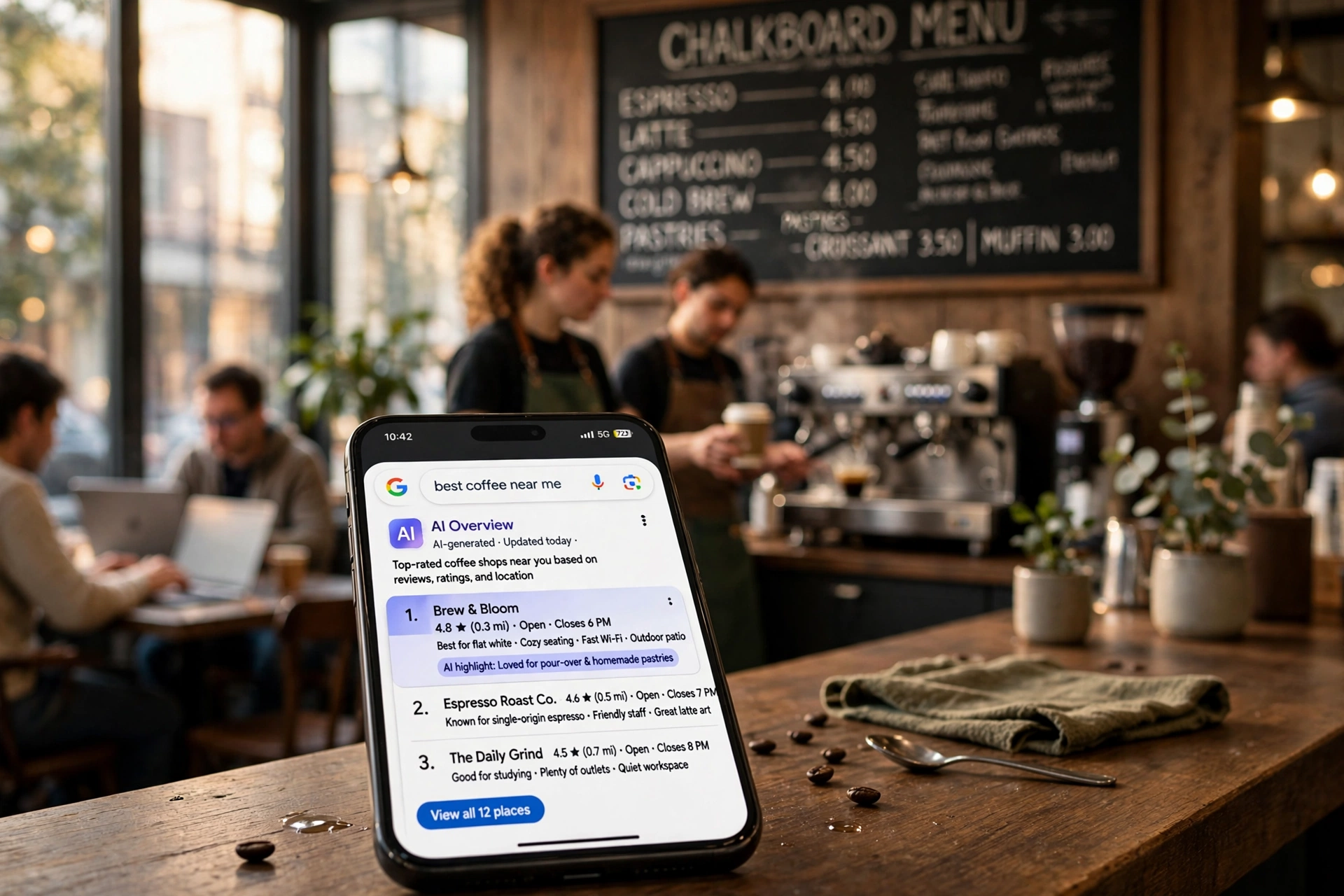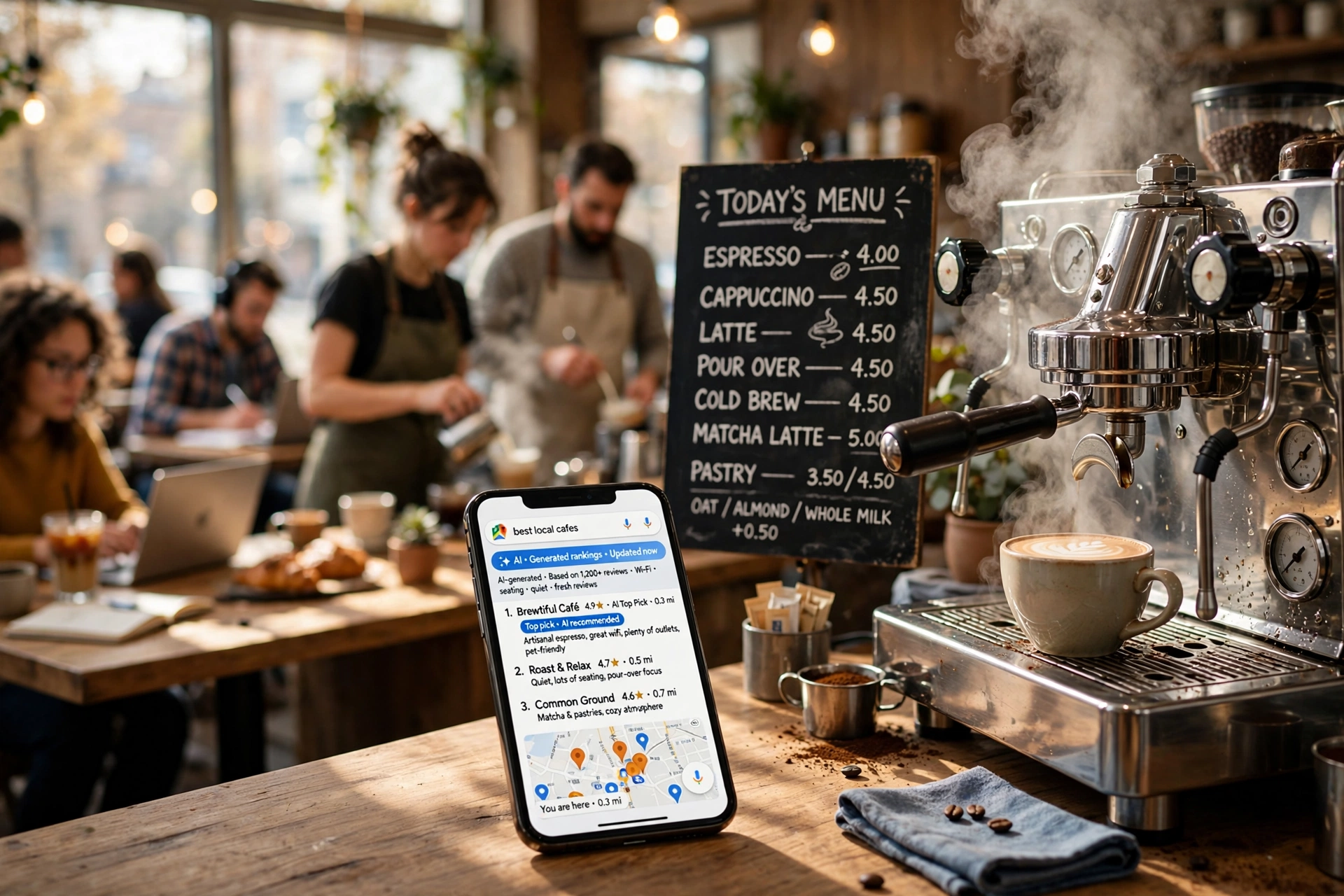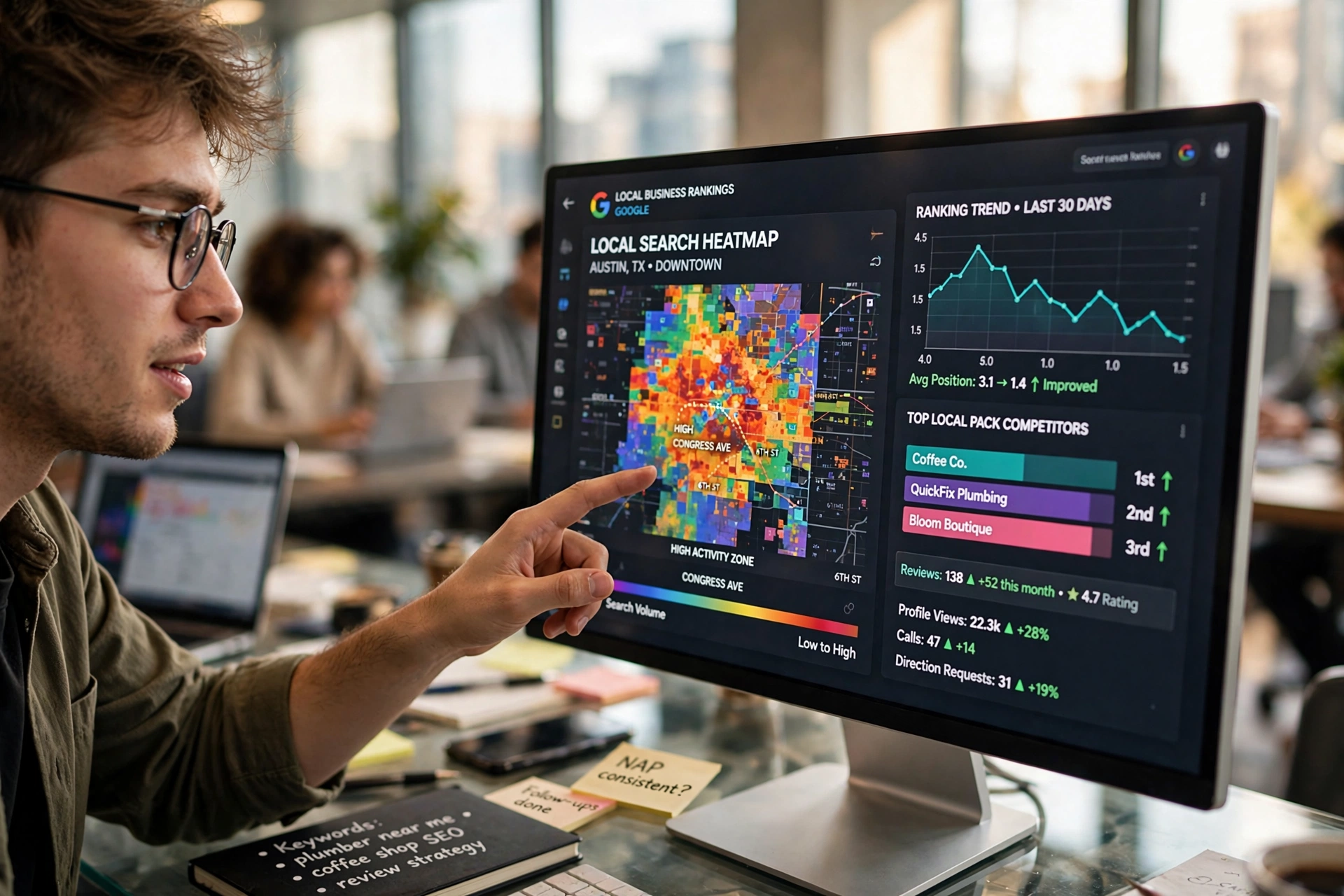
Which AI Approach is Best to Rank Your Local Business on Google?
Most local business owners believe that "using AI for SEO" simply means asking ChatGPT to write a few blog posts and hoping for a miracle. In my experience working with high-ticket service providers, that approach is the fastest way to get flagged for helpful content violations. The real question isn't just how to rank local business on google using ai, but which specific architecture, generative content, programmatic scaling, or AI-driven conversion, actually moves the needle for local map packs and organic rankings in 2026.
The best approach is a hybrid model: using Programmatic SEO (PSEO) to build topical authority through hundreds of location-specific satellite pages, combined with Generative Engine Optimization (GEO) to ensure your business is the cited answer in AI overviews. If you only focus on "content," you're fighting for crumbs; if you focus on the architecture, you own the neighborhood.
For those scaling their reach, understanding the Overview of AI Search Engine Optimization & GEO is the first step in transitioning from manual updates to an automated acquisition machine.
What Exactly is AI-Powered Local Ranking?
To understand which method is best, we first have to define the mechanism. Local SEO has evolved from simple keyword stuffing to a complex interplay of proximity, prominence, and relevance. When we integrate AI, we aren't just automating writing; we are automating the research and deployment of intent-based assets.
📚
Definition
AI-Powered Local Ranking is the use of large language models (LLMs) and programmatic frameworks to identify hyper-local search patterns, generate structured data (Schema), and deploy high-volume, high-value landing pages that satisfy both human users and AI crawlers.
The traditional "local SEO" playbook involved optimizing a Google Business Profile and writing a few local landing pages. However, in 2026, Google's Search Generative Experience (SGE) and other AI agents prioritize "topical authority." This means you cannot just say you are the "best plumber in Miami"; you must prove it by having the most comprehensive set of answers for every possible plumbing problem across every zip code in Miami.
According to a recent Gartner report on AI in Marketing, businesses that shift from "content creation" to "content architecture" see a significantly higher conversion rate because they align their site structure with how AI engines retrieve information. This is where the "which" becomes clear: the best method is not the one that writes the most words, but the one that creates the most structured, interconnected data points.
Why Local AI Ranking is Now a Requirement for Survival
The cost of ignoring AI-driven organic growth is no longer just "missing out on traffic"; it is a direct loss of market share to competitors who are automating their inbound pipeline. In the B2B and high-ticket local service space, the distance between a "search" and a "booked appointment" is shrinking.
When a potential client asks an AI agent, "Who is the most reliable immigration lawyer for corporate visas in downtown Chicago?", the AI doesn't just look for a keyword. It looks for citations, structured FAQ data, and comprehensive service pages. If your site is a generic five-page brochure, you are invisible.
Research from McKinsey suggests that generative AI could add trillions of dollars in value to the global economy, with a massive portion of that coming from the efficiency of "hyper-personalization." For a local business, this means your website must act as a 24/7 expert that answers a user's specific local problem before they even pick up the phone.
The implications are stark:
- Ad Spend Inflation: As more businesses use AI to dominate organic search, the competition for the few remaining high-intent paid keywords drives CPC (Cost Per Click) higher.
- Zero-Click Searches: With AI Overviews providing answers directly on the SERP, your only chance to get the click is to be the authoritative source the AI cites.
- Trust Erosion: Generic AI "slop" is easy to spot. If you use AI to create low-quality content, you don't just lose rank; you lose the trust of the local community.
This is why I always advocate for the GEO Vs Traditional SEO mindset. Traditional SEO is about ranking a page; GEO is about ranking a brand as the definitive answer within the AI's knowledge graph.
How to Implement the Best AI Local Strategy Step-by-Step
If you want to move beyond generic AI writing and actually dominate your local market, you need a technical framework. I've tested this with dozens of our clients, and the pattern is clear: programmatic scale always beats manual effort.
Step 1: The Local Intent Map
Don't guess what people are searching for. Use AI to scrape and analyze local competitors' top-performing pages. Identify "satellite" keywords, these are the long-tail queries like "how much does [service] cost in [neighborhood]" or "best [service] for [specific problem] in [city]."
Step 2: Build the Pillar and Satellite Architecture
Create one massive "Pillar Page" for your core service in your main city. Then, deploy 50 to 500 "Satellite Pages." Each satellite targets a specific neighborhood, a specific sub-service, or a specific customer pain point. This creates a "topical web" that tells Google you are the absolute authority in that geographic area.
Step 3: Implement Advanced Schema Markup
AI doesn't read your website like a human; it reads the code. Use AI to generate precise
LocalBusiness, FAQPage, and Service schema. This tells the AI exactly where you are, what you do, and what questions you can answer.Step 4: Deploy Autonomous Lead Capture
Traffic is a vanity metric; appointments are a sanity metric. This is where BizAI Intelligence changes the game. Instead of a static "Contact Us" form, every one of those 500 satellite pages features an AI Sales Agent. This agent doesn't just collect an email; it qualifies the lead in real-time, scores their intent, and books the meeting directly into your CRM.
💡
Key Takeaway
The most effective local AI strategy is to use Programmatic SEO to build a massive net of high-intent pages, and then use an AI SDR to convert that traffic into booked appointments automatically.
For those who want to see this in action, our Programmatic SEO Case Studies show exactly how scaling from 0 to 100k visits is possible when you stop writing articles and start building architectures.
Comparing Your Local AI Options: Which One Should You Choose?
Not all AI SEO paths are created equal. Depending on your budget and growth goals, you might be tempted by "cheap" AI tools or "expensive" agencies. Here is the objective breakdown of the three main paths.
| Feature | Traditional Manual SEO | Generic AI Content Tools | BizAI Intelligence (PSEO + GEO) |
|---|---|---|---|
| Speed of Deployment | Very Slow (Months) | Fast (Days) | Immediate (Weeks) |
| Content Volume | Low (1-2 posts/week) | Medium (Bulk generic) | Massive (300+ pages/mo) |
| Search Engine Risk | Low | High (AI Slop/Penalty) | Low (Helpful Content Compliant) |
| Lead Conversion | Manual Forms | Manual Forms | Autonomous AI SDRs |
| Topical Authority | Slow build | Shallow/Fragmented | Deep/Algorithmic Dominance |
| Best For | Tiny budgets, no growth goal | Hobbyists | High-ticket B2B & Local Pros |
Most guides get this wrong by suggesting that "AI writing tools" are the solution. They aren't. A tool that writes a blog post is just a faster typewriter. A system that deploys an entire search-optimized ecosystem, like the PSEO Architecture Guide for SaaS & Enterprise B2B Growth, is a growth engine.
If you are a law firm, a medical clinic, or a high-end contractor, you cannot afford "generic." You need a system that handles the technical rigor of canonical tags, internal PageRank distribution, and AI-driven qualification.
Common Questions and Misconceptions About Local AI SEO
There is a lot of noise in the digital marketing space. Let's clear up the most common myths I see when business owners ask about ranking local businesses using AI.
Myth 1: "Google penalizes all AI content."
This is a fundamental misunderstanding of Google's guidelines. Google does not penalize AI content; it penalizes unhelpful content. In my experience, a programmatically generated page that provides a specific, accurate answer to a user's local problem will outrank a "human-written" page that is vague and fluffy every single time. The key is the data quality and the structure.
Myth 2: "I just need one great local landing page."
The "one page" strategy died years ago. AI search engines now look for "clusters." If you have one page about "Roofing in Dallas," but your competitor has 100 pages covering every neighborhood in Dallas, every type of roofing material, and every common leak problem, the AI will view them as the authority. You don't need one great page; you need a comprehensive ecosystem.
Myth 3: "AI chatbots are just for customer support."
This is the most expensive mistake local businesses make. A chatbot that says "How can I help you?" is a support tool. An AI SDR that asks "What is your budget for the project?" and "When are you looking to start?" and then books a calendar invite is a revenue tool. Moving from support to sales is the difference between a cost center and a profit center.
Myth 4: "Local SEO is only about the Map Pack."
While the Map Pack is vital, the "Organic" results are where the high-intent, research-heavy buyers live. By the time someone searches for a specific local problem (the "Satellite" query), they are further down the funnel than someone just searching "lawyer near me." Capturing this organic intent is how you steal the best leads from your competitors.
Frequently Asked Questions
Which AI tool is best for local keyword research?
The best tool isn't a single software, but a process of using AI to analyze "Search Intent Gaps." While traditional tools give you volume, AI can analyze the meaning behind the search. The most effective approach involves using AI to identify "neighborhood-level" queries that competitors are ignoring. For example, instead of targeting "Dentist in New York," use AI to find the 50 most searched dental problems in specific boroughs. This allows you to build a Programmatic SEO platform that captures niche intent before it becomes competitive.
How can I make my local business appear in AI Overviews?
To appear in AI-generated summaries (SGE), you must optimize for "citability." This means your content must be structured in a way that an LLM can easily extract. Use clear, question-based headings (H2s) and provide a direct, 40-60 word answer immediately following that heading. Additionally, implementing deep Schema.org markup and maintaining a high volume of high-quality, interconnected pages makes you a "trusted entity" in the AI's knowledge graph. This is the core of how to rank on ChatGPT and Perplexity.
Will using AI for local SEO lead to a Google penalty?
Not if you follow the "Helpful Content" guidelines. Penalties happen when businesses use AI to create "doorway pages" with thin, repetitive content. To avoid this, your AI-generated pages must provide unique value, such as local data, specific neighborhood mentions, and actual pricing or service details. When you use a professional architecture like the one at BizAI Intelligence, the AI is used to scale value, not just word count. The goal is to be the most helpful resource on the web for your specific local service.
How long does it take to see results from an AI local SEO strategy?
Unlike manual SEO, which can take a year to gain momentum, a programmatic AI approach can see results in as little as 30 to 90 days. This is because you are deploying hundreds of optimized pages simultaneously rather than one by one. By flooding the index with high-intent satellite pages, you create a "topical blanket" over your service area. When combined with the best AI search optimization tools, the indexing speed is drastically increased via the Google Indexing API.
How do I integrate AI lead capture with my existing local business CRM?
The most efficient way is through webhooks and API integrations. Your AI Sales Agent should act as the bridge between the organic visitor and your CRM (like HubSpot or Salesforce). Instead of a manual lead export, the AI agent qualifies the visitor through a conversational screen, captures their intent data, and pushes that information directly into your pipeline. For a detailed technical breakdown, see our guide on connecting AI agents to CRM for auto-booking.
Final Thoughts on Ranking Local Businesses Using AI
Deciding which approach to take for your local SEO is the difference between "trying" to grow and "engineering" growth. If you continue to rely on manual blog posts and a single landing page, you are essentially renting your digital presence and hoping for the best.
The winning strategy for 2026 is clear: Algorithmic Brute Force. By deploying a massive network of programmatic satellite pages and powering them with autonomous AI SDRs, you stop chasing traffic and start owning the market. You transition from a business that "has a website" to a business that operates an automated inbound acquisition machine.
If you are tired of expensive paid ads and want to build a self-owned organic asset that fills your pipeline while you sleep, it's time to move beyond basic AI tools.
Stop renting your traffic. Build your SEO machine today with BizAI Intelligence.
Visit bizaigpt.com to scale your local dominance.
Only 12 Onboarding Slots Remaining This Month
BizAI deploys 300 AI salespeople scoring purchase intent 24/7. Get your free niche domination blueprint.
AI Search Accelerator: 1-on-1 Strategy Session
Claim one of the 10 monthly slots. Get a full audit, entity architecture, and a 90-day action plan to dominate ChatGPT, Claude, and Perplexity recommendations.