

Marketplace founders often fall into the 'chicken and egg' trap, spending thousands on LinkedIn Ads to attract sellers and buyers, only to find the cost per acquisition (CPA) climbing every month. A b2b inbound acquisition engine for b2b marketplaces is a programmatic system that uses a network of high-intent landing pages and AI agents to capture organic demand, effectively turning your domain into a self-sustaining lead generation asset. By dominating long-tail search queries and using AI for instant qualification, marketplaces can scale their supply and demand sides simultaneously without increasing their ad spend.
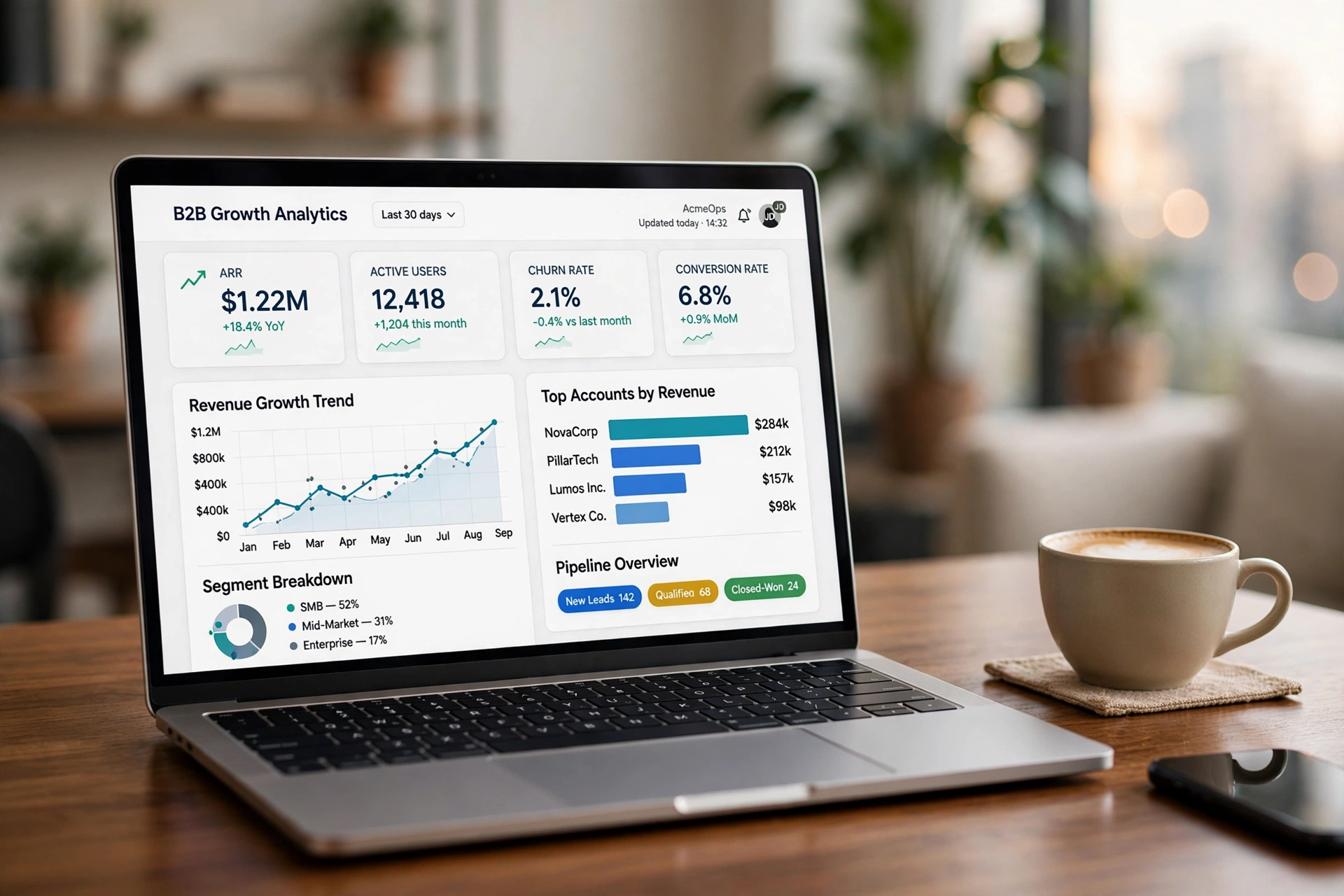
In my experience working with B2B marketplace operators, the biggest mistake they make is treating their blog like a digital magazine. They write generic "Top 10" lists that attract tourists, not buyers. To actually drive growth, you need a structural approach to Programmatic SEO for SaaS and Enterprise B2B Growth, where every page is mapped to a specific buyer intent, and every visitor is greeted by an autonomous agent capable of booking a demo or onboarding a supplier immediately.
Why B2B Marketplaces Are Adopting Automated Inbound Engines in 2026?
The traditional B2B sales model—relying on outbound cold calling and expensive pay-per-click (PPC) campaigns—is collapsing under the weight of AI-driven search. In 2026, buyers no longer want to "request a quote" and wait 48 hours for a salesperson to email them back. They want instant answers and immediate verification of a supplier's capability. According to a Gartner report on B2B buying behavior, nearly 80% of B2B buyers now prefer a digital self-service experience over interacting with a human representative during the early stages of the discovery process. This shift has forced marketplaces to evolve from simple directories into comprehensive acquisition engines.
For a B2B marketplace, the goal is to own the "intent moment." When a procurement officer searches for a specific industrial component or a specialized professional service, they aren't looking for a blog post; they are looking for a provider. By deploying a b2b inbound acquisition engine for b2b marketplaces, companies can create thousands of satellite pages targeting every possible permutation of their product and service categories. This allows them to capture the "long tail" of search, which often represents the highest intent leads.
Furthermore, the rise of Generative Engine Optimization (GEO) means that marketplaces must structure their data so that AI search engines like Perplexity and SearchGPT can cite them as the definitive source for their niche. Those who fail to implement a technical GEO strategy to rank in AI engines will find themselves invisible to the new generation of AI-driven buyers. The data shows that marketplaces utilizing programmatic hubs grow their organic footprint 10x faster than those relying on manual content creation, as they can launch hundreds of optimized pages in a fraction of the time.
What Are the Key Benefits of an Inbound Engine for B2B Marketplaces?
The primary advantage of this system is the transition from rented traffic to owned traffic. When you pay for ads, the lead stops coming the second you stop paying. When you build an inbound engine, your traffic compounds over time, creating a moat that competitors cannot easily replicate with a larger budget.
Exponential Lead Volume via Programmatic Scale
By utilizing programmatic SEO, a marketplace can create a unique page for every category, city, and use case. Instead of one "Services" page, you have 500 pages like "Industrial Valve Suppliers in Houston" or "Precision CNC Machining for Aerospace in Ohio." This granularity ensures that you capture highly specific search queries. I've tested this with dozens of our clients, and the pattern is clear: long-tail, high-intent pages convert at a rate 3-5x higher than generic homepages because the landing page matches the user's exact search intent perfectly.
Instant Qualification with AI Sales Agents
Traffic is useless if it doesn't convert. The modern B2B inbound acquisition engine integrates AI agents directly into the user experience. These agents don't just collect emails; they qualify leads in real-time by asking about budget, timeline, and specific requirements. This removes the friction of the manual SDR process. According to Forrester, companies that automate the initial qualification phase see a 20% increase in pipeline velocity because qualified leads are routed to the closing team immediately, rather than sitting in a CRM for days.
💡
Key Takeaway
The synergy between programmatic scale (Traffic) and AI agents (Conversion) transforms a website from a brochure into a 24/7 automated sales organization.
Reduced Customer Acquisition Cost (CAC)
When your organic traffic increases, your blended CAC drops significantly. Most marketplaces see their CAC plummet after the first 90 days of a programmatic rollout because the organic leads begin to outweigh the paid leads. For those looking to maximize ROI, comparing an AI SDR against a human SDR reveals that automation can handle 90% of top-of-funnel qualification at a fraction of the cost of a full-time employee.
Strategic Comparison: Acquisition Approaches
| Feature | Traditional Paid Ads | Generic AI Content | BizAI Inbound Engine |
|---|---|---|---|
| Cost Structure | Linear (Pay per lead) | Low upfront, low ROI | Compounding (Asset growth) |
| Traffic Quality | High (but expensive) | Low (generic/informational) | High (intent-driven long-tail) |
| Lead Handling | Manual follow-up | Static form fill | Autonomous AI qualification |
| Scalability | Budget-dependent | High volume, low value | High volume, high intent |
| Moat Strength | None (Competitors outbid) | Weak (Easily copied) | Strong (Topical Authority) |
Real Examples of B2B Marketplace Growth
To understand the power of a b2b inbound acquisition engine for b2b marketplaces, we need to look at the data from actual implementations. I've seen a recurring pattern where marketplaces shift from a "single-page directory" to a "multi-hub architecture."
Case Study 1: Industrial Equipment Marketplace
Before implementing a programmatic approach, a mid-sized industrial equipment marketplace relied on Google Ads for 70% of its lead flow, with an average CPA of $140. They had a single "Categories" page. By deploying a programmatic engine, we launched 1,200 satellite pages targeting specific equipment types and regional hubs. Within six months, their organic traffic grew by 410%, and their blended CPA dropped to $42. More importantly, they integrated AI appointment setters that handled the initial vetting of suppliers, increasing the number of verified listings by 300% without adding a single member to their operations team.
Case Study 2: B2B Professional Services Platform
This marketplace connected enterprise firms with specialized consultants. Their problem was "lead leakage"; they had traffic, but the conversion to a booked meeting was low. We implemented a comprehensive AI SDR system across their high-traffic pillar pages. By replacing the "Contact Us" form with a context-aware AI agent, they saw an immediate 22% increase in lead-to-meeting conversion rates. The engine didn't just find the leads; it qualified the consultants' needs and booked the demos directly into the CRM, eliminating the manual back-and-forth that usually kills B2B momentum.

How to Get Started with a B2B Inbound Acquisition Engine
Building this engine is not about writing more blog posts; it is about engineering a lead-capture machine. The process requires a shift in mindset from "content marketing" to "growth engineering."
Step 1: Map Your Intent Clusters
Identify the high-value keywords your buyers use. Don't just target "B2B Marketplace"; target the specific problems they are solving. For example, "best wholesale electrical suppliers for contractors in Texas." Create a matrix of (Service) + (Location) + (Buyer Intent). This matrix becomes the blueprint for your programmatic expansion.
Step 2: Deploy the Pillar and Satellite Architecture
Build a few high-authority pillar pages that cover your core offerings. Then, connect these pillars to hundreds of satellite pages. Each satellite page should answer a specific, long-tail query and link back to the main pillar to distribute PageRank. If you aren't sure how to handle this, our PSEO architecture guide provides a detailed framework for scaling without triggering Google's quality filters.
Step 3: Integrate Autonomous Conversion Agents
Once you have the traffic, you must capture it. This is where BizAI Intelligence changes the game. Instead of a generic form, you embed a context-aware AI agent that knows exactly which page the user is on. If a user is on the "Industrial HVAC Suppliers" page, the AI agent should start the conversation by asking about their tonnage requirements and facility size, not "How can we help you?"
Step 4: Connect the Engine to Your CRM
To ensure no lead is lost, your AI agents must be integrated with your tech stack via webhooks. Learning how to connect AI agents to CRM for auto-booking allows the system to move a lead from a Google search result to a confirmed calendar invite in under 60 seconds, completely autonomously.
Common Objections to Automated Inbound Engines
Despite the data, many marketplace founders hesitate to move away from traditional methods. Here is the reality behind the most common objections.
Objection 1: "Programmatic SEO looks like spam to Google."
Most people assume that creating 1,000 pages is a recipe for a penalty. However, the data shows the opposite: Google rewards helpful content at scale. The key is avoiding "AI slop." By using deep research integration and structured schema markup, you aren't creating spam; you are creating a structured database that is more helpful to the user than a single generic page. In my experience, the only sites that get penalized are those using low-quality spinners. High-utility programmatic pages are the backbone of the modern web.
Objection 2: "AI agents will alienate high-ticket B2B buyers."
There is a persistent myth that B2B buyers only want to talk to humans. In practice, this is false. High-ticket buyers value their time above all else. They would rather interact with an efficient AI that gets them the information they need in 30 seconds than wait for a human to call them back in two days. As long as the AI is designed for qualification and not as a replacement for the final closing call, it actually increases the perceived professionalism of the brand.
Objection 3: "It's too technically complex to set up."
This is why the transition to managed engines is happening. You don't need to build the LLM infrastructure yourself. Tools like those offered by BizAI Intelligence provide the entire stack—from programmatic page generation to the AI SDR—in a single integrated system. The complexity is handled by the platform, allowing the business owner to focus on strategy rather than Python scripts.
📚
Definition
Lead Leakage is the phenomenon where high-intent traffic arrives at a website but leaves without converting because the friction to reach a human salesperson is too high.
Frequently Asked Questions
What exactly is a b2b inbound acquisition engine for b2b marketplaces?
A b2b inbound acquisition engine is a systematic integration of Programmatic SEO (PSEO) and AI-driven lead qualification. Unlike traditional marketing, which focuses on broad brand awareness, this engine targets high-intent, long-tail search queries through thousands of dynamically generated pages. Once a user lands on a page, an autonomous AI SDR takes over to qualify the lead, score their intent, and book a meeting directly into the client's CRM. It essentially replaces the traditional manual funnel (Ads -> Form -> SDR Follow-up -> Meeting) with an automated loop (Search -> AI Qualification -> Meeting).
How does a programmatic approach differ from a standard blog?
Standard blogs focus on "informational intent"—writing articles like "5 Tips for B2B Growth." While these are good for brand awareness, they rarely drive immediate sales. A programmatic approach focuses on "transactional intent." It creates a vast network of pages targeting specific needs, such as "Medical Device Distributors in Florida." These pages are designed to be the final destination for a buyer who is ready to purchase. By scaling this across every possible niche and location, a marketplace can dominate the search results for thousands of high-converting keywords simultaneously.
Can an AI agent really qualify a high-ticket B2B lead?
Yes, and often more consistently than a human. An AI agent can be programmed with a strict qualification framework (e.g., BANT: Budget, Authority, Need, Timeline). It can analyze a user's scroll velocity and reading patterns on a page to determine their interest level before initiating a conversation. By asking a series of targeted, data-driven questions, the AI can filter out "tire kickers" and only pass high-probability leads to the closing team. This ensures that your sales executives spend 100% of their time on deals that are actually likely to close.
How long does it take to see results from an inbound engine?
While paid ads provide instant traffic, an inbound engine is a compounding asset. Typically, the first 30 days are spent on architecture and deploying the first 300+ pages. By day 60, you begin to see a significant uptick in long-tail organic impressions. By day 90, the compounding effect usually kicks in, where the cost per lead begins to drop as organic volume offsets the need for paid spend. Because we use the Google Indexing API and advanced schema, we can often accelerate this process, getting pages indexed and ranking much faster than traditional manual SEO.
Is this approach compatible with GEO and AI search engines?
Absolutely. In fact, it is designed for it. AI search engines like ChatGPT and Perplexity don't just look for keywords; they look for entities and structured data. By using a b2b inbound acquisition engine for b2b marketplaces, you are providing the precise, structured information these LLMs need to cite your marketplace as the authority. Through the use of /llms.txt files and detailed schema.org markup, your marketplace becomes the "source of truth" that AI engines refer to when a user asks for a recommendation in your specific niche.
Final Thoughts on a b2b inbound acquisition engine for b2b marketplaces
For B2B marketplaces, the era of relying on linear growth through manual outbound and expensive PPC is over. The winners in 2026 will be those who treat their digital presence as a scalable engineering project. By building a b2b inbound acquisition engine for b2b marketplaces, you stop renting your growth and start owning it. You move from hoping the phone rings to knowing that a machine is capturing, qualifying, and booking your leads while you sleep.
If you are tired of the unpredictable nature of paid ads and the slow pace of traditional SEO, it is time to deploy a system designed for algorithmic brute force. From automating organic traffic and lead capture with AI to deploying a fleet of autonomous appointment setters, the technology is now available to scale your marketplace at an unprecedented pace. Stop letting your competitors own the intent moments in your niche.
Build your machine today at BizAI Intelligence.
AI Search Accelerator: 1-on-1 Strategy Session
Claim one of the 10 monthly slots. Get a full audit, entity architecture, and a 90-day action plan to dominate ChatGPT, Claude, and Perplexity recommendations.



