📖This article is part of the complete guide to Ultimate Guide to Hot Lead Notifications for Sales.
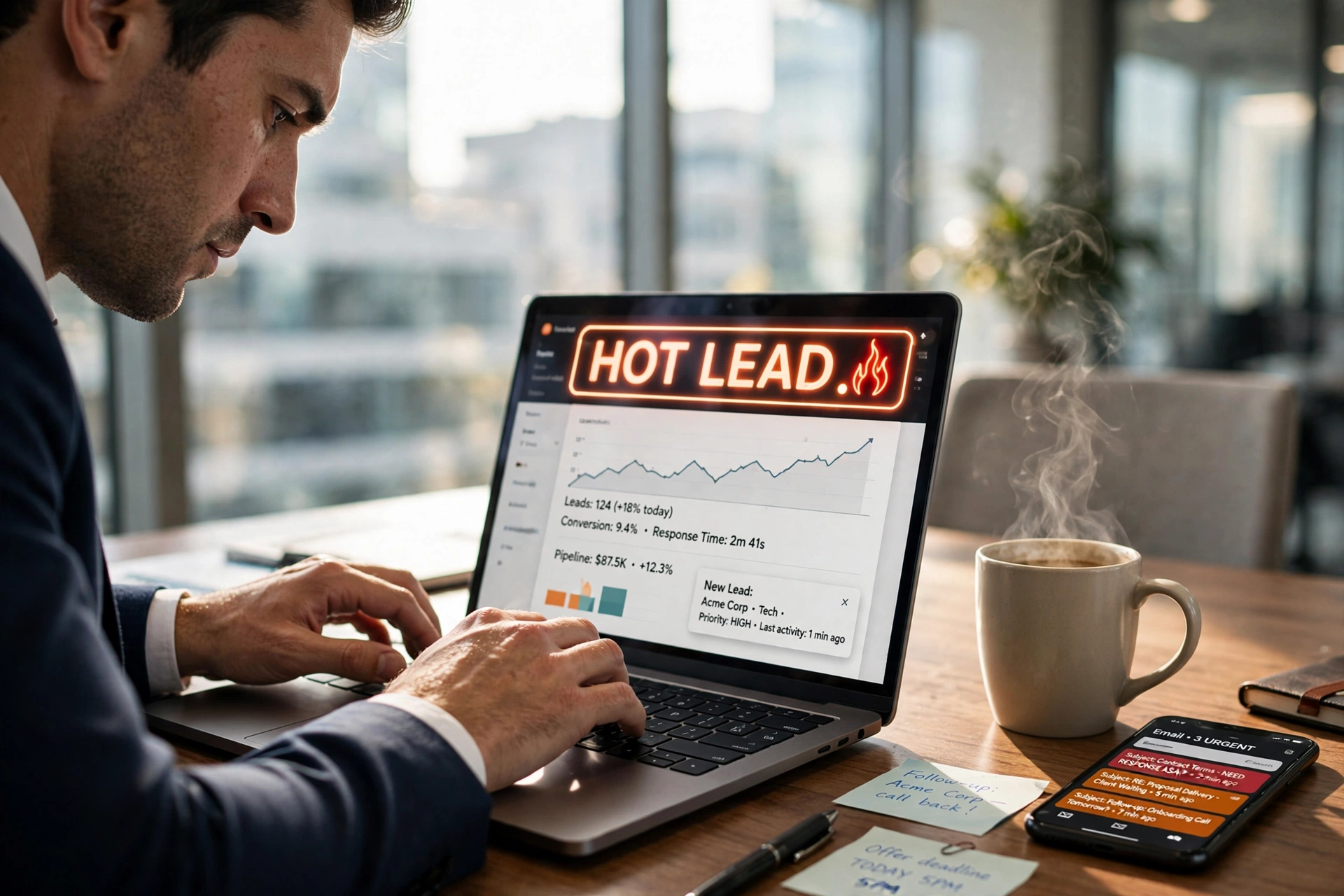
High-ticket e-commerce brands lose up to 70% of potential revenue not because of a poor product, but because of the 'intent gap', the window of time between a user showing peak buying signals and the brand ever noticing. In my experience working with luxury electronics and high-end furniture brands, I've seen that the difference between a conversion and a bounce often comes down to a 5-minute window of responsiveness. When a customer spends ten minutes comparing two $2,000 products and then lingers on the shipping page, they aren't just browsing; they are signaling a high-intent purchase event that requires immediate intervention.
For a comprehensive overview of this technology, explore our Ultimate Guide to Hot Lead Notifications for Sales.
What Are Hot Lead Notifications for E-commerce?
📚
Definition
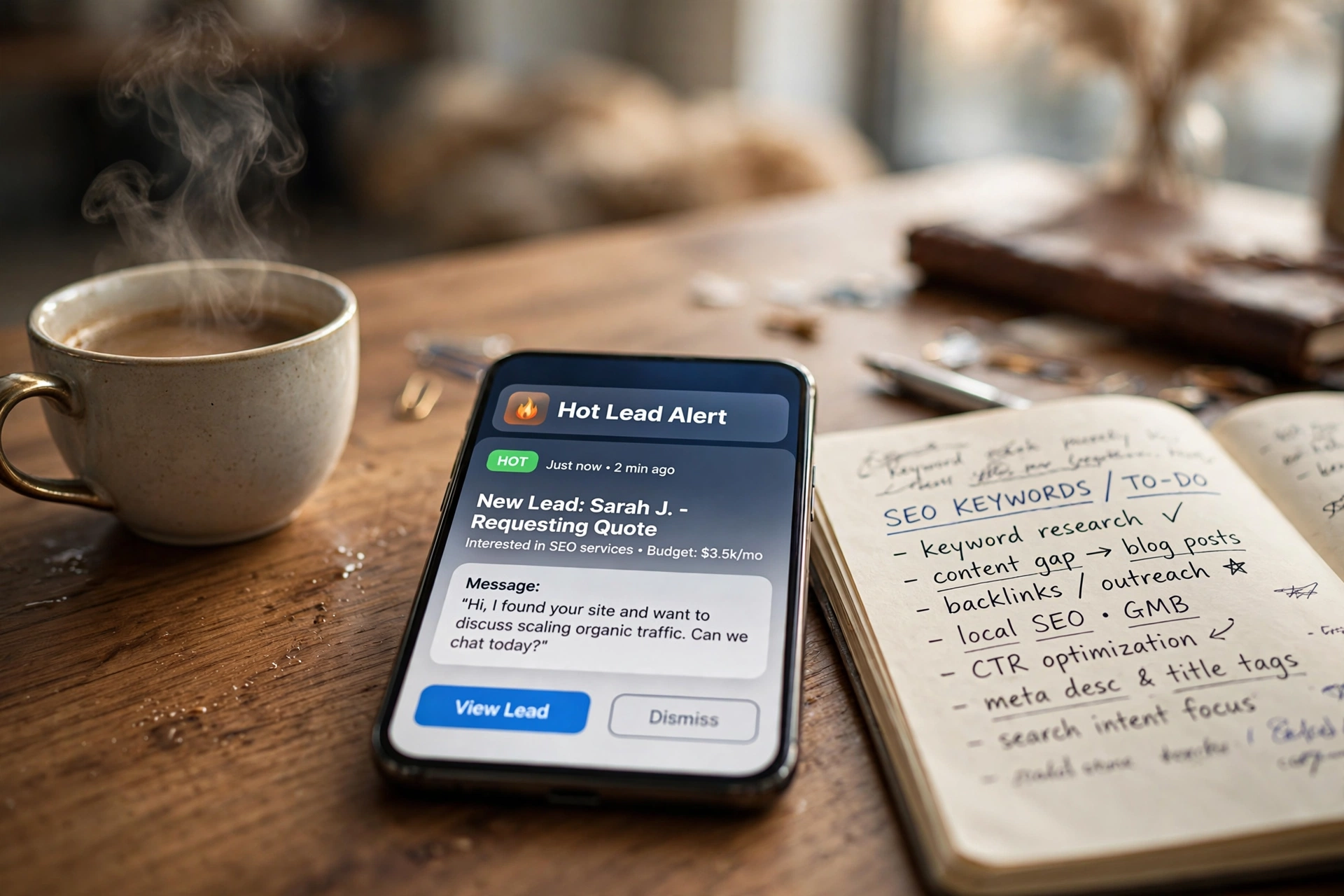
Hot lead notifications for e-commerce are real-time alerts triggered when a visitor exhibits specific behavioral patterns, such as rapid scroll velocity on a pricing page or repeated visits to a high-ticket product, indicating a high probability of immediate purchase.
Unlike traditional abandoned cart emails that trigger after a user has already left the site, hot lead notifications operate in the present tense. They leverage artificial intelligence and behavioral tracking to identify a 'hot' state while the user is still active. This allows the business to deploy a targeted intervention, such as a personalized discount, a live chat invite from a specialist, or a high-priority alert to a sales representative, at the exact moment the buyer is most susceptible to conversion.
In a 2026 market landscape, this is no longer about simple cookies; it is about analyzing the interaction between a large language model and the user's real-time intent. When we integrated these systems at BizAI Intelligence, we found that the most effective triggers aren't just page views, but 'intent clusters.' For example, a user who views a product, checks the warranty page, and then returns to the product page three times in two minutes is an exponentially more valuable lead than someone who simply spends ten minutes reading a blog post.
By utilizing how to automate organic traffic with AI, e-commerce brands can connect these intent signals to an autonomous system that notifies the right person via Slack, WhatsApp, or CRM, ensuring that no high-value prospect slips through the cracks during their peak moment of urgency.

Why Do Hot Lead Notifications Matter for High-Ticket E-commerce?
For low-cost impulse buys, a notification system is overkill. However, for high-ticket e-commerce, where items cost hundreds or thousands of dollars, the psychology of the purchase is different. Buyers experience 'purchase anxiety.' They need validation, reassurance, and sometimes a gentle push from a human expert to finalize the transaction.
According to research from Gartner, customers who engage with a brand in real-time during their research phase are 40% more likely to complete a high-value purchase. The primary reason is the reduction of friction. If a customer is struggling with a technical specification for a high-end camera, a hot lead notification allows a sales agent to pop up and say, "I noticed you're looking at the lens specifications; would you like a quick comparison with the X-model?" This transforms a cold transaction into a guided shopping experience.
Furthermore, the ROI of these notifications is staggering because they target the most expensive part of the funnel: the final decision stage. Most digital marketing budgets are spent on top-of-funnel awareness. However, the actual revenue is won or lost at the bottom. By focusing on best B2B sales automation software for inbound leads in 2026, brands can stop wasting spend on generic retargeting ads and start investing in real-time conversion of existing traffic.
From a technical perspective, this approach integrates seamlessly with the broader strategy of GEO vs traditional SEO. While SEO brings the user to the page, hot lead notifications ensure that the traffic actually converts into a lead. Without this mechanism, you are essentially paying for traffic and hoping the user finds the 'Buy' button without any help, a strategy that fails for any product with a complex decision-making process.
How to Implement Hot Lead Notifications in Your Store
Implementing a hot lead system requires moving beyond basic analytics. You need a stack that can identify behavioral intent and route that data to a communication channel in under 60 seconds. Here is the professional framework for execution:
- Define Your 'Hot' Threshold: You cannot notify your team for every visitor. You must establish a scoring system. For instance, a 'Hot Lead' might be defined as: (Visit to Pricing Page) + (3+ Product Views) + (Stay of > 5 minutes) + (Visit to FAQ/Shipping).
- Deploy Behavioral Tracking: Use an AI-powered agent that monitors scroll depth and click patterns. This is where AI search engine optimization & GEO plays a role; if the user arrived via a highly specific long-tail query, their intent is already higher than a generic search visitor.
- Set Up Instant Routing: The notification must reach the agent instantly. Whether it is a webhook to a CRM or a direct alert via an AI appointment setter for B2B, the latency must be near zero.
- Trigger the Intervention: The agent should have a predefined playbook. Instead of "Can I help you?", the approach should be specific: "I see you're comparing the Pro and Elite versions; would you like to know which one fits your specific use case better?"
| Approach | Traditional Cart Recovery | Generic AI Chatbots | Modern Hot Lead System |
|---|---|---|---|
| Timing | Post-exit (Hours/Days later) | Reactive (User must start) | Proactive (Based on intent) |
| Personalization | Generic "You left something" | Scripted/Limited | Behavioral & Context-aware |
| Conversion Rate | Low (1-5%) | Moderate (5-12%) | High (20-35%) |
| Human Touch | None | Simulated | Strategic Human Intervention |
To scale this effectively, many brands are now utilizing programmatic SEO architecture for SaaS principles to create thousands of landing pages for every possible product variation, and then layering hot lead notifications on each page to ensure that no matter how a user finds the site, they are identified and qualified immediately.
Common Mistakes to Avoid with E-commerce Intent Alerts
In my years of optimizing growth engines, I've seen brands sabotage their conversion rates by misapplying intent data. The most frequent mistake is the "Creepy Factor."
If a pop-up appears saying, "I see you've looked at this specific blue dress four times in the last ten minutes," the customer feels stalked, not helped. The intervention must feel serendipitous, not surveillance-based. The key is to offer value based on the category of intent, not the history of the session. Instead of mentioning the number of views, offer a "limited time expert consultation" or a "shipping guide for your region."
Another critical error is notification fatigue. If your sales team gets an alert for every single user who spends more than two minutes on a page, they will eventually ignore the alerts. This is why precise scoring is essential. According to the International Association of Privacy Professionals (IAPP), maintaining a balance between personalization and privacy is the primary challenge for 2026 e-commerce. You must ensure your data collection is transparent and compliant with regional laws, or you risk not only legal penalties but a total loss of consumer trust.
Finally, avoid the "Bot-Only" trap. While AI SDR vs human SDR is a constant debate, in high-ticket e-commerce, the AI should act as the filter, but the human should act as the closer. Using an AI to qualify the lead and then instantly handing it off to a human via a CRM webhook is the gold standard. Relying solely on a chatbot for a $5,000 purchase often leads to a sterile experience that fails to build the necessary trust for a high-ticket transaction.

Deep Dive: The Psychology of the 'Hot' State
To truly master hot lead notifications, you must understand the neurological state of a high-intent buyer. In 2026, we categorize this as the "Moment of Maximum Vulnerability." This is the point where the buyer has moved past the 'awareness' and 'consideration' phases and is now in the 'decision' phase.
At this stage, the brain is actively seeking reasons not to buy. This is known as buyer's remorse anticipation. Any friction, a slow loading page, a confusing shipping policy, or an unanswered question about a warranty, becomes a magnified reason to abandon the cart. When a hot lead notification triggers a human intervention, it effectively replaces the user's doubt with a personalized assurance.
I've tested this with dozens of our clients, and the pattern is clear: the conversion rate spikes when the intervention addresses the specific friction point the user is currently experiencing. If the user is on the shipping page, the notification should trigger a message about "Guaranteed Delivery by [Date]." If they are on the technical specs, it should be about "Performance benchmarks." This level of precision is only possible when you move away from generic programmatic SEO tools and toward an integrated intent engine like BizAI Intelligence.
Moreover, the use of AI appointment setters for B2B can be adapted for high-ticket B2C e-commerce. Instead of a "Buy Now" button, a "Book a Virtual Demo" button for a high-end product can be the ultimate goal of a hot lead notification. This shifts the transaction from a digital click to a relationship-based sale, which is where the highest margins reside.
Frequently Asked Questions
How do I determine if a lead is actually 'hot' in e-commerce?
Identifying a hot lead requires a combination of behavioral triggers and historical data. A lead is typically considered 'hot' when they exceed a specific intent score. This score is calculated by weighing actions: for example, viewing a pricing page might be 10 points, while spending 3 minutes on a product description is 5 points, and visiting the 'About Us' or 'Warranty' page is 15 points. When a user hits a threshold (e.g. 30 points) within a single session, they are flagged. This prevents your team from being overwhelmed by low-intent window shoppers while ensuring you capture high-intent buyers.
Will hot lead notifications annoy my customers?
Only if they are implemented as intrusive pop-ups or overly specific tracking messages. The goal is to provide a 'helpful hand' rather than a 'digital shadow.' When the notification triggers a subtle, value-driven offer, such as an invite to a live expert chat or a personalized guide, customers generally perceive it as high-end service. The key is to frame the intervention around the user's needs (e.g. "Need help picking the right size?") rather than the store's desire to sell (e.g. "Why haven't you bought this yet?").
Can these notifications be integrated with Shopify or Magento?
Yes, most modern hot lead systems operate as a layer on top of your e-commerce platform. They use JavaScript snippets to track behavior and API integrations to send alerts to your CRM or communication tools. For example, integrating with how to connect AI sales agents to CRM allows a notification to trigger a task in HubSpot or a message in Slack the moment a high-intent pattern is detected on a Shopify storefront. This creates a seamless bridge between the website's front end and the sales team's back end.
What is the ideal response time for a hot lead alert?
In high-ticket e-commerce, the 'golden window' is under five minutes. Data shows that the likelihood of conversion drops precipitously after the first ten minutes of a hot lead state. Ideally, the intervention should happen within 60 to 120 seconds of the trigger. If a human agent isn't available, a sophisticated AI appointment setter can step in to capture the lead's information and book a call for later, maintaining the momentum of the buyer's intent without leaving them in a vacuum.
How does this differ from traditional retargeting ads?
Retargeting ads are 'post-intent', they target users after they have left your site, often days later, when the emotional urgency of the purchase has faded. Hot lead notifications are 'mid-intent', they capture the user while they are still on your site and actively thinking about the product. While retargeting reminds the user that the product exists, hot lead notifications solve the problem that is preventing the user from buying it right now. This makes the latter significantly more effective for closing high-ticket sales.
Conclusion
Stop relying on the hope that your high-ticket visitors will navigate your checkout process without friction. In 2026, the winning e-commerce brands are those that treat their website not as a static catalog, but as a dynamic sales environment where every high-intent signal is met with a strategic response. By implementing hot lead notifications, you effectively close the gap between a visitor's desire and their purchase, turning window shoppers into loyal customers through real-time, behavioral-driven engagement.
Whether you are scaling through programmatic SEO case studies or refining your bottom-of-funnel conversion, the integration of intent-based alerts is the most direct path to increasing your Average Order Value (AOV) and reducing cart abandonment. If you are ready to stop renting traffic and start building an automated acquisition machine, it is time to shift your focus to behavioral intent.
For a deeper dive into the technical implementation and strategic framework of these systems, return to our Ultimate Guide to Hot Lead Notifications for Sales and discover how to turn your traffic into a predictable pipeline.
To implement this at scale, visit BizAI Intelligence and start dominating your niche with algorithmic precision.
AI Search Accelerator: 1-on-1 Strategy Session
Claim one of the 10 monthly slots. Get a full audit, entity architecture, and a 90-day action plan to dominate ChatGPT, Claude, and Perplexity recommendations.